If you want to carry bikes without wrestling them onto the roof, a flange towbar for bike rack use is often one of the most practical setups you can choose. It gives you a solid mounting point, suits a wide range of cycle carriers, and makes loading far easier for family bikes, electric bikes and heavier mountain bikes. The catch is that not every rack suits every towbar, and not every vehicle setup is as straightforward as it first looks.
That is usually where people get stuck. They know they want a bike rack on the back of the car or van, but they are not sure whether a flange towbar is the right base for it, whether electrics are needed, or whether a different towbar style would make more sense. The right answer depends on the rack, the vehicle and how you actually use it.
What is a flange towbar for bike rack use?
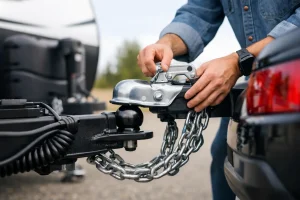
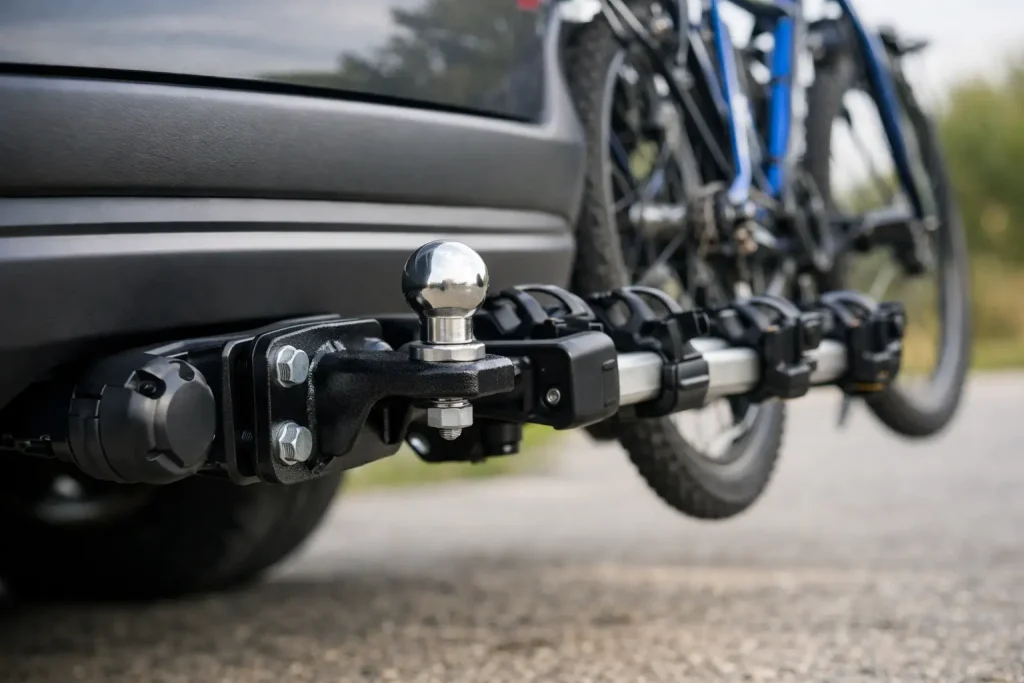
A flange towbar is a towbar with a towball fixed to a faceplate using two bolts, typically either a two-bolt or four-bolt arrangement. It is a very common design in the UK and has been used for years on cars, 4x4s and commercial vehicles because it is strong, straightforward and versatile.
For bike rack use, that matters because many towbar-mounted cycle carriers are designed to clamp directly onto a standard towball. A flange towbar can provide that standard mounting point, while also allowing other towing accessories to be fitted if needed. For drivers who tow a trailer one weekend and carry bikes the next, that flexibility is a real advantage.
It is also a practical option for customers who want a setup that is durable and workshop-friendly. If something needs adjusting, replacing or checking, a flange system is generally simple to work with.
Why many drivers choose a flange towbar
The main reason is versatility. A flange towbar does not only suit towing. It can also work well with cycle carriers, bumper protection plates, towball-mounted accessories and certain stabiliser-compatible towing setups. If you want one vehicle to do several jobs, it is often the sensible choice.
Strength is another factor. Flange towbars are well regarded for their solid construction, which is useful when carrying heavier bikes or using a rack loaded close to its limit. That does not mean every flange towbar can carry every bike rack and every load, because noseweight limits still apply, but it does mean the basic design is proven and dependable.
Cost can also be part of the decision. In many cases, a flange towbar is a more economical option than some detachable or swan neck alternatives. If appearance is less important than function, it often represents very good value.
Flange towbar or swan neck for a bike rack?
This is one of the most common questions in the workshop. Both can work, but they are not identical.
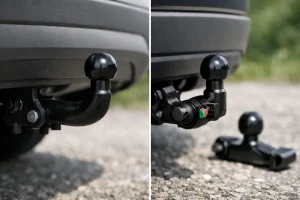
A swan neck towbar has a curved neck with the towball integrated into the shape of the bar. Many drivers prefer the cleaner look, especially on newer cars where appearance matters. Some bike racks are designed to fit both styles, but others have clearer preferences depending on the clamp design and clearance around the towball.
A flange towbar, on the other hand, is more obviously functional. It looks like a working towbar because that is exactly what it is. The benefit is compatibility with a broad range of towing and carrying accessories. If your priority is practicality over appearance, a flange setup often comes out ahead.
There is a trade-off, though. On some vehicles, a swan neck may offer slightly better rear-end aesthetics, and some owners prefer a detachable version so the towball can be removed when not in use. If the vehicle is mainly used as a daily car and only occasionally carries bikes, that may matter. If it is a family workhorse, caravan tug or van that needs to earn its keep, the flange type usually makes a lot of sense.
Will any bike rack fit a flange towbar?
Not automatically. That is the detail that is worth checking before buying anything.
Most towbar-mounted bike racks use the towball as the attachment point, but manufacturers set their own fitting requirements. Some racks need a particular amount of clearance around the towball. Others may not be suitable if the towbar faceplate, bumper shape, spare wheel position or rear door arrangement gets in the way.
Vehicle layout matters too. A hatchback, SUV and van can all behave differently once a rack is fitted. Rear door access may be limited, parking sensors may react to the rack, and on some vehicles the rack position can affect number plate visibility or rear light visibility unless the carrier includes its own lighting board.
That is why proper matching matters. The towbar, the electrics and the bike rack need to work as one system rather than as separate parts bought in isolation.
Noseweight matters more than most people realise
When people think about bike racks, they often focus on how many bikes the carrier can hold. The more important figure is usually the permitted noseweight of the towbar and the vehicle.
Noseweight is the downward load applied to the towball. That includes the weight of the bike rack itself plus the weight of the bikes. Electric bikes are the classic example here. A rack might physically hold them, but once you add the carrier and two heavy e-bikes together, you can get close to the limit very quickly.
That does not mean a flange towbar is unsuitable. In fact, it is often a very good choice for heavier-duty use. It simply means the setup has to be checked properly. Safe carrying is not about guessing what looks fine in the car park. It is about staying within the vehicle and towbar limits.
Do you need electrics with a flange towbar for bike rack use?
In many cases, yes.
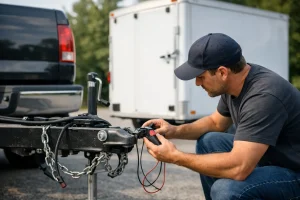
If the bike rack obscures the rear lights or number plate, you will usually need a carrier with its own light board and number plate holder, and that means the vehicle needs the correct towbar electrics. Depending on the rack and vehicle, that may be a 7-pin or 13-pin setup, sometimes with an adaptor if required.
Good electrics are not just a box-ticking exercise. They keep the vehicle legal, make the rack safer in traffic, and help avoid faults caused by poor-quality universal wiring. Modern vehicles can be particularly sensitive, especially where bulb failure systems, parking sensors and vehicle-specific electronics are involved.
A properly fitted electrical kit suited to the vehicle is usually the better long-term option. It reduces the risk of warning lights, erratic behaviour and unreliable connections.
Is a flange towbar a good choice for vans and working vehicles?
Very often, yes. For vans, trade vehicles and dual-purpose family vehicles, a flange towbar is hard to fault. It suits users who want towing ability during the week and bike-carrying flexibility at the weekend.
It also tends to suit customers who are less concerned about hiding the towbar and more concerned about durability, replacement ease and compatibility. If the vehicle is already used for trailers, plant, stock or work equipment, adding a suitable bike rack option to a flange towbar can be a practical extension of what the vehicle already does.
The same applies to larger family cars and SUVs. If holidays, cycling trips and general towing all feature in the year, one well-specified towbar setup can cover a lot of ground.
Professional fitting makes the difference
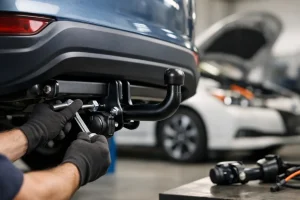
A towbar might look simple once installed, but getting it right involves more than bolting metal to the rear of a vehicle. The bar must be vehicle-specific, fitted to the correct mounting points, torqued correctly and paired with electrics that suit the car or van.
Then there is the real-world side of the job. Will the chosen bike rack clear the bumper? Can the tailgate open with the carrier tilted? Are the parking sensors likely to need coding or management? Will the rack and bikes stay within the legal and technical limits of the vehicle?
These are the details that save headaches later. At Doncaster Towbars, this is exactly the sort of practical advice customers ask for when they want a setup that works first time, rather than a box of parts that almost fit.
When a flange towbar may not be the best option
There are cases where another towbar type may suit better. If you have a newer car and strongly prefer a cleaner appearance, a detachable swan neck may appeal more. If your chosen bike rack manufacturer recommends a different towball style for best clearance, that should be taken seriously.
Likewise, if you never tow, only carry one or two lightweight bikes, and want the towball hidden when not in use, a detachable option might be worth the extra cost. It is not that a flange towbar is wrong in those cases. It is simply that the best fit depends on your priorities.
If, however, you want proven strength, broad compatibility and a setup that can handle more than one job, a flange towbar remains one of the most dependable choices available.
The best starting point is to match the towbar to the vehicle and the bike rack you actually plan to use, not the one that happens to be cheapest or easiest to order. A quick conversation before fitting can save a lot of trial and error later, and that usually leads to a safer, more useful result.