You usually only notice towbar wiring when it goes wrong. A trailer board that flickers, parking sensors that will not switch properly, or a dashboard warning light after a quick-fit wiring job can turn a simple towing setup into a headache. That is why factory electrics versus universal wiring is not just a technical choice. It affects reliability, safety, compatibility and how well your vehicle behaves once a towbar is fitted.
For some vehicles, universal wiring will do the job perfectly well. For others, factory-style vehicle-specific electrics are the right answer and can save trouble later. The best option depends on the age of the vehicle, how often you tow, what you are towing, and how integrated the car or van’s systems are.
Factory electrics versus universal wiring – what is the difference?
Factory electrics, sometimes called vehicle-specific electrics, are designed to communicate properly with your vehicle’s existing systems. Rather than simply taking a feed from the rear lights, the wiring kit is matched to the make and model and is intended to work with the car’s electronic architecture. On newer vehicles, that can include bulb failure monitoring, stability systems, parking sensors, fog light cut-off and trailer recognition.
Universal wiring is a more general solution. It is fitted by connecting into the vehicle’s lighting circuits so the trailer lights mirror what the vehicle is doing. In many cases, it is a practical and cost-effective setup, especially on older vehicles with simpler electrics. The issue is that modern cars and vans are not always happy with a one-size-fits-all approach.
That does not mean universal wiring is poor quality by default. Properly fitted, it can be reliable and safe. The question is whether it is suitable for the specific vehicle in front of you.
Why modern vehicles often need more than basic wiring
A lot of motorists assume trailer electrics are still just indicators, brake lights and side lights. Years ago, that was largely true. On many current vehicles, though, the electrical system is tied into control modules that constantly monitor loads, check for faults and manage convenience features.
When a vehicle is fitted with factory-style electrics, it may recognise that a trailer is connected. That can trigger useful changes in how the vehicle behaves. Rear parking sensors may switch off automatically. Trailer stability functions may be enabled. In some models, the rear fog light on the vehicle is disabled so you do not get glare reflected off the front of the caravan or trailer. Battery charging and fridge functions can also be handled correctly where a 13-pin setup is needed.
With universal wiring, some of those features may be missing, limited or require extra workarounds. On older vehicles, that may not matter. On a newer SUV, estate or van with advanced electronics, it can matter a great deal.
When factory electrics make the most sense
If you drive a newer vehicle, factory electrics are often the smarter long-term choice. This is especially true if the vehicle uses CAN bus systems, has bulb monitoring, factory parking sensors, or driver assistance features that interact with towing.
They are also well suited to people who tow regularly. Caravan owners, horsebox users, tradespeople with plant trailers, and anyone who depends on their towing setup week in, week out, usually benefit from a vehicle-specific installation. It tends to provide cleaner integration and fewer unwanted surprises.
There is also a compliance and warranty angle to consider. On some vehicles, the correct wiring route and coding process matter. A proper vehicle-specific system fitted by experienced technicians gives you a better chance of everything working as intended.
When universal wiring can still be a good option
Universal wiring still has a place. If you have an older car or van with straightforward electrics, and you only tow occasionally, it can be a sensible and economical solution. A small utility trailer, bike carrier board or light domestic trailer may not justify the added cost of a vehicle-specific kit if the vehicle itself does not need that level of integration.
It can also be appropriate where a vehicle-specific kit is not readily available, or where the customer’s needs are very simple. What matters is that the wiring is fitted correctly, protected properly, and tested thoroughly. Cutting corners is where problems begin, not the fact that a universal kit is being used.
Factory electrics versus universal wiring on cost
Cost is one of the first things people ask about, and fairly so. Universal wiring is often cheaper at the outset because the parts are more general and installation can be simpler on the right vehicle. Factory electrics usually cost more because the kit is model-specific and fitting may involve coding or configuration work.
But the cheapest option on day one is not always the most cost-effective over time. If universal wiring causes warning lights, sensor issues, lighting faults or repeat workshop visits, the saving can disappear quickly. On the other hand, fitting factory electrics to an older basic vehicle that does not need them may be money spent without much practical benefit.
This is why good advice matters. The right answer is based on the vehicle and the way you use it, not a blanket rule.
Reliability depends on the fitting as much as the kit
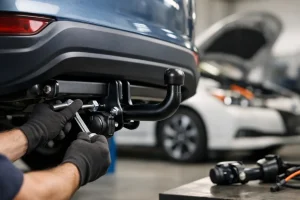
Customers sometimes focus entirely on which wiring type is better and overlook the installation itself. In practice, a poor fitting job can ruin either option. Bad joins, weak earths, exposed wiring, careless routing and lack of testing are what lead to many of the problems people blame on the electrics.
A proper installation should take into account water protection, cable support, correct module placement, secure connections and full function testing with towing electrics. It should also consider the vehicle as a whole. If the towbar electrics interfere with parking sensors, dashboard systems or lighting behaviour, that is not a finished job.
This is where a specialist workshop earns its keep. At Doncaster Towbars, for example, the real value is not just supplying parts. It is knowing what each vehicle will tolerate, what it needs to function properly, and what will give the customer the most dependable result.
Common problems caused by the wrong wiring choice
The wrong wiring setup does not always fail immediately. Sometimes it works well enough at first, then faults appear later. Intermittent trailer lights are a common issue, particularly where the load has not been managed correctly or the connections were rushed.
On newer vehicles, you may see dashboard warnings, parking sensors that stay active while reversing with a trailer, or functions that simply do not behave as expected. Caravan users can run into charging problems if the electrical system has not been set up correctly for a 13-pin connection. Even if the lights work, the installation may still be falling short of what the vehicle and trailer combination actually requires.
That is why matching the wiring approach to the vehicle is so important. It is not about choosing the more expensive option for the sake of it. It is about avoiding an installation that only half does the job.
How to choose between factory electrics and universal wiring
Start with the vehicle. If it is newer, more electronically advanced, or fitted with integrated safety and driver-assistance systems, factory electrics are usually worth serious consideration. If it is older and simpler, universal wiring may be entirely suitable.
Then think about your towing habits. If you tow a caravan, a work trailer, a horse trailer or anything regularly, a vehicle-specific solution is often the safer bet. If you only tow now and then and your setup is basic, universal wiring may make more sense.
Finally, think beyond price. Ask how the system will affect your parking sensors, dashboard warnings, trailer stability features and charging functions. Ask whether coding is required. Ask whether the installation will be tested properly. These are the questions that separate a quick fit from a proper one.
The best towbar wiring choice is the one that suits your vehicle
There is no single winner in factory electrics versus universal wiring because vehicles are not all built the same and customers do not all tow for the same reasons. Universal wiring can be a solid, practical option on the right vehicle. Factory electrics can be the better investment where modern systems demand proper integration.
If you are not sure which route suits your car or van, the sensible move is to ask a specialist before any fitting begins. A few minutes of proper advice can save a lot of frustration later, and it gives you the confidence that when you hitch up, everything will work exactly as it should.