You hitch up, plug in the electrics, test the lights – and nothing. Or worse, one indicator works, the brake light flickers, and the side lights only come on when they feel like it. If your trailer lights not working is the problem, the fault is usually something simple, but finding it quickly matters. Faulty trailer lights are a safety issue, a legal issue, and a common cause of stress just when you are ready to tow.
For most drivers, the problem sits in one of four places: the vehicle socket, the trailer plug, the wiring between them, or the light units themselves. The trick is checking them in the right order so you do not waste time replacing parts that are not at fault.
Why trailer lights not working is rarely just a bulb issue
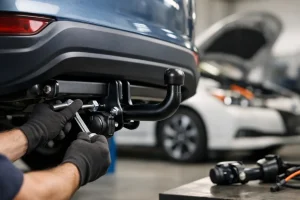
People often assume the trailer itself is the problem, but that is not always the case. Modern vehicle electrics can be sensitive, especially on cars and vans with dedicated towing electrics, CAN bus systems, or coding requirements. A trailer light fault can come from corrosion in a 7-pin or 13-pin socket, a poor earth, a damaged cable, or a vehicle-side wiring issue that is stopping the signal from reaching the trailer properly.
On older trailers, the opposite can be true. The vehicle is fine, but the trailer wiring has had years of weather, road dirt, strain on the plug lead, and makeshift repairs. That is when you see intermittent faults – lights that work on one journey and fail on the next, usually after hitting a bump or turning sharply.
Start with the simplest checks
Before getting tools out, do the obvious checks properly. Make sure the plug is fully seated and locked in place. It sounds basic, but a loose 13-pin connection or a worn 7-pin plug causes plenty of call-outs. Look for bent pins, green corrosion, trapped cables, or signs the plug has been dragged on the ground.
Then test each light function one at a time – side lights, brake lights, indicators, fog light and reverse light if fitted. If nothing works at all, the issue is often power supply or earth. If only one function fails, the fault is more likely to be a specific circuit, bulb holder, or pin connection.
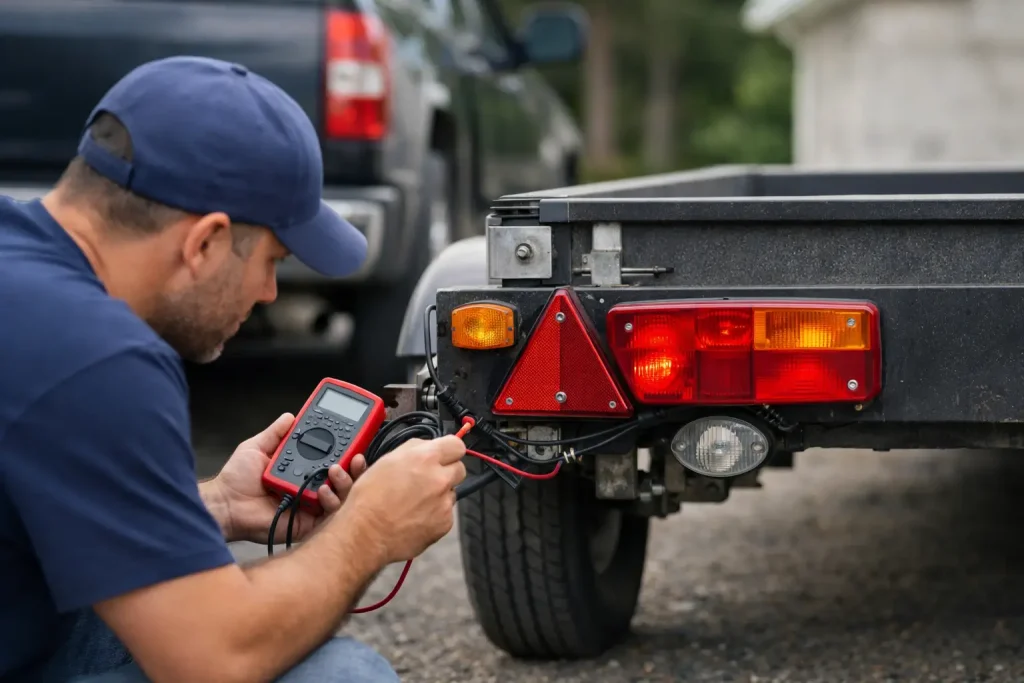
A second person makes this easier, but a proper light board tester or socket tester speeds things up and removes guesswork. If you tow regularly, these are worth having.
The most common causes of trailer light faults
Poor earth connection
A bad earth is one of the biggest causes of trailer lights not working. When the earth connection is weak or corroded, lights may appear dim, flash incorrectly, or interfere with each other. You press the brake pedal and the indicator glows faintly. You switch on side lights and another lamp goes out. That usually points to the earth circuit struggling to return current properly.
Earth faults can sit in the trailer plug, the socket, the main wiring loom, or where the light units fix to the trailer chassis. Rust, paint, moisture and loose fixings all play a part.
Corroded plug or socket
Trailer plugs and sockets live in harsh conditions. Rain, road salt and dirt all get into places they should not. Corrosion on the pins creates resistance, and resistance creates faults. Sometimes a clean-up is enough. Sometimes the plug or socket is simply too worn and needs replacing.
If the socket flap does not close properly, or the inside looks green, white, or badly tarnished, it is time for a closer look.
Damaged cable or broken wiring
The cable from trailer to plug takes constant movement. It gets twisted during hitching, stretched on tight turns, and occasionally trapped or crushed. Internal wire breaks are common, especially near the plug entry point where strain is highest.
Trailer wiring along the chassis can also rub through, particularly on older units or trailers used for work. A horse trailer, plant trailer or small business trailer that sees regular use tends to suffer more than a lightly used camping trailer.
Faulty light units or bulb holders
Bulbs still fail, of course, but so do bulb holders, lamp boards and sealed light units. Water ingress is a regular problem. If there is condensation inside the lens, corrosion inside the fitting may already be affecting the terminals.
LED lights add another angle. They are generally reliable, but when they fail, you are often replacing the whole unit rather than just a bulb.
Vehicle-side electrical problems
If the trailer is sound but no proper signal is leaving the vehicle, you may be dealing with a blown fuse, a faulty bypass relay, an issue with a dedicated towing module, or poor installation work from a previous fitment. On newer vehicles, incorrect coding or module faults can also prevent trailer electrics from behaving as they should.
This is where DIY fault-finding can start to get slow and expensive.
How to narrow the fault down quickly
The fastest way to isolate the problem is to separate trailer from vehicle. If possible, plug the trailer into another tow vehicle that you know works correctly. If the lights still fail, the trailer is the problem. If they work, look at the vehicle socket, wiring or towing electrics.
You can also test the vehicle socket with a proper tester. That will show whether each function is sending the right output. It is a straightforward check, but it tells you a lot before you start stripping lights apart.
Where people lose time is replacing bulbs first, then the plug, then a light board, only to discover the issue was a poor earth in the vehicle socket or a damaged wire hidden under the trailer bed. Method matters here.
When a quick fix is enough – and when it is not
Sometimes the repair is simple. Cleaning terminals, replacing a plug top, fitting a new bulb, or repairing a short section of damaged cable can put everything right. If the trailer is otherwise in good condition and the wiring has been looked after, these small fixes can be perfectly sensible.
But there is a point where patch repairs stop being good value. If the wiring is brittle, the light units are full of moisture, and the plug has clearly seen better days, replacing sections one by one often costs more in time and repeat faults than doing the job properly in one go. For regular towing, reliability matters more than squeezing a few more months out of tired electrics.
Why professional diagnosis saves time
Electrical faults are not always complicated, but they can be misleading. A symptom at the back of the trailer may start at the front of the vehicle. A light fault that looks like bad wiring may actually be a control module issue. And if your towbar electrics were installed incorrectly in the first place, chasing faults on the trailer alone will not solve much.
A workshop that deals with towing electrics day in, day out can usually spot patterns quickly. Testing equipment helps, but so does experience. Knowing how different vehicle systems behave, how 7-pin and 13-pin setups differ, and where common failures occur makes diagnosis much faster.
That is especially useful for caravan owners, tradespeople and van users who cannot afford repeated problems every time they need to tow.
Preventing trailer light problems in the future
Most trailer lighting faults build up over time. A bit of maintenance goes a long way. Keep the plug clean and dry when not in use. Check the cable for strain or cuts. Make sure the socket flap closes properly. Inspect lights for water ingress and replace cracked lenses before moisture gets inside. If the trailer is stored outside, regular checks matter even more.
It also helps to test all lighting functions before every journey, not after you are loaded and ready to leave. That two-minute check can save you from roadside hassle and avoid towing illegally.
If your trailer gets heavy use, an annual inspection is a sensible move. For many owners, it is the easiest way to catch worn electrics before they become a failure on the day you need the trailer most.
If your trailer lights are not working, get it sorted before you tow
There is no safe workaround for faulty trailer lights. If they are not operating properly, the trailer should not be on the road until the issue is fixed. Whether the fault turns out to be a tired plug, damaged wiring, a vehicle socket issue or a more involved electrical problem, proper diagnosis saves frustration and keeps your towing setup safe and compliant.
If you are in Doncaster or the surrounding area and want the fault traced properly, Doncaster Towbars can inspect trailer electrics, wiring and connections and help get everything working as it should. A reliable towing setup starts with the basics, and lighting is one of the most important ones to get right.