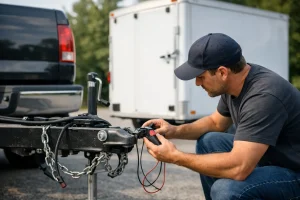
A trailer with dodgy electrics rarely gives much warning. One day the indicators work, the next the brake lights fail, or the road lights flicker every time you hit a bump. That is why 7 pin trailer wiring installation matters more than many drivers expect. It is not just about getting a plug fitted. It is about making sure your trailer lights work properly, your vehicle electrics are protected, and your towing setup is safe and legal.
For many motorists, caravan owners and tradespeople, a 7-pin system is still the right choice. It is widely used on small trailers, utility trailers, plant trailers and older towing setups where the main requirement is road lighting. If you only need the essential trailer light functions and do not need extra power feeds for things like caravan fridges or battery charging, a 7-pin socket is often the practical option.
What a 7 pin trailer wiring installation actually does
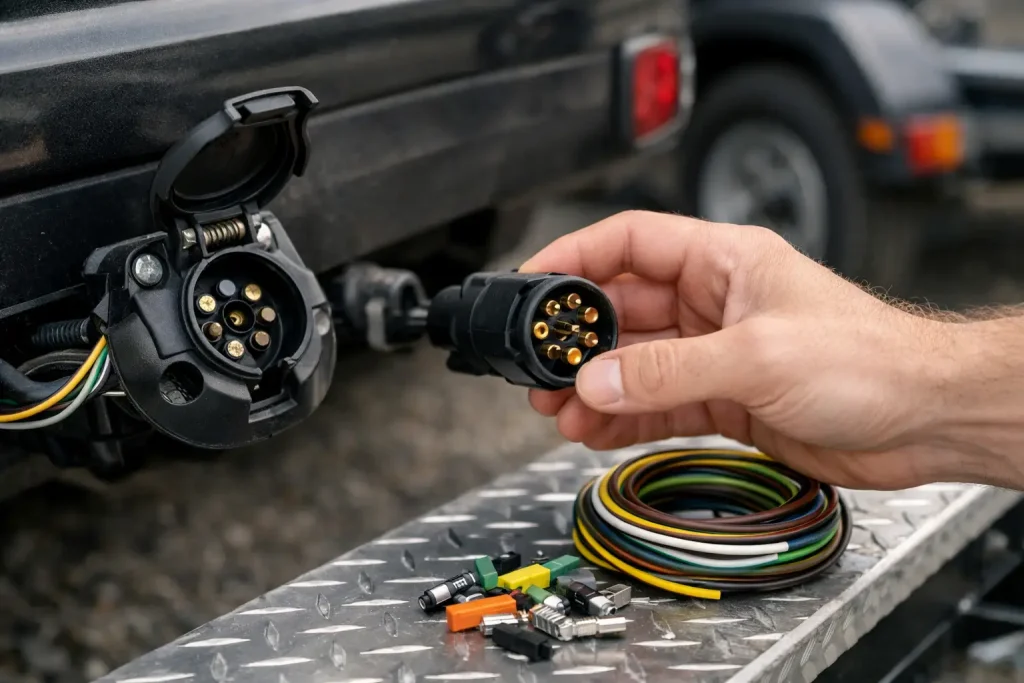
A standard 7-pin trailer wiring installation connects the core lighting functions between the towing vehicle and the trailer. That usually includes left and right indicators, tail lights, brake lights, rear fog light and earth. In simple terms, it allows the trailer to mirror the key road signals from the towing vehicle so other road users can see clearly what you are doing.
That sounds straightforward, but the fitting itself can vary a lot depending on the vehicle. On an older car or van, wiring in a socket may be more direct. On a newer vehicle with multiplex electrics, bulb monitoring and vehicle control modules, it is a more technical job. In those cases, proper integration matters. A poor connection can trigger warning lights, affect other systems or cause intermittent faults that are frustrating to trace.
This is where experience counts. Vehicle-specific electrics and correct testing make a big difference between a setup that works reliably and one that becomes a recurring problem.
Is 7-pin the right choice for your vehicle?
It depends on what you are towing.
If you are towing a standard trailer for garden waste, tools, machinery or general load carrying, 7-pin is usually enough. It covers the legal lighting requirements for many common trailers and keeps the setup simple. For plenty of drivers, especially those using trailers occasionally, that is all that is needed.
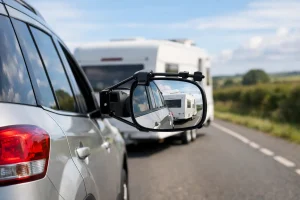
If you are towing a caravan, horsebox with additional power needs or anything requiring interior power functions, reverse circuits or charging feeds, a 13-pin system may be the better fit. That does not make 7-pin outdated. It just means the right wiring setup should match the job. Choosing the cheaper option without checking your actual towing needs can mean paying twice.
A good fitter will ask what you tow, how often you tow it, and whether your vehicle needs a dedicated electrics kit. That is a much better starting point than assuming one socket type suits every vehicle.
7 pin trailer wiring installation on modern vehicles
Modern vehicle electrics are less forgiving than many people realise. Years ago, universal wiring kits were often used as a quick solution. On some vehicles, they still have a place. But on many newer cars, SUVs and vans, a universal bypass relay setup is not always the best answer.
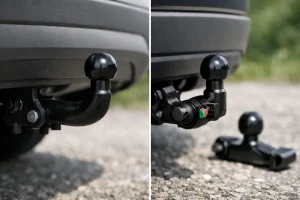
A proper 7 pin trailer wiring installation may involve a dedicated kit designed for the vehicle. That can allow the towing electrics to work alongside the car’s onboard systems rather than bypassing them. Depending on the make and model, that may help with trailer stability features, bulb failure monitoring, parking sensor cut-off and dashboard notifications.
Not every vehicle needs coding, and not every customer needs the most complex setup. But this is exactly why there is no one-size-fits-all answer. The vehicle, the trailer use and the expected reliability all affect the best route.
Why poor trailer wiring causes so many problems
Most trailer electrical faults come back to one of three things – poor connections, water ingress or incorrect installation.
If a socket has been fitted badly, wires may not be secured properly, seals may be weak, or the cable route may leave the wiring exposed to damage. Add in road spray, winter salt and regular movement at the rear of the vehicle, and small installation mistakes soon become bigger faults. Corrosion inside the socket is common. So are broken wires near the plug where repeated flexing takes its toll.
There is also the issue of diagnosis. A trailer lighting fault is not always caused by the trailer. Sometimes the vehicle socket is the problem. Sometimes the fault sits in the vehicle wiring loom or relay system. Sometimes both vehicle and trailer have separate issues, which is why testing each side properly matters.
This is one reason professional fitting often saves money over time. It reduces the chance of recurring faults and makes future fault-finding much more straightforward.
What to expect during a professional 7 pin trailer wiring installation
The process should start with the vehicle and towing requirements, not with the socket itself. A proper installation involves checking compatibility, selecting the correct electrics kit and planning a clean, secure fit.
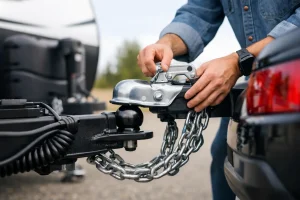
The towbar electrics are then connected in a way that suits the vehicle. On some models that means using dedicated connection points and vehicle-specific modules. On others, it may involve a quality universal system with the right protection and relay arrangement. The socket is mounted securely, wiring is routed safely, and everything is tested thoroughly.
Testing is not the bit to rush. Each lighting circuit should be checked under load, not just glanced at. Indicators, brake lights, tail lights and fog lights all need confirming. On vehicles with additional electrical sensitivity, installers should also make sure nothing unwanted has been triggered during the fitting.
At Doncaster Towbars, this workshop-led approach is exactly what customers are usually looking for – a fitting that works properly first time and is matched to the vehicle rather than guessed.
Common signs your trailer wiring needs attention
Sometimes the issue is obvious. More often, it starts with something inconsistent.
If trailer lights are dim, flickering or working only occasionally, the socket or wiring may already be deteriorating. If one function affects another, such as the indicator making the tail light flash oddly, that often points to an earth fault. If the car displays electrical warnings when towing, the installation may not be integrated correctly. And if the plug feels loose or the socket cap no longer closes properly, moisture can quickly become the next problem.
These faults are worth dealing with early. Small electrical issues rarely stay small for long, especially on vehicles used for work or regular towing.
DIY or professional fitting?
There are drivers who are comfortable working on vehicle electrics, and on older vehicles a straightforward installation can look manageable. But there is a big difference between making a trailer board light up and fitting a towing electrical system that remains dependable in daily use.
The trade-off is simple. DIY may save money upfront, but mistakes can be expensive if they lead to damaged vehicle electrics, unreliable trailer lights or failed MOT-related checks. Professional installation costs more initially, but it gives you a setup that is tested, secure and suitable for the vehicle.
For van owners, regular towers and anyone relying on a trailer for work, downtime matters too. A wiring issue on a busy week is not just inconvenient. It can stop jobs, deliveries or travel plans altogether.
Choosing the right installer for 7 pin trailer wiring installation
Not all towbar and electrics fitting is equal. The right installer should understand both mechanical towbar fitting and the electrical side in proper detail. That includes vehicle-specific kits, fault finding, trailer testing and the practical realities of how the setup will be used.
It also helps to choose a business that can support you after the fitting. If you tow regularly, future checks, repairs and trailer servicing can all become relevant. Having one local specialist who understands the full setup is far more useful than bouncing between general garages.
When you speak to an installer, ask practical questions. Is the wiring matched to your vehicle? Will the socket be tested fully? Is the installation suitable for the trailer you actually tow? Clear answers usually tell you a lot.
A reliable towing setup should feel boring in the best possible way. You hitch up, plug in, test the lights and get on the road without second guessing whether the electrics will behave. If your vehicle needs a 7-pin socket fitted, replaced or checked, getting the installation done properly is the simplest way to keep towing safe, legal and hassle-free.