A caravan that feels steady on the drive can become hard work very quickly if the setup is wrong. That is why a proper guide to caravan towing safety starts before you turn the key – with the vehicle, the towbar, the electrics, the loading and the trailer itself all working as they should.
For many drivers, the problems do not begin at motorway speed. They begin earlier, with mismatched weights, poor nose weight, ageing tyres, weak trailer brakes or electrics that have not been checked properly. Get those basics right and towing becomes far safer, more predictable and far less stressful.
What caravan towing safety really depends on
Safe towing is not down to one part alone. A good towbar fitted to the wrong vehicle setup will not fix poor loading, and a well-loaded caravan will not make up for worn tyres or faulty trailer brakes. Caravan towing safety is about the whole combination working together.
The first thing to check is whether your vehicle is actually rated to tow the caravan you plan to use. That means looking at the vehicle manufacturer limits, the caravan’s laden weight and the towbar specification. Plenty of towing problems start with assumptions. A larger SUV is not always suitable for every caravan, and some modern cars have surprisingly specific towing limits depending on engine, transmission and trim.
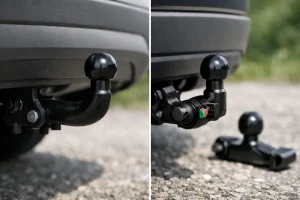
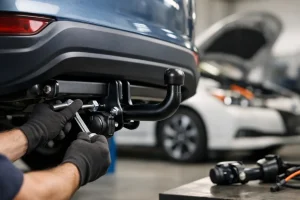
It also matters how the towbar and electrics have been installed. Vehicle-specific wiring is often the better route because it is designed to work properly with the car’s systems, including trailer lighting functions and, on some vehicles, stability and sensor settings. A universal setup can be fine in the right situation, but it depends on the vehicle and how it will be used.
Weight, loading and balance
If there is one area drivers should never guess, it is weight. You need to know the car’s maximum towing capacity, the caravan’s maximum authorised mass and the permitted nose weight for both the vehicle and the towbar. The lowest figure is the one that matters.
Loading matters just as much as the headline weight. A caravan can be technically within limits and still tow badly if the balance is wrong. Heavy items should be placed low down and close to the axle where possible. Fill every high cupboard with tins, awning parts and tools and you raise the centre of gravity, which can make the caravan less stable through bends or in crosswinds.
Nose weight needs attention too. Too little can encourage snaking. Too much can overload the rear of the tow vehicle and affect steering and braking. There is no single ideal number for every outfit, but it should be within the legal and mechanical limits while giving the caravan a settled, controlled feel.
This is where many people come unstuck before a holiday. They pack for convenience rather than balance. It may save five minutes on the driveway, but it can make the next two hours on the road much less comfortable.
The pre-journey checks that make the biggest difference
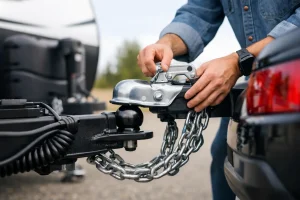
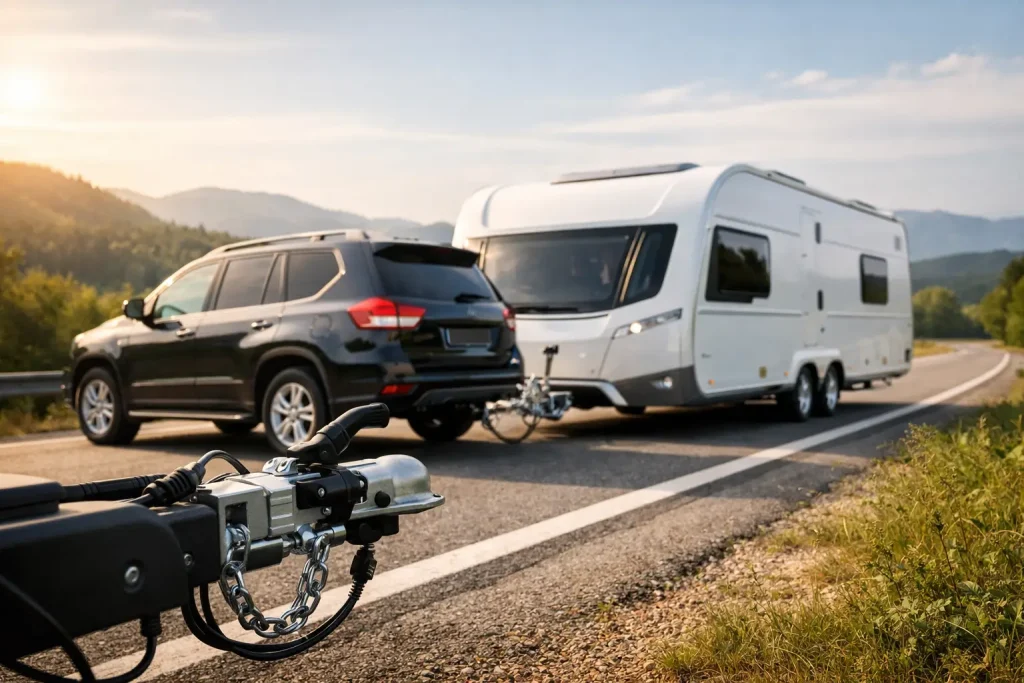
A thorough walk-round is one of the simplest habits in any guide to caravan towing safety, and it catches more issues than most people expect. Before every journey, check the hitch is fully engaged, the breakaway cable is attached correctly, the jockey wheel is raised and secured, and the corner steadies are up.
Then check the lights. Indicators, brake lights, tail lights and number plate illumination all need to work properly. If you have intermittent faults, do not leave them until the morning of travel. Electrical issues are often easier to sort in the workshop than on a campsite approach road in poor weather.
Tyres deserve close attention on both the car and the caravan. Look at pressure, tread depth, sidewall condition and age. Caravan tyres can look barely worn and still need replacing because age and storage conditions affect them. Cracks, bulges and flat spots are all warning signs.
Finally, check wheel nuts, mirrors, number plates, battery security, petrol bottle security and that all internal caravan items are stowed safely. A cupboard flying open or a loose object moving around inside may not sound dramatic, but repeated movement affects stability and can cause damage.
Towbar, electrics and trailer condition
A safe caravan outfit depends heavily on proper fitting and maintenance. The towbar must be right for the vehicle, fitted correctly and in sound condition. If there is corrosion, impact damage or any doubt about how an older towbar was installed, it is worth getting it checked professionally.
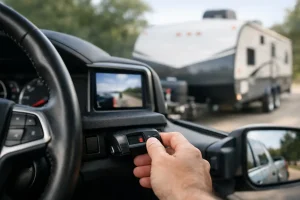
Electrics are just as important. Modern vehicles often need coded or vehicle-specific systems so they can recognise a trailer correctly. That can affect how the rear sensors behave, how lighting faults are monitored and, on some vehicles, how stability systems respond when towing. If your electrics have been added as an afterthought with poor wiring practices, reliability tends to suffer.
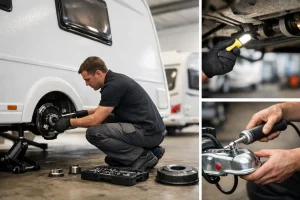
The caravan itself also needs regular servicing. Brakes, running gear, lights, bearings, hitch components and cables all wear over time. If a trailer has been standing for long periods, that is another reason to have it inspected. Lack of use does not always mean good condition.
Driving style matters more than power
One of the biggest misconceptions in towing is that a more powerful vehicle solves everything. Power helps when pulling away or climbing hills, but towing safety is far more influenced by control, braking, weight balance and driver behaviour.
Leave more stopping distance than you would normally. Brake earlier and more gently. Take bends steadily and avoid sudden steering inputs. Lane changes need more planning, especially in wind or when being overtaken by larger vehicles. Speed has a direct effect on stability, so even when legal limits allow more, calmer progress is often the safer option.
Crosswinds catch plenty of drivers out, especially on exposed roads and motorways. If the caravan begins to move about, do not try to steer aggressively against it. Ease off the accelerator smoothly, keep the steering straight and let the outfit settle. Sharp braking can make the situation worse.
Reversing is another area where patience beats confidence. Small steering inputs work better than big corrections. If visibility is poor or the pitch is awkward, use a banksman where possible. Parking sensors and cameras can help, but they should support good judgement rather than replace it.
Why matching matters
Not every car and caravan pairing is a good one, even if the figures seem acceptable on paper. Kerb weight, wheelbase, suspension characteristics and the way the car delivers its power all affect towing behaviour. A combination that is legal may still feel unsettled, particularly for a less experienced driver.
That is why advice should be based on the actual vehicle and intended use, not guesswork. A family car towing a lightweight tourer for the occasional summer break has very different needs from a larger vehicle pulling a heavier twin-axle caravan across the country several times a year.
If you are changing vehicle, upgrading caravan or fitting a towbar for the first time, it pays to get proper guidance on compatibility, towing limits and electrics. At Doncaster Towbars, that practical workshop-led approach is often what saves customers from expensive mistakes and poor towing setups.
Common problems that should not be ignored
A few warning signs come up again and again. If the caravan feels twitchy above moderate speeds, if the rear of the car squats heavily, if the brakes feel less controlled than expected, or if lights fail intermittently, something needs attention.
The same applies to unusual noises from the hitch area, uneven tyre wear, a steering wheel that feels lighter than normal, or trailer brakes that seem to snatch. These are not things to put up with until the next service. Most towing issues get easier and cheaper to sort when found early.
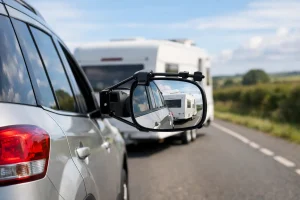
There is also the legal side. Incorrect number plates, defective lights, overweight loading and unsafe towing mirrors can all create avoidable trouble. More importantly, they increase risk for you and everyone else on the road.
A safer setup starts before the first trip
The best towing journeys usually feel uneventful, and that is exactly the point. When the towbar is fitted correctly, the electrics are working as they should, the caravan is serviced, and the outfit is loaded and matched properly, towing becomes much more straightforward.
If you are unsure about weights, electrics, towbar options or trailer condition, get it checked before your next journey rather than after a problem appears. A bit of preparation in the workshop is far better than finding out on the hard shoulder that something was not right.