If your van earns its keep, the wrong towbar setup soon becomes a problem. Choosing between commercial van towbar options is not just about what fits underneath the vehicle – it is about payload, towing habits, rear access, electrics and how the van is used day to day.
For some drivers, a towbar is there for occasional trailer runs. For others, it is part of the working week, hauling tools, plant, stock or equipment across Doncaster, Rotherham and beyond. That difference matters, because the best solution for a small business owner doing local jobs may not be the right one for a fleet van covering long miles with regular towing.
Which commercial van towbar options are available?
Most van owners will be choosing between a fixed towbar, a detachable towbar or, on some vehicles, a flange towbar. Each has its place, and the right choice depends on how often you tow and what sort of trailer or carrier you use.
A fixed towbar is often the straightforward workhorse option. It stays in place, is always ready to use and suits vans that tow regularly. If the van is out most days with a trailer, there is a lot to be said for a setup that does not need removing, storing or refitting. For trade users, this is often the practical answer.
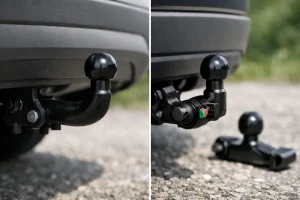
A detachable towbar gives a cleaner look when not in use and can be useful if rear access or appearance matters. On some vans, especially newer models used for mixed business and personal driving, that flexibility appeals. The trade-off is simple – it costs more, and it is only convenient if the detachable mechanism is kept clean and looked after properly.
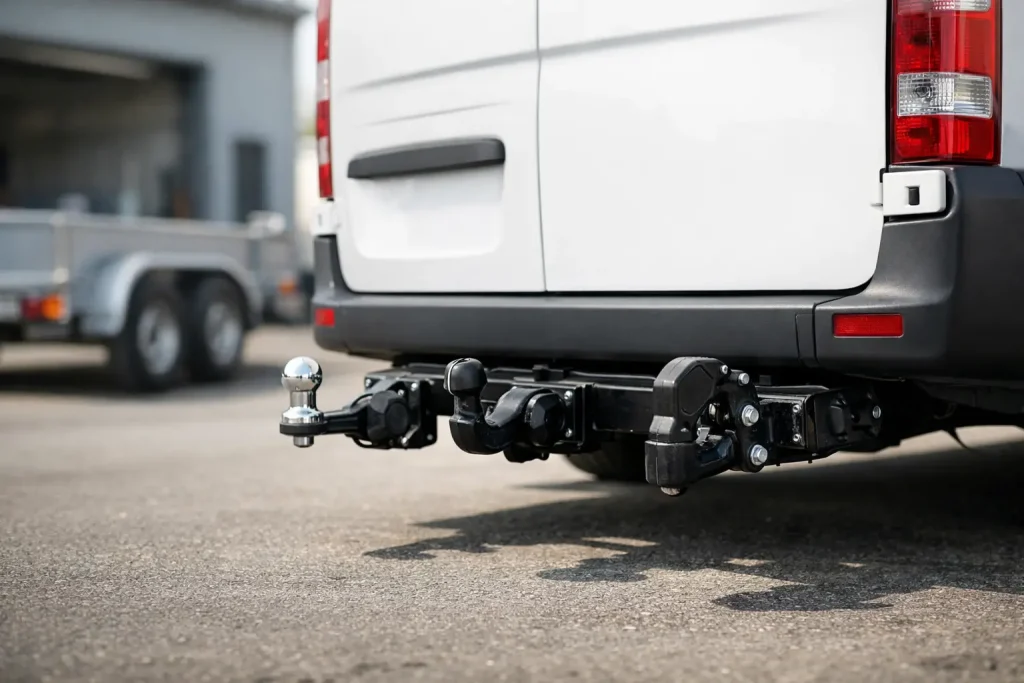
A flange towbar is still a strong choice for many commercial vehicles. It is particularly useful where extra towing accessories may be needed, such as bumper protectors, tow steps, cycle carriers or different ball and pin arrangements. For some working vans, that compatibility makes it the better tool for the job than a neater-looking swan neck style.
Fixed, detachable or flange – what suits a working van?
If the van tows often, fixed usually makes the most sense. It is dependable, visible, easy to access and well suited to vans that are used in all weather and all seasons. There is less fuss, and that matters when time is tight.
Detachable suits drivers who only tow now and then or want to keep the rear of the vehicle unobstructed when off duty. That can help if the van also serves as a personal vehicle at weekends. Still, on a hard-working commercial van, practicality usually wins over appearance.
Flange towbars tend to be a favourite where flexibility matters more than looks. Many trade users prefer them because they work well with a wider range of attachments. If you already know you need a step, a special coupling or additional towing accessories, flange is worth discussing from the outset.
The electrics matter as much as the towbar
A towbar is only half the setup. The electrics determine whether the trailer lights work correctly, whether the vehicle recognises it is towing and whether the installation behaves properly with modern safety systems.
Older or simpler vans may use a basic wiring setup, but many newer commercial vehicles need dedicated electrics. These are designed to communicate properly with the vehicle’s own systems rather than simply tapping into the rear lights. That can affect trailer lighting behaviour, dashboard warnings, parking sensor response and, on some vehicles, stability control functions linked to towing.
This is where cheap universal wiring can become a false economy. It may appear to save money at first, but if it causes electrical faults, warning lights or unreliable trailer signals, the van is off the road and the job becomes more expensive than it needed to be.
For commercial users, reliability is the real value. Proper vehicle-specific electrics help protect that.
Towing capacity and noseweight are not the same thing
One of the most common mistakes with commercial van towbar options is assuming that if a van can tow, any towbar will do. In practice, the vehicle’s towing limit, the towbar rating and the noseweight all need to match the intended use.
Towing capacity is the maximum trailer weight the vehicle can legally pull. Noseweight is the downward force on the towball. Both matter. A van may be capable of towing a decent braked trailer weight, but if the trailer setup puts too much load onto the towball, that is still a problem.
This catches people out with tool trailers, generators, plant trailers and loaded box trailers. Weight distribution changes quickly depending on what is being carried. A proper fitting service should check suitability based on the actual work the van does, not just the brochure figure.
Rear doors, steps and access can change the best option
With commercial vans, clearance and practicality at the back of the vehicle often shape the decision. Barn doors, rear steps, parking sensors and racking access all need considering before anything is fitted.
Some vans need a towbar that works around existing rear equipment. Others may need parking sensors recalibrated or fitted in a way that still makes reversing manageable once the towbar is in place. If the van is used in busy yards, on customer driveways or in town centres, reversing confidence matters just as much as towing ability.
This is one reason a van-specific recommendation is better than a generic one. What suits a Transit may not suit a Transporter, and what works well on one wheelbase may be awkward on another.
What about fleets and business vehicles?
Fleet operators and small businesses tend to value consistency. If several vans are being fitted, it often makes sense to standardise where possible so drivers know what they are working with and replacement parts or accessories are easier to manage.
That said, standardisation should not override suitability. A van doing occasional light towing for deliveries may not need the same setup as one pulling equipment every day. Good advice starts with the use case, not just a parts list.
For businesses, downtime is expensive. Professional fitting reduces the risk of electrical issues, poor mounting, compatibility problems and repeat workshop visits. It also gives confidence that the installation is suitable for the vehicle and the job it needs to do.
Commercial van towbar options for different uses
The right towbar often becomes clearer when you think about how the van is used in real life.
A builder or tradesperson towing most weeks will usually benefit from a fixed or flange towbar with durable electrics and easy access. It is built for routine use and less likely to become an irritation during a busy week.
A company van that only tows occasionally may suit a detachable system, especially if the vehicle also needs to present well when meeting clients. You keep the towing function without having the towball in place all the time.
If the van carries bike racks, steps or specialist towing attachments as well as trailers, a flange setup may be the sensible route. Not every van owner needs that flexibility, but for those who do, it is far more practical than trying to force the wrong towbar into the job.
Why professional fitting is worth it
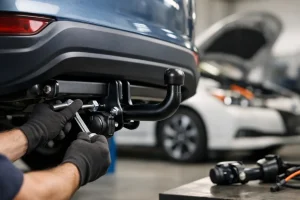
Commercial vans are working vehicles, and that means every part of the installation needs to be dependable. The towbar itself must be fitted correctly to the vehicle mounting points, torqued properly and matched to the right electrical system. There is not much room for guesswork.
Modern vans also bring more complexity than many owners expect. Parking sensors, bulb failure monitoring, towing software functions and manufacturer-specific wiring all come into play. A proper installation should account for these from the start.
That is why many van owners prefer a workshop that handles both the mechanical fitment and the electrics in one place. At Doncaster Towbars, that practical, vehicle-specific approach is what helps customers leave with a setup that works properly rather than one that merely bolts on.
Getting the right advice before booking
Before choosing between commercial van towbar options, it helps to have a few details ready. The exact make, model and year matter, but so do the type of trailer, how often you tow and whether the van has rear sensors, steps or existing accessories.
Those details shape the recommendation. Two identical vans can still need different setups if one tows a small domestic trailer a few times a year and the other pulls equipment every week. There is no point paying for features you do not need, and there is just as little point choosing a budget option that will not stand up to regular commercial use.
A good towbar setup should feel like part of the van, not an afterthought. If you are unsure which option is right for your vehicle, it is worth speaking to a specialist fitter who can match the towbar, electrics and installation to the work you actually do. Getting that decision right at the start usually saves time, money and hassle later on.