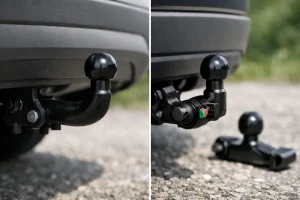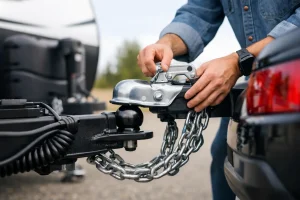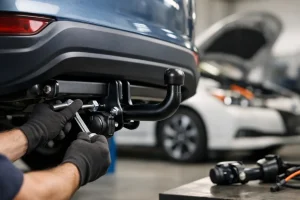
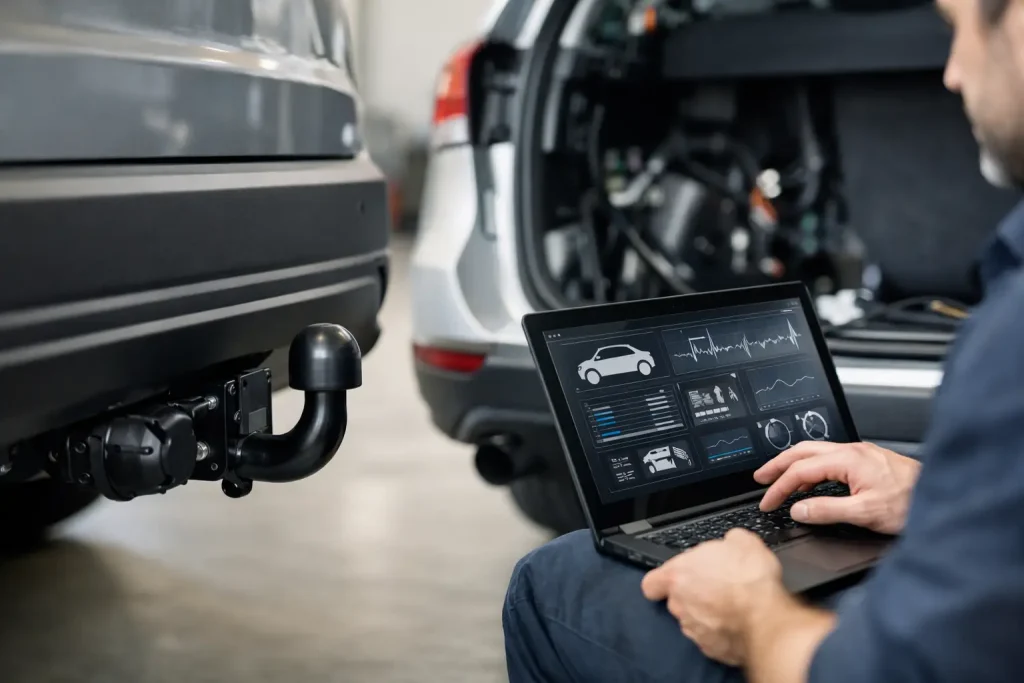
You can have a towbar fitted perfectly, the electrics connected neatly, and the socket working as it should – then still have a vehicle that is not fully set up for towing. That is why the question of coding required after towbar fitting comes up so often. On many modern vehicles, especially those with advanced electronics, driver assistance features and bulb monitoring systems, the physical fit is only part of the job.
For some cars and vans, coding is essential. For others, it is not needed at all. The right answer depends on the make, model, age of vehicle and the type of electrics being installed. If you tow a caravan, trailer, horsebox or work trailer, it is worth understanding what coding actually does and why it can make a real difference once the towbar is on the vehicle.
What does coding required after towbar fitting actually mean?
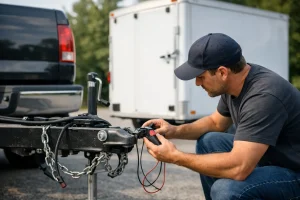
Coding is the process of programming or configuring the vehicle so it recognises that a towbar and dedicated towing electrics have been fitted. On newer vehicles, the towbar wiring does more than power trailer lights. It often communicates with the car’s electronic control units.
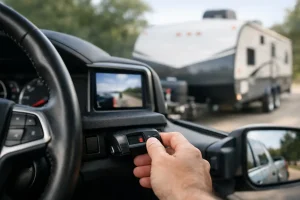
When that happens, the vehicle may need to be told that towing equipment is now part of its system. This can involve activating trailer stability functions, adjusting rear parking sensors, changing how rear fog lights operate, or allowing bulb failure monitoring to work properly with a trailer attached.
Without that coding, the towbar may still appear to work at a basic level, but some important towing-related functions may not behave as they should. That is where problems start – not always dramatic ones, but the sort of faults and irritations that lead to warning messages, sensors constantly beeping, or systems not responding correctly when a trailer is connected.
Which vehicles are most likely to need coding?
The general rule is simple. The more modern and electronically managed the vehicle is, the more likely coding is to be required after towbar fitting.
Many German vehicles are well known for this, including a lot of Audi, BMW, Mercedes-Benz and Volkswagen models. That said, it is not limited to those makes. Plenty of Ford, Volvo, Land Rover, Peugeot, Vauxhall and other vehicles may also need coding depending on the factory setup.
Vehicles with CAN bus electrics, integrated parking sensors, factory tow prep, trailer stability control or advanced driver assistance systems are the most common candidates. Newer vans used by tradespeople and small businesses can also fall into this category, particularly where reversing aids and electronic safety systems are already built in.
Older cars are usually more straightforward. If the towbar electrics are fitted through a universal bypass relay system, coding may not be needed at all. But even then, it should never be assumed. Vehicle-specific electrics can change the picture.
Why coding matters in practice
A lot of drivers hear the word coding and think it is just a dealer-level extra or an optional technical tidy-up. In reality, it can directly affect how usable and safe the towing setup is.
One of the biggest examples is rear parking sensors. On a vehicle that has not been coded correctly, the sensors may detect the towbar permanently and sound every time reverse is selected. Proper coding can tell the vehicle when a trailer or towbar is present and adjust that behaviour.
Lighting functions are another area. Some vehicles are designed to switch off the car’s rear fog light when a trailer is connected, so the trailer’s fog light operates instead. That is not just about convenience. It helps lighting work in the intended way and avoids confusion for other road users.
Then there are stability and safety features. Certain vehicles can activate trailer stability programmes only when the towing system has been registered in the software. If that feature is available on the car, you want it working. The same goes for dashboard warnings related to trailer indicators or lighting faults.
Coding required after towbar fitting – or not?
This is where a proper assessment matters more than a blanket yes or no.
If you have an older vehicle with basic wiring and no integrated towing functions, coding may not be required after towbar fitting. The towbar can be installed, the electrics connected, and the system can work perfectly well without any software changes.
If you have a newer vehicle with dedicated electrics, body control modules and integrated assistance systems, coding may well be part of the correct installation process. In some cases, the electrics kit is designed on the assumption that coding will be carried out. Skipping it can mean the job is only half-finished.
There is also a middle ground. Some vehicles will tow without coding, but not with full functionality. That often leads owners to think everything is fine until they notice parking sensor issues, dashboard warnings or odd behaviour when using a caravan or trailer board.
Dedicated electrics vs universal wiring
The type of wiring kit fitted often determines whether coding enters the conversation.
A universal wiring kit is designed to provide basic trailer lighting functions without deep integration into the vehicle’s systems. These kits can be suitable for some older vehicles and certain straightforward applications. They are often a practical option where the vehicle electronics do not demand a more advanced solution.
Dedicated vehicle-specific electrics are different. These kits are made to work with the car or van’s existing electronic architecture. They are generally the better choice for newer vehicles because they are designed to interact properly with bulb monitoring, safety systems and trailer functions. In many cases, that interaction requires coding.
This is one reason professional fitting matters. The right towbar is only one part of the setup. Matching the correct electrics to the vehicle – and knowing whether coding is needed afterwards – is what separates a proper towing installation from a basic bolt-on job.
What happens if coding is missed?
Sometimes, not much appears to happen at first. The trailer lights may work, and the owner assumes the installation is complete. But faults can show themselves later, especially with regular towing.
You might get persistent parking sensor activation, trailer indicator warnings that do not function correctly, lighting errors on the dashboard or systems that fail to detect a connected trailer. On some vehicles, advanced towing features simply remain inactive.
That does not always mean the towbar has been fitted badly. It can mean the mechanical and electrical work has been done, but the vehicle software has not been configured to finish the job. For owners who rely on their vehicle for work or frequent towing, that can be frustrating and, in some cases, compromise the intended safety features.
How a professional fitter approaches it
A proper installer should check the vehicle details before the fitting starts, not after problems appear. That means looking at the registration, model variant, factory equipment and what the customer plans to tow.
If coding is required after towbar fitting, it should be identified as part of the job. If it is not required, that should be clear as well. Good advice here saves time, avoids guesswork and helps make sure the vehicle leaves ready for real use rather than just looking finished in the workshop.
At Doncaster Towbars, that practical approach matters because towing setups are rarely one-size-fits-all. A family SUV towing a caravan has different demands from a tradesman’s van pulling a work trailer every day. The fitting method, electrics choice and coding requirements all need to reflect that.
Is coding only needed for dealer-fit towbars?
No. That is a common misunderstanding.
Coding is not about whether the towbar came from the vehicle manufacturer or the aftermarket. It is about whether the vehicle’s electronic systems need configuration to recognise the towing equipment. An aftermarket towbar with the correct dedicated electrics may still need coding on many modern vehicles.
Likewise, not every factory-style installation automatically mean coding will be extensive. It depends on the vehicle platform and the equipment level. That is why generic advice found on owners’ forums is often unreliable. Two cars that look identical can have different requirements depending on year and spec.
The sensible next step before booking a fitting
If you are planning a towbar installation, ask the question before the work is booked: will this vehicle need coding after the towbar fitting? A good fitter should be able to tell you, or at least check accurately before the installation goes ahead.
That matters for cost, time and expectations. It also means you know whether features like trailer stability, parking sensor adjustment and vehicle-specific lighting functions are going to be fully operational afterwards.
For anyone towing a caravan, trailer, bike carrier with electrics, or work equipment, proper setup is the whole point. The towbar has to fit securely, the electrics have to function correctly, and the vehicle needs to know how to behave once towing equipment is connected.
If you are not sure whether your car or van needs coding, it is worth asking a specialist rather than finding out after the first reverse manoeuvre with sensors screaming at you. Getting it right first time usually costs less than sorting out a half-finished installation later.
The best towbar fitting is not just the one that bolts on neatly – it is the one that leaves your vehicle ready to tow properly, with everything working as it should.