Towing is so practical and convenient but you need to know how the weather can affect your towing. Whether you’re towing a caravan, a trailer or another vehicle, the weather plays a huge part in your safety and towing journey.
Knowing how weather conditions affect your towing will keep you safe and prepared on the road.
From heavy rain to strong winds, the weather can test even the most experienced drivers.
This blog will look at how different weather conditions affect towing and give you tips on how to adjust your driving and towing techniques accordingly. Let’s take a look at how each season can affect your towing.
Rain
Rain is the most common weather condition that affects towing. Wet roads can reduce your vehicle’s traction big time when towing a heavy load.
Hydroplaning is more likely to happen and your stopping distances are longer.
So in rainy conditions, slow down, increase the gap between you and the vehicle in front and avoid sudden braking which can cause skidding.
On top of these driving tips, make sure your towing equipment is in good condition before heading out in the rain.
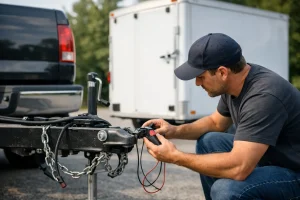
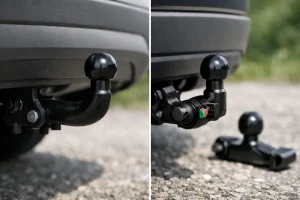
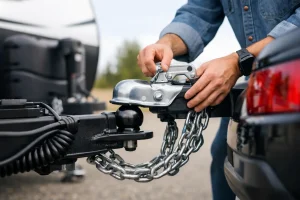
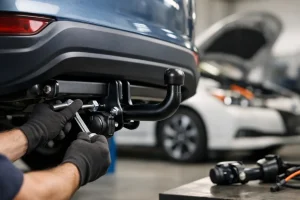
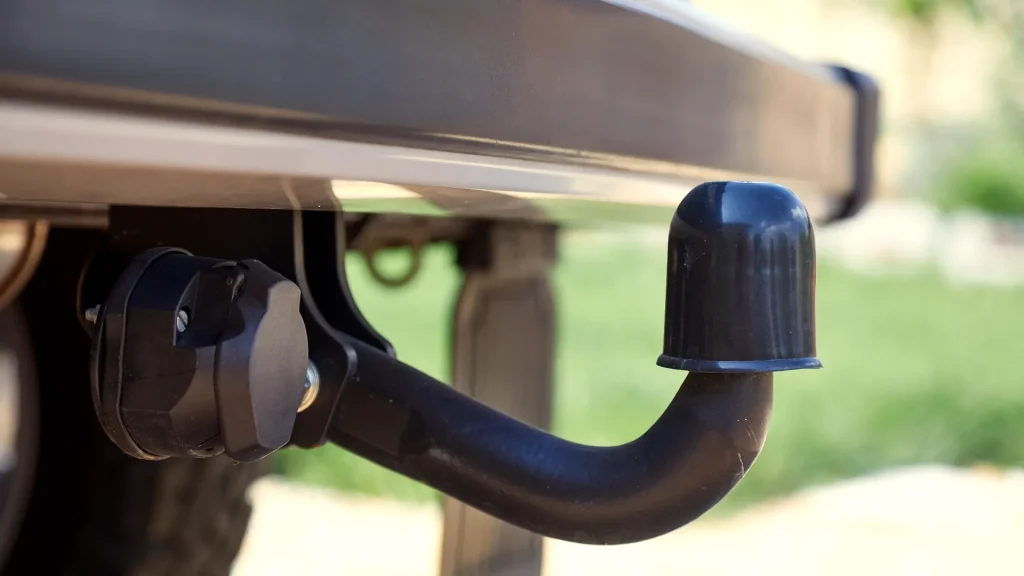
Wet weather can cause brake issues and checking everything before you go is crucial. Always check your tyres, towbar and trailer brakes to reduce the risk of an accident.
Wind
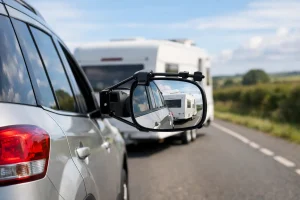
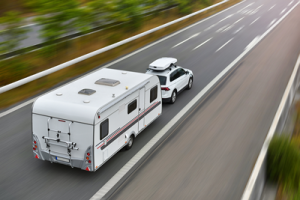
Strong winds can make towing a challenge and potentially dangerous. Crosswinds that blow across the road from one side to the other can push your towing vehicle and trailer off course.
This is more problematic when towing big trailers, caravans or boats. The added weight and size of the load can amplify the effects of crosswinds making it harder to handle.
Slow down and keep both hands on the wheel to counteract the effects of wind. If possible choose routes that are sheltered from the wind, through areas with trees or buildings.
In extreme wind conditions, it may be wise to postpone your journey until the weather improves.
Snow and Ice
Towing in snow and ice is one of the most dangerous situations a driver can face. Icy roads reduce the friction between your tyres and the road making it harder to stop or control your vehicle.
When towing, the added weight of the trailer or caravan can make your vehicle skid more easily especially on downhill slopes or sharp turns. You need to be extra cautious.
Before towing in winter weather, check your vehicle’s tyres for sufficient tread and ensure they are inflated correctly. Winter tyres can greatly improve your grip on snow and ice.
Allow more time to stop and be prepared for reduced visibility. Make sure your vehicle’s lights and windscreen wipers are in top condition to navigate through snow and ice.
Hot Weather
Hot weather might seem like a welcome relief compared to winter months but it can still affect your towing. The heat can strain your vehicle’s engine and braking system. Overheating is common when towing in hot weather especially if you’re towing a heavy load over a long distance.
The extra weight can make the engine work harder which can lead to overheating if you’re not careful.
To avoid overheating, make sure your vehicle’s cooling system is in top condition before towing in hot weather. Take regular breaks to let your vehicle and brakes cool down, especially on long journeys.
Also make sure your towing equipment, towbar and trailer are properly lubricated to prevent unnecessary friction and wear.
Fog or Heavy Rain
Visibility is a key factor when towing and weather conditions like fog or heavy rain can reduce your ability to see other road users and obstacles.
In fog, the distance you can see ahead can be reduced to just a few metres making it hard to judge stopping distances and react to hazards.
Heavy rain can similarly obscure your view and water on the windscreen can cause visibility problems even with your wipers at full speed.
To improve visibility in these conditions, make sure your headlights and fog lights are working correctly as these can help you see further ahead and make your vehicle more visible to others.
When towing, slow down and be cautious as you may need to stop suddenly. If the fog or rain is too severe, pull over to a safe location and wait for the weather to improve.
Conclusion
Weather can affect towing and knowing how to adjust to it is key to towing safely. From slowing down in the rain to being aware of strong winds and winter conditions, being prepared is everything.
Make sure your vehicle and towing equipment are in top condition and take extra care when driving in tough weather.
Follow these tips and you’ll tow safer and more comfortably whatever the weather.