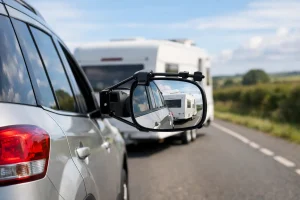
If you tow a caravan, boat, horsebox or builders’ trailer, you may have felt an unsettling sideways tug in the rear-view mirror. That motion is called trailer snaking—and when it escalates, it can turn a routine journey into a frightening emergency for you and everyone around you.
As towing specialists, Doncaster Towbars see first-hand how easily snaking incidents start, and how thoroughly they can be prevented with the right preparation. This guide explains the causes, the cures, and the expert help that keeps UK roads safer.
What Is Trailer Snaking?
Trailer snaking is the uncontrollable side-to-side sway that begins at the towed vehicle and quickly transfers to the car or van in front.
Mild wobble: a gentle, rhythmic sway that settles when you ease off the throttle.
Dangerous snaking: a violent fishtail that amplifies with every swing, making steering ineffective and risking a total loss of control.
Common Causes of Trailer Snaking
Improper load distribution: Heavy objects placed too far aft shift the centre of gravity behind the axle, turning the trailer into a counter-weight that pushes sideways.
High speed (over 55 mph / 90 km): Aerodynamic forces rise with the square of speed, magnifying any tiny sway.
Crosswinds & overtaking lorries: A sudden gust or pressure wave can start an oscillation your rig cannot damp quickly enough.
Incorrect tyre pressure / mis-alignment: Under-inflated or skewed wheels delay the trailer’s self-centring response.
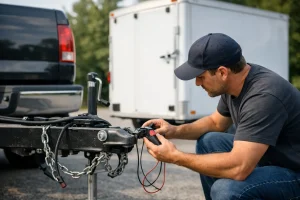
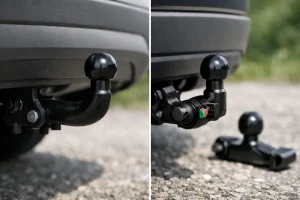
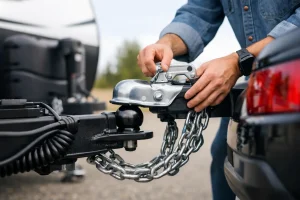
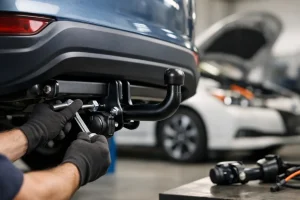
Unsuitable towbar or hitch: Too much play or an under-rated coupling invites lateral movement. See our towbar fitting services »
How to Prevent Trailer Snaking
Load correctly
Keep 60 % of the mass forward of the axle and as low and centred as possible.
Aim for 7–10 % nose weight on the towball.
Fit sway-control devices / stabiliser hitches
Friction-based or electronic stabilisers damp oscillations before they escalate.
Maintain tyres, bearings and brakes
Equal pressures and sound running gear keep the trailer tracking true.
Drive smoothly and reduce speed
Gentle throttle inputs and staying below 55 mph dramatically reduce risk.
Check equipment compatibility
Ensure your towbar, ball height and electrical connections are rated for your trailer.
Need help checking your set-up? Speak to our experts at Doncaster Towbars.
What to Do if Your Trailer Starts to Snake
Stay calm – do not stamp on the brakes.
Ease off the accelerator so the rig can decelerate smoothly.
Hold the steering wheel steady. Avoid sudden corrections that feed the swing.
Let speed fall gradually until the trailer regains line.
The Importance of Professional Towing Set-up
A properly fitted, correctly rated towbar is the anchor point that decides whether subtle forces are absorbed or magnified. Professional installers:
Match nose-weight limits, breakaway cable positions and electrics to your trailer.
Spot tyre-age, bush wear or chassis cracks that inexperienced eyes miss.
Balance caravan A-frame heights to prevent “rear sag” that destabilises handling.
Summary
Trailer snaking is preventable. Distribute weight sensibly, keep speeds modest, fit proven sway controls and maintain your equipment. Above all, a professional towbar installation brings peace of mind—so when you next hitch up, you’re ready for fun, not fiasco.
Avoid accidents—trust Doncaster Towbars for safe, expert towing solutions.