
You can have the strongest towbar on the car, but if the electrics are wrong, the whole setup falls short. Lights that do not work properly, warning systems that misbehave, or a trailer battery that never charges can turn a simple towing job into a real headache. That is why a proper guide to towbar electrics matters – not just for convenience, but for safety, legality and the way your vehicle performs once a trailer or caravan is connected.
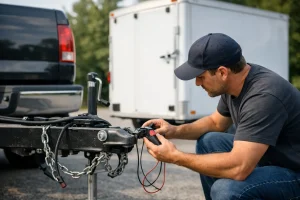
Towbar electrics are the wiring and socket system that links your vehicle to whatever you are towing. They allow the trailer or caravan to mirror the vehicle’s road lights and, in some setups, provide extra power for charging or running internal equipment. On older vehicles, that sounds fairly simple. On modern cars, vans and SUVs, it rarely is. Today’s vehicles use sensitive electronics, bulb failure monitoring, parking sensors, stability systems and manufacturer-specific software, so fitting towbar electrics properly is no longer just a case of joining a few wires together.
What towbar electrics actually do
At the most basic level, towbar electrics power the legal road lights on your trailer, bike carrier or caravan. That includes indicators, brake lights, tail lights, fog lights and number plate lights. If any of those are missing or unreliable, you are immediately into safety and compliance issues.
Some systems do more than that. Caravan electrics can also supply a permanent live feed and an ignition-switched feed. In practical terms, that can support battery charging, fridge operation or other 12V functions while travelling. If you only ever tow a small utility trailer, you may not need those extra functions. If you tow a caravan, horsebox or certain commercial trailers, they can be essential.
7-pin or 13-pin – which one do you need?
Any useful guide to towbar electrics has to start with the socket type, because this affects what your towing setup can actually do.
7-pin electrics
A 7-pin socket is the traditional option used on many small trailers, bike carriers and light-duty towing setups. It handles the basic road lighting functions and suits plenty of everyday trailer users. If you are occasionally towing a small trailer to the tip, transporting garden equipment, or using a simple goods trailer for work, 7-pin electrics may be all you need.
The trade-off is capability. A 7-pin system does not provide the additional power supplies needed for most caravans or more complex towing requirements.
13-pin electrics
A 13-pin socket is the modern standard for caravans and many newer trailers. It includes all the standard road light functions, but also supports extra power feeds and gives a more secure, weather-resistant connection. For regular towing, it is generally the more versatile option.
Even if you are not towing a caravan right now, some customers choose 13-pin electrics to future-proof the vehicle. That can be sensible, but it depends on how you use the car or van and whether the added functionality is likely to be needed.
Universal wiring or vehicle-specific wiring?
This is where many towing jobs either go right or go wrong.
Universal electrics
Universal wiring kits are designed to work across a wide range of vehicles. They can be suitable in some cases, particularly on older vehicles with simpler electrical systems. They are often seen as the cheaper route, but cheaper at the start does not always mean better value if the system causes faults, dashboard warnings or unreliable operation later on.
Vehicle-specific electrics
Vehicle-specific wiring kits are designed for a particular make and model. They integrate far better with the vehicle’s existing systems and are usually the best option for modern vehicles. Depending on the car, they may communicate properly with features such as trailer stability programmes, rear parking sensors, bulb monitoring and dashboard alerts.
That matters more than many drivers realise. If the electrics are not integrated correctly, you may end up with parking sensors beeping constantly when towing, warning lights on the dash, or safety features that do not respond as they should. On some vehicles, coding or programming is also needed after fitting so the car knows a trailer module has been installed.
Why modern vehicles need a proper installation
A lot of drivers assume towbar electrics are a straightforward add-on. In reality, modern vehicle wiring is often highly sensitive. Cars and vans now use control modules and multiplex systems that monitor current draw and communicate across the vehicle. Tapping into the wrong circuit can cause problems that go well beyond the towbar socket.
A proper installation takes account of how the manufacturer built the vehicle. That means correct power feeds, proper relay or bypass systems where required, secure earth points, careful routing and protection of cables, and software coding if the vehicle demands it. It also means testing every circuit once fitted, rather than assuming it will be fine because the plug is in place.
For tradespeople and van owners, reliability is the key issue. If a trailer is part of your working day, the electrics need to work every time without draining the battery, triggering faults or leaving you chasing intermittent lighting problems. For caravan owners, the stakes are just as high. A poor electrical connection can affect both road safety and the comfort features you rely on when travelling.
Common towbar electrics problems
When towbar electrics have been badly fitted, poorly maintained or damaged through use, the signs tend to show up quickly.
The most obvious issue is trailer lights not working correctly. That may mean one function has failed, such as an indicator or brake light, or that multiple lights are behaving oddly because of a poor earth or damaged socket. Corrosion is another common problem, especially on sockets exposed to year-round weather and road grime.
On newer vehicles, electrical faults are not always visible at the socket. Sometimes the first sign is a dashboard warning, parking sensor issue or a vehicle system that no longer behaves normally when towing. In other cases, customers find that caravan charging functions are not working, even though the road lights are.
These faults can have several causes. A cheap wiring kit, poor installation, water ingress, damaged pins, trailer-side faults or missing coding can all be part of the picture. That is why diagnosis matters. Replacing parts at random often wastes time and money.
Choosing the right setup for your towing needs
The best towbar electrics are not always the most expensive option. They are the setup that matches your vehicle, what you tow, and how often you tow it.
If you tow a small domestic trailer a few times a year, a basic lighting setup may be perfectly suitable. If you tow a caravan regularly, use a commercial trailer for work, or want factory-style integration with the vehicle’s safety systems, the specification needs to be higher. There is no point fitting a basic kit that leaves out functions you will depend on later.
This is also where professional advice pays off. The right answer depends on the exact vehicle and the trailer or caravan being used. A compact hatchback, a family SUV and a long-wheelbase van will not always require the same electrical approach, even if they are all towing legally within limits.
What a professional fitting should include
A proper towbar electrics installation should be tidy, tested and suited to the vehicle rather than adapted in the quickest possible way. In practical terms, that means secure cable routing, correct socket mounting, quality components and full testing of each lighting and power function.
Where the vehicle requires it, coding should be part of the job, not treated as an optional extra that can be ignored. The same goes for checking whether trailer stability support, fog light cut-off and parking sensor deactivation are working as intended.
At Doncaster Towbars, this hands-on approach is exactly what drivers need when they want towing equipment fitted properly the first time. It saves guesswork, helps protect the vehicle’s electrical system and gives you confidence that the car, van, trailer or caravan will work together as it should.
A guide to towbar electrics and long-term reliability
Once fitted, towbar electrics still benefit from a bit of attention. The socket should be kept clean, the flap should close properly, and any signs of corrosion or impact damage should be dealt with early. If a trailer develops a lighting fault, it is worth checking both sides of the connection rather than assuming the vehicle is always to blame.
For regular towing users, periodic inspections make sense. This is especially true for working trailers, caravans stored outdoors, or vehicles used through winter conditions where salt and moisture take their toll. A small electrical issue caught early is usually far easier to sort than a full wiring repair after months of neglect.
If you are planning a towbar fitting, upgrading an older setup or trying to solve a fault that keeps returning, the best next step is to match the electrics to the real job the vehicle needs to do. Get that part right, and towing becomes much simpler, safer and far less frustrating.