A trailer that starts to move independently of the towing vehicle can turn an ordinary journey into a stressful one very quickly. Learning how to improve trailer towing stability is not about adding one accessory and hoping for the best. It comes down to the whole towing setup: the vehicle, towbar, trailer, load, tyres and the way everything is used.
Whether you tow a caravan, box trailer, plant trailer, horse trailer or work equipment, stability should be checked before you leave the drive. A few practical checks can make a major difference to how confidently the outfit behaves on dual carriageways, uneven rural roads and in crosswinds.
Start with the right vehicle and towing equipment
A stable tow begins with a vehicle that is suitable for the trailer and the load you intend to carry. Check the vehicle handbook or manufacturer plate for its maximum braked and unbraked towing limits, maximum gross train weight and permitted towball noseweight. These figures are all different, and staying below the trailer’s plated maximum weight alone does not guarantee that the vehicle is operating within its limits.
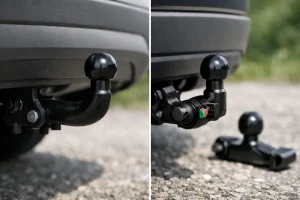
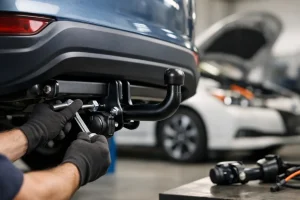
The towbar must also be correctly rated for the vehicle and towing task. A properly fitted, vehicle-specific towbar gives the trailer a secure mounting point and maintains the intended geometry at the rear of the vehicle. Avoid assumptions based on what a similar-looking vehicle can tow. Kerb weight, engine specification, transmission type and factory options can all affect towing limits.
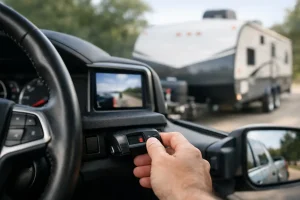
Trailer electrics matter as much as the mechanical connection. Working indicators, brake lights, tail lights and fog light are essential for safe, legal towing. On modern vehicles, vehicle-specific wiring is often the sensible choice because it is designed to communicate correctly with the car’s electrical system and may support functions such as trailer stability control, where fitted by the manufacturer.
Get loading right before every journey
Poor loading is one of the most common causes of trailer instability. A trailer loaded heavily at the rear can reduce the weight on the towball and encourage snaking. Once a trailer begins to sway, the movement can rapidly build, particularly at speed or when passing a lorry.
Aim to place the heaviest items low down and close to the trailer axle, with a sensible amount of weight forward of the axle to create positive noseweight. Do not place all the weight at the very front, though. Excessive noseweight can overload the vehicle’s rear axle, towbar or towball limit, lift weight from the front wheels and affect steering and braking.
The correct noseweight is the lowest of three limits: the vehicle’s maximum permitted noseweight, the towbar’s stated limit and the trailer coupling limit. Use a proper noseweight gauge or suitable measuring device rather than judging it by eye. The trailer should sit broadly level when coupled. If it slopes sharply down at the front or rear, reassess the load, hitch height or both.
Secure every item properly. A load that shifts during braking, cornering or over potholes changes the trailer’s balance without warning. Use rated straps, anchor points and, where appropriate, load restraints that are suitable for the weight and type of cargo. Loose tools, timber, machinery and camping equipment can all become a stability issue.
Do not forget the trailer’s own weight limits
Check the trailer’s maximum authorised mass and ensure the combined weight of the trailer and load does not exceed it. If you use a commercial trailer, consider the weight of added sides, ramps, toolboxes, spare wheels and accessories. They all count.
For caravans and enclosed trailers, distribute contents across the available space rather than filling rear lockers with heavy items. Water containers, gas bottles and generators need particular thought because their weight is concentrated.
Check tyres, wheels and running gear
Tyres are a frequent weak point on trailers that spend long periods parked up. Tread depth is only part of the picture. Look for cracking in the sidewalls, bulges, cuts, uneven wear and signs of ageing. Trailer tyres can deteriorate with age and sunlight even if they have covered very few miles.
Set tyre pressures when the tyres are cold and use the pressures specified by the trailer manufacturer or tyre supplier for the load being carried. Under-inflated tyres allow extra sidewall movement and can make a trailer feel unsettled. Over-inflation can reduce grip and cause uneven wear. Check the towing vehicle tyres too, as rear tyre pressures may need adjusting for towing according to the vehicle handbook.
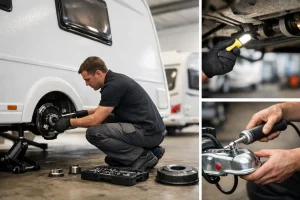
Wheel bearings, brakes, suspension components, hubs and couplings should be inspected and serviced at suitable intervals. A worn bearing, dragging brake or damaged suspension unit may not be obvious at low speed, but it can affect how a trailer tracks at road speed. Before a longer trip, check that wheel nuts are tightened to the manufacturer’s specified torque and that the wheels rotate freely where safe to do so.
Couple up carefully and complete the safety checks
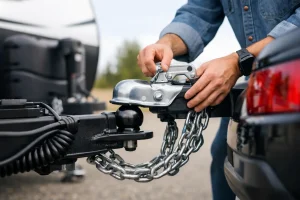
A rushed hitch-up can undermine every other preparation. Make sure the coupling is fully engaged on the towball and that the hitch indicator, if fitted, confirms a secure connection. Raise the jockey wheel fully, secure it correctly and check that any breakaway cable is attached to the designated attachment point on the towing vehicle or towbar as instructed.
The breakaway cable should not be looped around the towball neck unless the towbar manufacturer specifically permits it. It must have enough slack for full turns without dragging on the road or becoming tangled, but not so much that it can catch.
Before setting off, walk around the outfit. Check lights, number plate visibility, load security, tyre condition, coupling engagement and trailer doors or ramps. Make sure the trailer handbrake is fully released. It is a simple routine, but it catches problems before they become roadside delays.
How to improve trailer towing stability on the road
Even a well-prepared trailer needs the right driving approach. Allow more room for braking, take corners steadily and make all inputs gradual. Sudden steering, harsh braking and rapid acceleration can unsettle the trailer, especially when it is lightly loaded or affected by wind.
Keep to the relevant towing speed limits and drive below them when conditions call for it. Rain, standing water, gusting winds, poor road surfaces and passing heavy vehicles all justify a calmer pace. Stability is not improved by travelling faster to ‘pull through’ a wobble.
If the trailer starts to snake, keep both hands on the steering wheel, hold a straight course and ease off the accelerator smoothly. Do not brake sharply and do not try to steer aggressively against the movement. Allow the speed to reduce gradually until the trailer settles, then stop in a safe place and investigate the cause. Check the loading, noseweight, tyre pressures and whether anything has shifted.
Use towing aids for the job, not as a substitute for setup
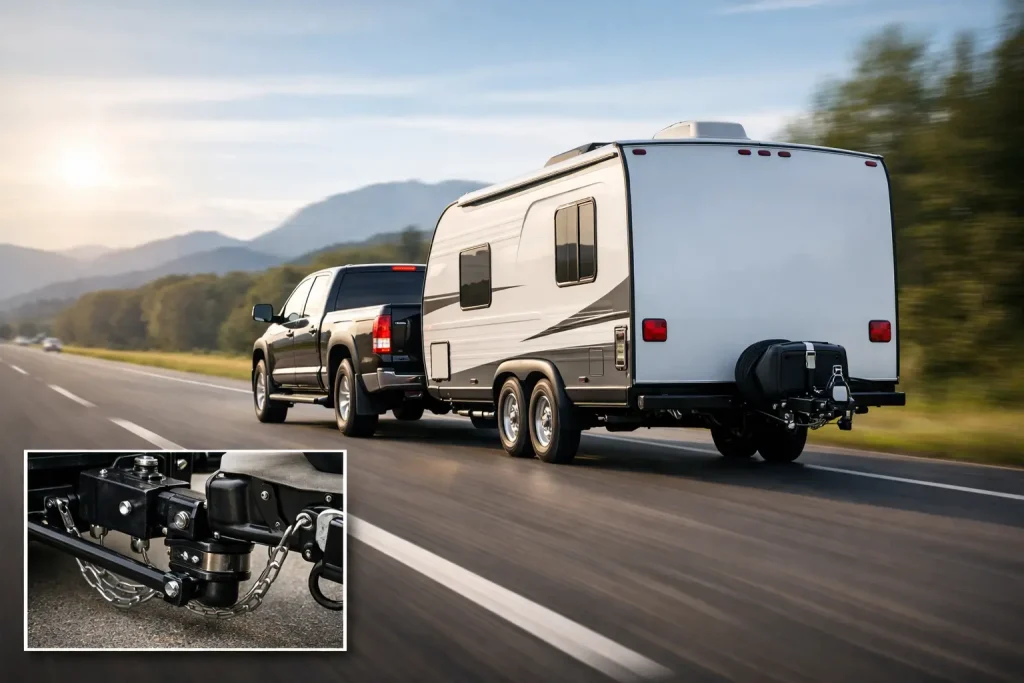
Some caravans and trailers benefit from stabiliser couplings, friction stabilisers or electronic trailer stability systems. These can help reduce minor sway and improve confidence, but they cannot make an overloaded, badly balanced or poorly maintained trailer safe.
A stabiliser coupling needs clean, dry friction pads and a compatible towball. If the ball has been greased, painted or contaminated, the stabiliser may not work as intended. Ask for advice before fitting or using any towing aid, particularly if you change trailers or tow with more than one vehicle.
Book professional help when something does not feel right
If your trailer pulls to one side, bounces excessively, brakes unevenly, makes unusual noises or has begun to feel less stable than usual, do not ignore it. These symptoms can point to issues with tyres, bearings, brakes, suspension, alignment, loading or the towing vehicle itself.
A professional inspection is particularly worthwhile before a holiday, a long-distance collection, regular commercial work or towing a newly purchased trailer for the first time. At Doncaster Towbars, the team can help assess towbar suitability, trailer electrics and practical trailer condition so you can tow with greater confidence. A stable trailer is built through careful preparation, and that preparation is best done before the road gives you a reason to regret it.