A trailer that rolls freely on the drive can still cause problems once it is loaded and travelling at speed. Knowing how to test trailer brakes before every trip helps you spot dragging brakes, weak braking, damaged cables and electrical faults before they become a safety issue on the road.
For most UK caravans and braked trailers, the brakes operate through an overrun coupling. When the towing vehicle slows, the trailer pushes forward against the coupling, which pulls the brake linkage. Some specialist trailers use electric brakes, so the checks are slightly different. Either way, a quick inspection and controlled test are time well spent.
How to Test Trailer Brakes Before Setting Off
Start on level, firm ground with the trailer uncoupled, unloaded where possible, and the handbrake applied. Put the tow vehicle in park or in gear with its parking brake on before working around the hitch area. Never rely on a jack alone if you need to lift a wheel – use suitable axle stands and keep clear of the trailer’s underside.
Check the coupling, handbrake and brake linkage
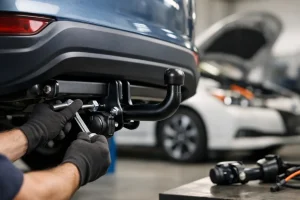
Look closely at the overrun coupling at the front of the drawbar. The sliding section should move in and out smoothly without excessive looseness, corrosion or sticking. A seized coupling can prevent the brakes applying properly, while one that does not return freely may leave the brakes partially on after you accelerate.
Release the trailer handbrake and push the coupling in by hand, if the design allows it. You should feel firm, progressive resistance as the brake mechanism begins to operate. It should return when released. A completely soft movement, a clunking action or a coupling that stays compressed needs further investigation.
Then apply the trailer handbrake fully. On a correctly functioning braked trailer, it should hold the trailer against a gentle attempt to move it by hand. Do not use force or try to drag it with the car. The point is to confirm that the linkage is applying the brakes, not to strain the system.
Check underneath and along the axle area for damaged brake rods, loose cables, split outer cable sleeves or missing clips. Cables should be secure and protected from rubbing on the chassis. Rust is common on trailers that are stored outdoors, but heavy corrosion around moving brake parts is not something to ignore.
Inspect the breakaway cable
The breakaway cable is a vital safety device on most braked trailers. It applies the trailer brakes if the trailer separates from the towing vehicle. Check that it is not frayed, kinked, stretched or corroded, and that its spring clip is in good condition.
When hitched, the cable must be attached to the designated breakaway point on the towbar, following the trailer manufacturer’s instructions. It should have enough slack for full turns without dragging on the road or becoming tight on corners. Do not loop it around the towball unless the towbar manufacturer specifically permits that arrangement.
Do not pull the breakaway cable as a routine test. Once activated, it can lock the brakes on and may require the mechanism to be reset. If you suspect it is faulty, have it checked during a trailer service rather than risking damage or an accidental brake application.
Test each wheel for drag and free movement
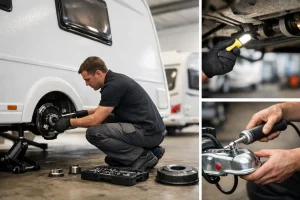
With the handbrake released and the trailer safely supported if it needs lifting, turn each wheel by hand. A slight brushing sound from the brake shoes can be normal on some drum-braked trailers, but the wheel should rotate without a heavy bind.
Compare one side with the other. If one wheel is much harder to turn, the likely causes include a seized cable, a sticking expander mechanism, contaminated brake shoes or a worn wheel bearing. A wheel that spins unusually freely while the other side has clear resistance can also indicate that one brake is not doing its share of the work.
After applying and releasing the handbrake, turn the wheels again. They should release fully. If a wheel remains tight, do not tow until the cause has been found. Dragging brakes can overheat quickly, damage tyres and bearings, and make the trailer unstable under braking.
Carry Out a Low-Speed Brake Test
A static inspection tells you whether the parts appear to work. A low-speed test confirms how the trailer behaves under load. Choose a quiet, level private area or other safe location where you can stop gradually without affecting other road users.
With the trailer correctly coupled, the jockey wheel raised, lights connected and the load secured, pull away gently. At walking pace, apply the vehicle brakes progressively. You should feel the trailer settle smoothly behind the vehicle, without a sharp bang through the hitch, pulling to one side or a pronounced shove from behind.
Repeat at a low speed with a firmer but controlled stop. An overrun-braked trailer will usually compress slightly as it applies its brakes, but it should not slam into the tow vehicle. Knocking, jolting or a noticeable delay before the trailer begins to brake can point to wear in the coupling, excessive linkage adjustment or brake components that need servicing.
Pay attention after the stop as well. The trailer should roll away freely when you pull forward. If it feels held back, stop and check for a hot smell, smoke or a wheel that is noticeably hotter than the others. Do not touch a hot hub or brake drum directly. Let it cool and arrange an inspection.
What to check on electric trailer brakes
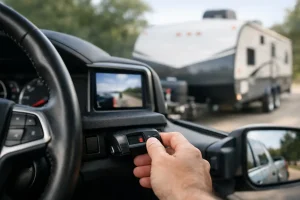
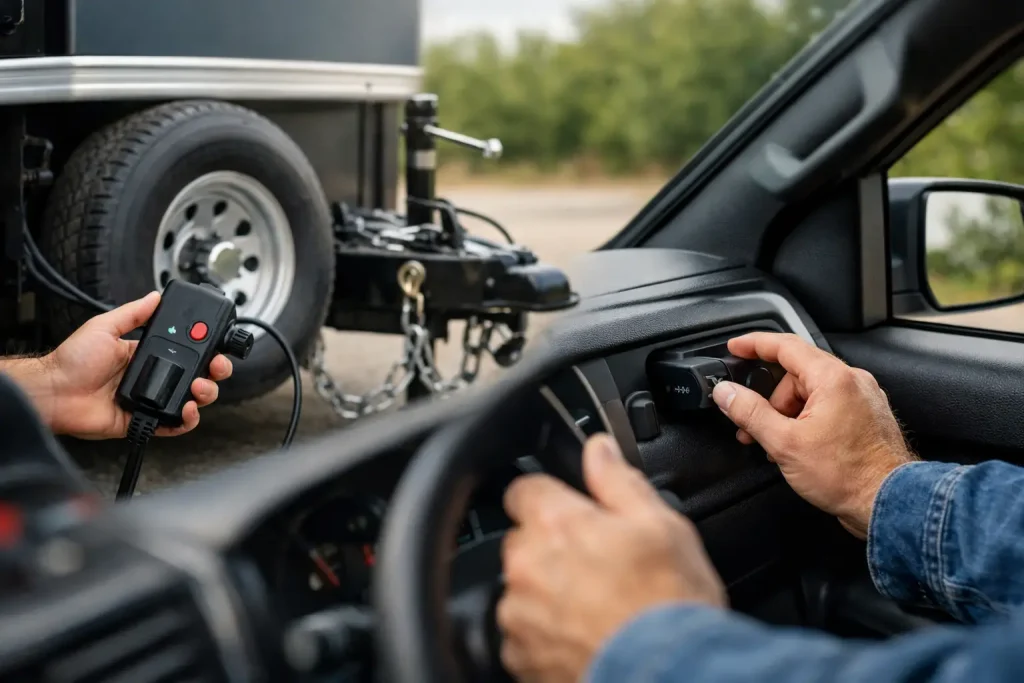
Electric trailer brakes are less common on standard UK trailers, but they are fitted to some imported, commercial and specialist setups. These systems use a brake controller in the tow vehicle, a suitable electrical connection and magnets within the trailer brake assemblies.
First, check that the controller powers up and recognises that a trailer is connected. Follow the controller manufacturer’s procedure to use its manual override at very low speed. You should feel the trailer brakes apply smoothly and proportionately. Start with a low gain setting, then increase it gradually if the trailer is not contributing enough braking effort.
Too much gain can make the trailer wheels lock, particularly when the trailer is empty or the road is wet. Too little gain leaves the tow vehicle doing most of the work. Check the plug, socket and cable for corrosion, loose pins and damage, as an intermittent earth connection can cause inconsistent braking.
Signs Your Trailer Brakes Need Attention
Do not assume a trailer is safe simply because the lights work and the tyres look sound. Brake problems often develop gradually, particularly on trailers used seasonally or left standing for months. Arrange a professional inspection if you notice any of the following:
- The trailer pushes the towing vehicle when braking or bangs through the hitch.
- One wheel runs hot, smells burnt or appears to be dragging.
- The handbrake has excessive travel or will not hold the trailer.
- The overrun coupling sticks, leaks grease excessively or fails to return.
- Brake cables are frayed, seized, stretched or badly corroded.
- The trailer pulls to one side or feels unstable under braking.
Brake adjustment is not always a simple cable-tightening job. On many drum-braked trailers, the brake shoes and adjusters need to be set correctly before the linkage is adjusted. Tightening a cable to compensate for worn shoes can leave the brakes dragging and still produce poor braking performance. The right repair depends on the condition of the coupling, cables, shoes, drums and bearings.
Make Brake Checks Part of Your Towing Routine
A quick brake check should sit alongside checking tyre pressures, wheel nuts, lights, load security and the towing hitch. It is especially worthwhile before a caravan holiday, a tip run with a loaded trailer, or a work trip where a van and trailer are carrying tools or machinery.
For a trailer that has been parked through winter, allow extra time. Brake shoes can stick to drums, cables can seize and couplings can stiffen while standing. A test the day before travelling gives you time to deal with a fault properly rather than discovering it on the motorway.
If the brakes feel wrong, trust that warning and stop using the trailer until it has been assessed. Doncaster Towbars can inspect trailer braking systems, identify faults and carry out practical repairs and servicing, so you can set off knowing the trailer is working with your vehicle rather than against it.