A small hatchback with a towbar on the back can look ready for anything. That does not mean it should be pulling a loaded trailer, a caravan, or even a pair of motorbikes. If you are asking can any car tow, the honest answer is no – and the reasons matter for safety, legality, and how well your vehicle copes on the road.
Towing is not just about whether a towbar can be fitted. It starts with the vehicle manufacturer’s limits, the weight of what you plan to tow, and whether the car’s braking, suspension, transmission and electrics are suited to the job. Get that right and towing can be safe and straightforward. Get it wrong and you can end up with poor handling, excess wear, or a setup that is not legal.
Can any car tow legally and safely?
Some cars are built with clear towing capacity figures from the factory. Others are not approved for towing at all. That is the first thing to understand. If the manufacturer has not given the car a towing limit, then fitting a towbar does not magically create one.
This catches people out, especially with smaller cars and some electric vehicles. A vehicle may have enough physical strength to pull a light trailer around a yard, but road towing is a different matter. It has to be approved, correctly equipped and within stated limits.
In practical terms, a car needs more than engine power to tow properly. It needs the right chassis strength, cooling capacity, braking performance and stability. A strong engine on its own is not enough. That is why two cars with similar horsepower can have very different towing capacities.
What decides whether a car can tow?
The biggest factor is the manufacturer’s towing limit. This is usually shown as a braked towing capacity and, where applicable, an unbraked towing capacity. A braked trailer has its own braking system. An unbraked trailer does not, so the allowed weight is much lower.
You also need to look at the gross train weight, which is the maximum combined weight of the car and trailer together. Even if the trailer is within towing capacity, the full loaded combination still needs to stay within the vehicle’s legal limit.
Then there is noseweight. This is the downward force the trailer puts on the towball. Too little and the trailer can become unstable. Too much and you can overload the rear of the vehicle, affecting steering and braking.
A proper towing setup is always a balancing act. The car, the towbar, the trailer, the load inside it and the electrics all have to work together.
Engine size does not tell the full story
Many drivers assume a bigger engine means better towing. Sometimes it does, but not always. A diesel estate may tow more confidently than a petrol hatchback with similar power because of torque delivery, gearing and chassis design. Equally, a large premium saloon might not be as practical for frequent towing as an SUV or van designed with heavier loads in mind.
Transmission also plays a part. Some automatic gearboxes are well suited to towing, while others have stricter limits. Certain hybrid and electric models need especially careful checking because towing approval varies a lot between vehicles.
Vehicle age and condition matter too
A car might be rated to tow on paper but still not be in suitable condition to do it safely. Worn suspension, tired brakes, poor tyres or electrical faults can all turn a legal towing setup into an unsafe one.
That is one reason professional fitting and inspection are so important. The towbar itself is only part of the job. The vehicle has to be up to the task as well.
Can any car tow a trailer, caravan or bike rack?
This is where the answer often becomes, it depends. A light domestic trailer for garden waste places very different demands on a car than a touring caravan. A cycle carrier mounted on a towbar is different again because it affects noseweight but does not involve a rolling trailer behind the vehicle.
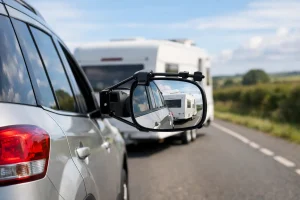
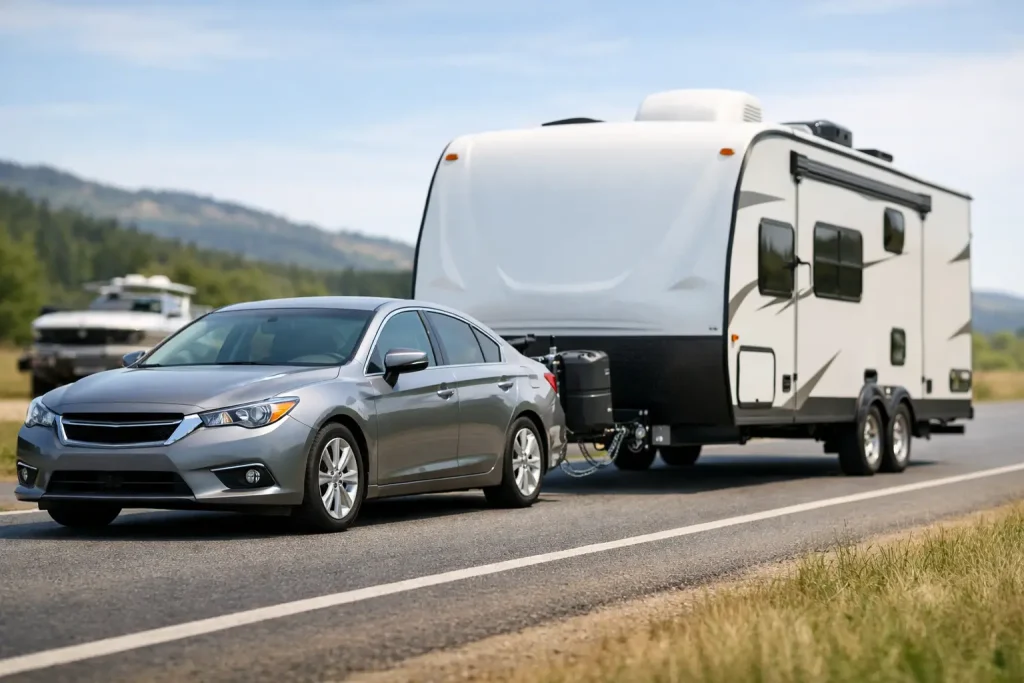
A compact car may be perfectly suitable for a small box trailer or a lightweight camping trailer, provided the weights are correct. The same car may be wholly unsuitable for towing a family caravan. A van, pick-up or SUV will generally offer more headroom in towing capacity, but even then the exact model and specification matter.
If you only plan to tow occasionally, it is still worth getting the setup checked properly rather than guessing. The mistake many owners make is looking only at what the car can pull, not what it can pull comfortably and safely over real roads, hills, roundabouts and wet conditions.
The towbar and electrics have to match the vehicle
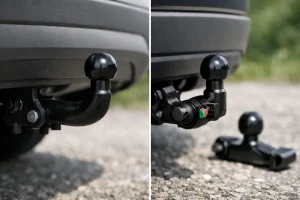
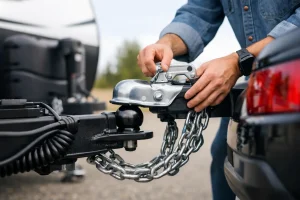
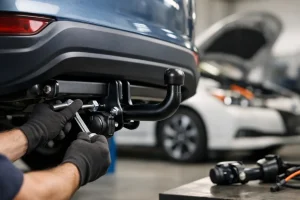
Even when the car is approved for towing, the fitting has to be right. Towbars are not one-size-fits-all. They need to match the vehicle properly, fit securely to the correct mounting points and provide the right towing capacity for that model.
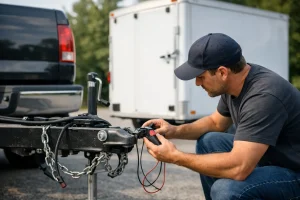
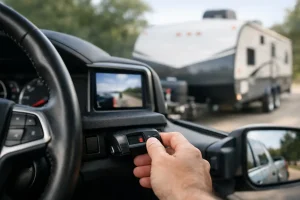
The electrics matter just as much. Modern vehicles often need vehicle-specific wiring and coding so the trailer lights work correctly and the car’s systems respond as they should. On many vehicles, this can affect parking sensors, stability control and dashboard warnings.
A poor-quality installation can create faults that are frustrating at best and dangerous at worst. That is why towing equipment should be fitted with the same care as any other safety-critical vehicle system.
Common cases where a car should not tow
There are a few situations where towing should raise an immediate red flag. One is when the manufacturer does not state a towing limit. Another is when the intended trailer weight is close to or over the vehicle’s maximum. A third is when the car has known issues with clutch wear, overheating or rear suspension sag under load.
Low-powered city cars, some EVs, and cars with limited cooling or light-duty transmissions often fall into this category. That does not make them bad vehicles. It simply means they were designed for a different job.
There is also the question of driver confidence. A legal towing setup is not always a pleasant one to use. If the car feels unsettled by crosswinds, struggles on inclines or becomes vague under braking, it may technically tow, but it may not be the right tow car for regular use.
What to check before you assume your car can tow
Start with the VIN plate and handbook. These will usually help confirm train weight and towing data. If the car has no listed towing capacity, that is your answer straight away.
Next, think about what you actually want to tow. Not just the empty trailer weight, but the real loaded weight. A small trailer can become much heavier once tools, machinery, camping kit or stock are added.
After that, consider how often you will tow and under what conditions. Occasional short local runs are one thing. Regular motorway towing, site work, holiday trips and steep routes are another. The more demanding the use, the more important vehicle choice becomes.
Finally, get advice from a specialist who fits towing equipment day in, day out. A proper check can save you from buying the wrong towbar, overloading your car or ending up with electrics that do not communicate properly with the vehicle.
If your car can tow, can it tow well?
That is the better question for most drivers. Plenty of cars can tow on paper. Fewer do it with real stability, comfort and confidence. Wheelbase, kerb weight, suspension design and braking feel all influence how composed a vehicle is when towing.
For caravan users, this is especially important. A heavier, more stable tow car generally inspires more confidence than a lighter car working near its upper limit. For tradespeople towing equipment trailers, durability and daily practicality may matter more than headline figures alone.
This is why tailored advice is worth having. The right answer is not simply whether a towbar can be fitted. It is whether the full towing setup suits the work you need it to do.
If you are unsure whether your vehicle is suitable, a specialist can check the towing limits, recommend the correct towbar and electrics, and explain any compromises before anything is fitted. For drivers around Doncaster and the wider area, that kind of hands-on guidance makes the difference between a setup that merely works and one you can rely on every time you hitch up.
The safest towing decisions usually start with a simple question and a proper check. If you are wondering can any car tow, treat it as the start of the conversation, not the end of it.