You usually notice trailer light faults at the worst possible moment – just before an early start, in the rain, or when you are already hitched up and ready to leave. If you have been asking why are trailer lights failing, the answer is rarely just one thing. In most cases, it comes down to a fault somewhere between the vehicle socket, the trailer plug, the wiring loom, the lamp units, or the earth return.
Trailer lighting systems are simple in principle, but they live a hard life. They are exposed to road spray, corrosion, vibration, knocks, poor storage conditions and the occasional rushed repair. A light that works one week and fails the next is often a sign of a weak point that has been building for some time rather than a sudden mystery fault.
Why are trailer lights failing on otherwise sound trailers?
A trailer can look tidy, tow well and still have unreliable electrics. Lighting faults do not always mean the whole trailer is in poor condition. Often, the problem is a small electrical issue made worse by moisture or movement. That is why these faults can seem inconsistent – brake lights work but indicators do not, one side flickers, or everything fails until the plug is wiggled.
The most common cause is a poor connection. That could be inside the trailer plug, in the vehicle socket, at a lamp fitting or at an earth point. Even a small amount of corrosion on a terminal can increase resistance enough to cause dim lamps, intermittent operation or complete failure.
Another regular issue is damaged cable. Trailer wiring runs underneath and around moving parts, so it can be trapped, stretched, rubbed through or cut. On older trailers, insulation becomes brittle. On working trailers used by tradespeople and small businesses, wiring often takes more abuse simply because the trailer sees more mileage, more loading and more outdoor storage.
The earth connection causes more problems than people expect
If there is one fault worth checking early, it is the earth. A bad earth creates all sorts of odd behaviour. You might press the brake and see a tail lamp glow faintly, or the indicators might flash too quickly, too slowly or not at all. Sometimes one circuit tries to earth back through another lamp, which is why multiple lights can behave strangely at the same time.
Earth problems are common because the connection point is vulnerable to corrosion, loose fixings and damp. On some trailers, previous repairs leave earth wires joined badly or attached to painted or rusty metal. The result is an unreliable return path.
A proper repair means cleaning the contact point back to sound metal, securing it correctly and protecting it from future corrosion. Simply tightening an already corroded connection may get the lights working for now, but it often will not last.
Plugs and sockets take a lot of punishment
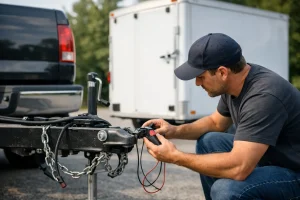
The plug and socket are the first places many technicians inspect, and for good reason. They sit low, get wet, collect dirt and are constantly handled. Pins can corrode, bend or loosen. The cable entering the plug can also break internally from repeated flexing, especially if the lead has been dragged, kinked or trapped.
With 7-pin and 13-pin systems alike, poor contact at the plug can create intermittent faults that are difficult to trace unless tested carefully. A trailer may appear faulty when the real issue is the vehicle socket. Equally, the socket may be perfectly fine and the problem sits in the trailer plug itself.
This is where proper diagnosis matters. Swapping parts blindly can waste time and money. Testing the vehicle electrics and the trailer separately is usually the quickest route to the real fault.
Why are trailer lights failing after rain or washing?
Water ingress is one of the biggest reasons trailer lights fail without warning. Once moisture gets into a plug, lamp unit, junction box or cable join, corrosion follows. That corrosion might not stop the lights immediately, but it gradually weakens the system until faults start appearing.
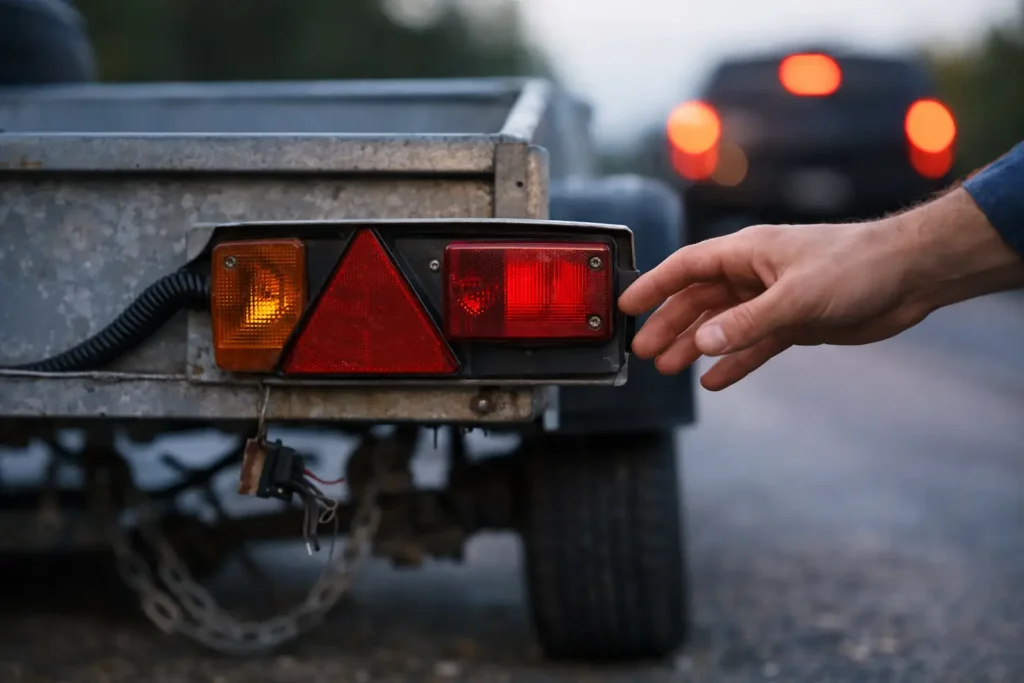
Lamp housings are especially prone if seals are tired or cracked. The trailer may still be roadworthy in every other respect, but if water sits inside the unit, bulb holders and terminals soon suffer. LED units are often more durable than older bulb-type lamps, though they are not immune if the wiring connections feeding them are poor.
Rain can also expose faults that already existed. A slightly damaged cable or loose terminal may work in dry weather and fail as soon as moisture creates a better path for current to leak where it should not.
Bulbs, lamp units and simple wear still matter
Not every lighting problem is complicated. Sometimes a bulb has simply failed. Filament bulbs wear out, and on trailers that spend a lot of time bouncing over uneven roads, vibration shortens bulb life further. If the same bulb keeps failing, though, there is usually another cause behind it, such as water ingress, poor voltage supply or a loose fitting.
Lamp units themselves also age. Plastic becomes brittle, seals deteriorate and internal contacts corrode. A cracked lens or damaged housing may seem minor, but it often leads to bigger electrical trouble later.
With older trailers, replacing individual parts can become a false economy if several components are already tired. In that case, a more thorough electrical refresh may be the smarter long-term fix.
Modern vehicles can complicate trailer electrics
If your trailer lights have started failing after changing vehicle, the trailer might not be the only suspect. Modern vehicles often use more advanced towing electrics, control modules and bulb monitoring systems. If the towbar wiring has not been fitted correctly, or if a bypass relay or dedicated kit is faulty, the trailer lights may behave unpredictably.
This is particularly relevant on newer cars, SUVs and vans where vehicle-specific electrics matter. Generic wiring methods that worked years ago do not always suit modern systems. You may get warning messages on the dash, non-functioning circuits or trailer recognition issues.
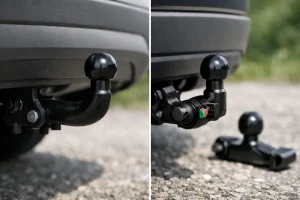
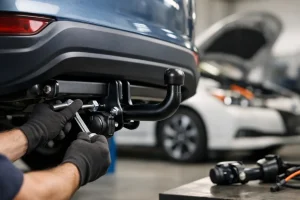
That is one reason professional towbar electrics fitting is worth doing properly from the start. A poor installation can create repeat faults that look like trailer problems but actually begin at the vehicle.
Faults caused by previous repairs
A lot of trailer lighting issues can be traced back to earlier repairs that were quick rather than correct. Twisted wires wrapped in tape, mismatched cable colours, poor crimping, household connectors and badly sealed joins all lead to trouble. They may hold for a while, but trailers operate in conditions that expose weak workmanship quickly.
The challenge is that once a loom has been altered several times, fault-finding takes longer. Colour codes may no longer match the standard layout. Hidden joins may be corroding inside the insulation. What looks like a lamp fault can turn out to be an old repair buried further up the cable run.
For that reason, there are times when replacing a section of loom is more sensible than patching one more break.
How to approach trailer light faults properly
The best way to deal with lighting faults is methodically. Start by separating the vehicle from the trailer. Test the socket output, inspect the plug, then move through the trailer wiring circuit by circuit. Check the earth early, because it influences everything else.
Visual checks help, but they are not enough on their own. A terminal can look acceptable and still have poor continuity. Proper testing with the right equipment gives a clearer picture than guessing. It also helps identify whether the issue is constant or only appears when the cable is moved, when brakes are applied, or when multiple lights are used together.
For owners who tow regularly, routine checks make a real difference. Inspect the plug for corrosion, keep contacts clean, look for cable damage and do not ignore flickering lights just because they start working again. Intermittent faults usually come back, often at the least convenient time.
If you use a caravan, plant trailer, horsebox or work trailer, regular servicing is the sensible option. Lighting is not just a convenience. It is a legal and safety requirement, and unreliable electrics can quickly turn into a roadside problem.
At Doncaster Towbars, we regularly see lighting issues that started as a minor annoyance and ended up needing more involved repairs because they were left too long. The upside is that most faults are fixable once the real cause is identified.
If your trailer lights are playing up, the main thing is not to treat it as guesswork. A sound plug, solid earth, protected wiring and correctly fitted electrics make all the difference. Get the fault checked properly, get it repaired properly, and you will spend less time chasing the same problem every few weeks.