A trailer rarely gives you much warning before a problem becomes obvious. One worn tyre, one weak light connection or one dry bearing can turn a routine journey into a breakdown on the roadside. That is why a proper trailer servicing checklist matters. It helps you catch the small faults before they become expensive, inconvenient or unsafe.
For anyone towing a general-purpose trailer, plant trailer, box trailer or caravan trailer, servicing is not just about keeping things tidy. It is about road safety, legal compliance and protecting the load behind you. If you use your trailer for work, regular checks also reduce downtime, missed jobs and wear on the towing vehicle.
What a trailer servicing checklist should cover
A good trailer servicing checklist is more than a quick walk around with a tyre gauge. It should cover the parts that affect braking, stability, visibility and load security, along with the components that quietly wear out over time.
The key areas are the tyres, wheels, brakes, bearings, suspension, coupling, jockey wheel, electrics, lighting, chassis and body condition. You also need to look at cables, breakaway systems, hinges, ramps and any moving parts that are exposed to weather and road grime. On some trailers, especially those used less often, corrosion and neglect are as much of a problem as mileage.
The exact service requirements depend on the type of trailer and how it is used. A small domestic trailer used for tip runs a few times a year will age differently from a trade trailer used daily with heavy loads. A horsebox or caravan may do fewer miles but still needs close attention because standing still can be hard on tyres, brakes and seals.
Start with tyres, wheels and wheel fixings
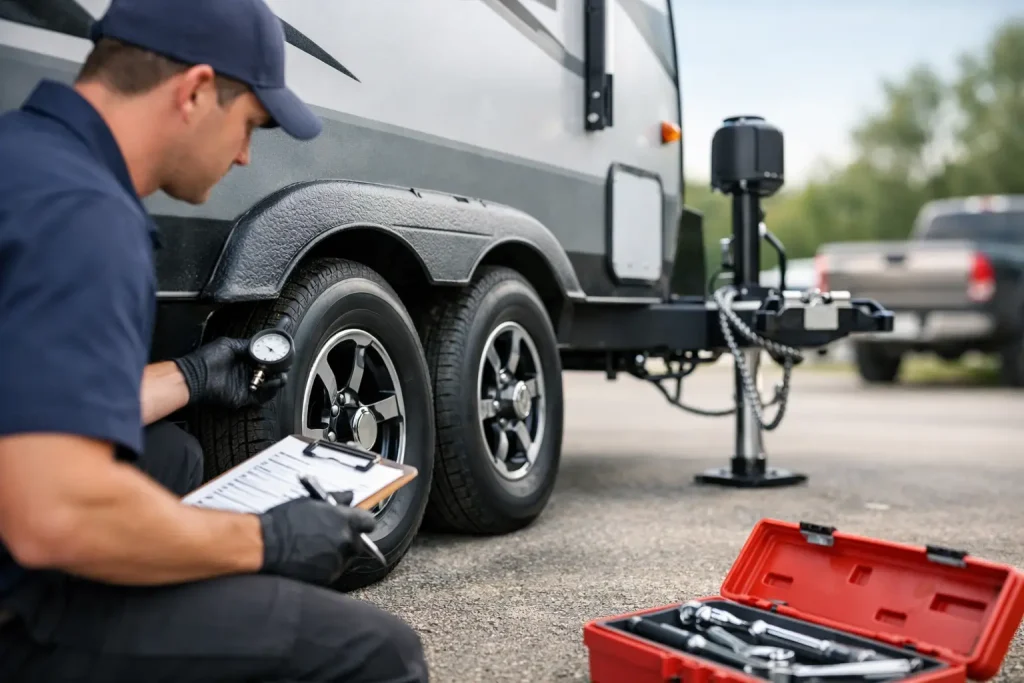
Tyres are often the first thing owners notice, but not always the first thing they inspect properly. Tread depth matters, but so do sidewall cracks, uneven wear, flat spots and age. A trailer tyre can look fine at a glance and still be unsafe if the rubber has perished or the load rating is wrong.
Check pressures when the tyres are cold and set them to the trailer manufacturer’s recommendation. Underinflation can make a trailer unstable and increase heat build-up, while overinflation can reduce grip and wear the centre of the tread. If one tyre is wearing more quickly than the others, that may point to an axle, suspension or bearing issue rather than just a tyre problem.
Wheels should also be checked for damage, corrosion and secure fixings. Loose wheel nuts are a serious risk, particularly after wheel removal or replacement. If you have recently had tyres changed, it is sensible to recheck torque after a short period of use.
Brakes and bearings need more than a glance
Trailer brakes are easy to ignore until they drag, snatch or stop working as they should. A full service should include inspection of brake shoes, drums, cables, linkages and adjustment. If the braking feels uneven or the trailer pulls oddly under deceleration, that needs attention sooner rather than later.
Bearings are just as important. They should run smoothly, without noise, play or overheating. A failing bearing can damage the hub and leave the trailer unusable with little notice. Grease condition, seal condition and correct adjustment all matter here. With trailers that are regularly immersed, such as boat trailers, bearing care becomes even more important because water contamination shortens component life quickly.
Coupling, hitch head and breakaway cable
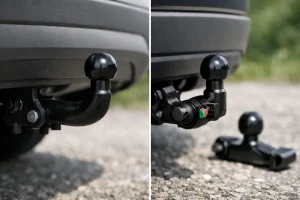
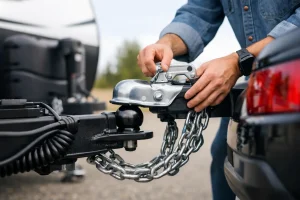
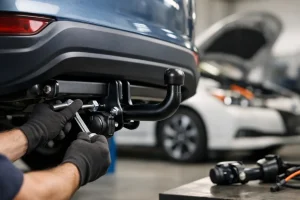
The coupling is the direct connection between trailer and towing vehicle, so there is no room for guesswork. The hitch head should engage securely on the towball, with no signs of excessive wear, cracking or poor operation. If the coupling is stiff, loose or unreliable, it needs proper inspection.
The breakaway cable or secondary coupling should also be checked for wear, fraying and correct attachment. This is one of those small items that is easy to overlook, yet it plays a key role if the trailer becomes detached. Jockey wheels, clamps and corner steadies should move freely and lock securely as well.
If your trailer has a security hitch lock or additional coupling hardware, that should be examined too. Extra accessories are useful, but only if they fit and function correctly.
Lighting and electrics are common trouble spots
Lighting faults are among the most common trailer issues, and often the most frustrating. A trailer may leave home with everything working, then develop a poor connection after a few miles due to vibration, corrosion or a damaged plug.
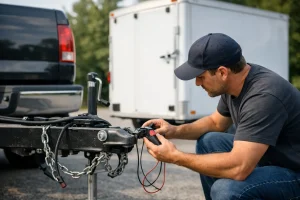
A proper inspection should include the plug, socket connection, cable condition and all road lights. That means indicators, tail lights, brake lights, number plate light and fog light where fitted. It is also worth checking for trapped wires, broken lamp units and signs of water ingress.
Vehicle-specific electrics can make a big difference to towing reliability. On modern vehicles, the wiring setup must interact correctly with the car or van’s existing systems. If you have recurring lighting faults, warning messages or intermittent issues, it is usually better to have the wiring checked properly rather than keep replacing bulbs.
Chassis, suspension and structural condition
The trailer chassis does the hard work, so it needs close inspection. Look for rust, cracked welds, bent sections and signs of previous impact damage. Surface corrosion is common on older trailers, but structural corrosion is a different matter and should not be ignored.
Suspension components should be checked for wear, damage and correct movement. Depending on the trailer design, that could include leaf springs, rubber suspension units, axle mountings and associated fixings. If the trailer sits unevenly or feels unsettled on the road, there may be more going on than a simple tyre issue.
Bodywork condition matters too. Floor panels, side panels, tailgates, hinges and ramps all need to remain secure and sound. On working trailers, floors can deteriorate gradually under repeated loading, especially if water gets trapped. A weak floor is not just inconvenient. It can be dangerous.
Don’t forget load security points and moving parts
Tie-down points, lashing rings, catches and ramp fastenings should all be checked during servicing. These parts see regular strain and can loosen or fatigue over time. If you carry tools, machinery, garden waste or building materials, secure anchor points are essential.
Moving parts benefit from cleaning, adjustment and lubrication where appropriate. Hinges, over-centre catches, ramp springs and locking mechanisms all work better when maintained. That said, not every part simply needs grease. Some assemblies should stay dry, and over-lubrication can attract grit and make wear worse. It depends on the component and how the trailer is used.
How often should a trailer be serviced?
There is no single answer that suits every trailer. If you tow frequently for business, a more regular inspection schedule makes sense because wear builds quickly and reliability matters day to day. If you only use the trailer seasonally, it still needs checks before use because standing idle can cause tyres to age, brakes to stick and electrics to corrode.
As a practical rule, carry out basic safety checks before every journey and arrange a more thorough service at sensible intervals based on mileage, load, age and usage. Owners who tow long distances, carry heavy loads or store trailers outside usually benefit from more frequent servicing.
Why professional servicing is worth it
Some checks are straightforward enough for owners to do themselves, especially routine inspections of tyres, lights and visible damage. But a proper service goes further. Brake adjustment, bearing inspection, axle checks and fault diagnosis all benefit from experienced hands and the right workshop setup.
A professional service can also spot developing problems that are easy to miss on the drive. That might be early bearing wear, slight brake imbalance, hidden corrosion or a wiring issue that only appears under load. Catching those faults early is usually cheaper than waiting for a failure.
For local motorists, caravan owners and tradespeople around South Yorkshire, using a specialist such as Doncaster Towbars means the trailer can be assessed by technicians who deal with towing equipment and trailer issues every day. That practical knowledge matters when safety and reliability are the priority.
A workable checklist between services
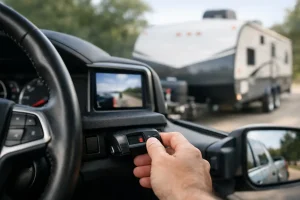
Between workshop visits, keep your own routine simple and consistent. Check tyre pressures and condition, test all lights, inspect the coupling and breakaway cable, make sure wheel fixings are secure, and look over the trailer for any obvious damage or loose parts. If something feels different while towing, such as increased sway, unusual noise or harsher braking, treat that as a warning sign rather than hoping it will sort itself out.
Small trailer problems have a habit of growing quietly. A few minutes spent checking the basics, plus regular servicing at the right time, is what keeps towing safe and predictable. If your trailer has not been inspected for a while, or you have noticed wear, noise or electrical faults, getting it looked at properly is the sensible next step before your next journey.