A dash cam is only useful when it actually records what you need, when you need it. That is why dash cam fitting matters more than many drivers expect. A camera stuck to the windscreen with a cable hanging across the dash might power on, but that does not mean it is positioned well, wired safely or set up to work properly day after day.
For many motorists, the appeal is simple. If you are involved in an incident, dealing with poor driving, or leaving your vehicle parked in public places, recorded footage can make life much easier. But the quality of the result depends on more than the camera itself. Placement, wiring, power supply and vehicle compatibility all make a difference.
Why professional dash cam fitting is worth it
The biggest reason customers ask for professional installation is reliability. A neatly installed dash cam should switch on with the ignition, record consistently and stay out of the driver’s line of sight. If the wiring is poorly routed or the power source is not chosen correctly, you can end up with intermittent faults, flat batteries or trim damage.
There is also the question of safety. Modern vehicles are packed with airbags, sensors, headlining components and electrical systems that need proper care during any accessory installation. Routing cables around A-pillars, fuse boxes and interior trims is not a guessing game. It needs a methodical approach.
A professional fitting also gives a better finish. Instead of loose wires and a plug-in adapter taking up the power socket, the camera can be hardwired and integrated more cleanly into the vehicle. For drivers who use their car or van every day, that makes a real difference.
What dash cam fitting involves
Dash cam fitting usually starts with choosing the right camera setup for the vehicle and the driver’s needs. Some customers want a straightforward front-facing camera for commuting and general road use. Others prefer front and rear coverage, which is common for family cars, company vehicles and vans that spend long hours on the road.
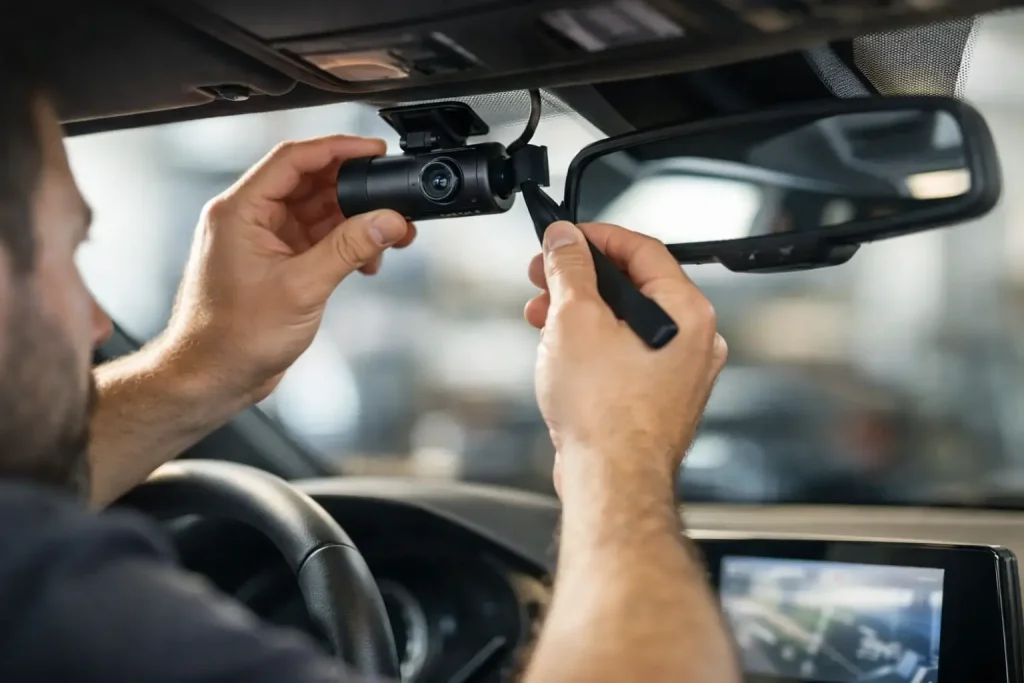
Once the suitable system has been selected, the next step is positioning. The front camera needs a clear view of the road without obstructing visibility. It should sit in a sensible position on the windscreen, usually close to the rear-view mirror area, where it remains discreet but effective. Rear cameras need similar thought, especially on vehicles with tinted glass, heated rear windows or tailgates that affect cable routing.
The power connection is equally important. Many dash cams can run from a 12V socket, but hardwiring is often the tidier and more dependable option. It removes clutter and allows the unit to power up automatically with the vehicle. If parking mode is required, the system may need a hardwire kit with battery protection to avoid draining the vehicle when it is parked.
Hardwired or plug-in – which is better?
This depends on how you use the vehicle. A plug-in setup can be fine for some drivers, especially if they want a basic installation and are happy to use a visible cable or occupy a power socket. It is often the cheaper route and may suit older vehicles where the owner wants a simple solution.
Hardwired dash cam fitting is generally the better long-term choice. It gives a neater finish, frees up the socket for other accessories and can support features such as parking surveillance. It is also less likely to be unplugged accidentally. For customers who want the camera to feel like part of the vehicle rather than an add-on, hardwiring usually makes more sense.
That said, not every vehicle or every usage pattern calls for the same setup. If a car is only used occasionally, or the owner plans to move the camera between vehicles, a plug-in option may still be practical. Good advice starts with how the vehicle is used, not with a one-size-fits-all answer.
Choosing the right camera for the job
Not all dash cams are equal, and the most expensive option is not always the right one. A daily commuter may only need a clear, reliable front camera with decent image quality and straightforward file storage. A tradesperson using a van may want front and rear recording, wider coverage and dependable operation over long working hours.
Parking mode is one of the features customers ask about most often. It can be useful if the vehicle is regularly left in public car parks, on the street or at job sites. However, it needs setting up properly. Without the right hardwire kit and battery management, the feature can become more trouble than it is worth.
Rear cameras are also worth considering, but they are not essential for everyone. If your main concern is proving fault in a forward road incident, a front unit may be enough. If you want fuller coverage for rear-end bumps, attempted theft or incidents while parked, a dual-camera system is the stronger option.
Common mistakes with DIY dash cam fitting
The most obvious issue is cable routing. It is very easy to tuck wires into trim in a way that looks acceptable at first but interferes with airbags or leaves the cable vulnerable to wear. In some cases, DIY fitting can also lead to broken clips, marked trim panels or rattles that were not there before.
Another common problem is poor camera placement. If the unit is mounted too low, too far to one side or in an area affected by wiper sweep limitations, the recorded footage may be less useful than expected. Sun glare, mirror housings and tinted sections of the windscreen can all affect image quality.
Fuse box connections can cause trouble as well. Hardwiring a dash cam is not simply a case of attaching it to any available fuse. The installer needs to identify the correct ignition or permanent live feed, use the right protection and make sure the setup behaves as intended. Get that wrong and you may face battery issues or unpredictable operation.
Dash cam fitting for cars, vans and working vehicles
Vehicle type makes a difference. On a hatchback or saloon, fitting a front and rear system is often fairly straightforward, although trim layout and electrical access still vary from model to model. SUVs and estates may have more involved rear cable routes, especially where tailgate movement needs to be accounted for.
Vans bring their own considerations. They often spend more time on the road, cover higher annual mileage and may be used by different drivers. For that reason, dependability matters even more. In some vans, rear camera positioning can also be less straightforward due to solid rear doors, bulkheads or different interior trims.
For business users, a dash cam is not only about accident evidence. It can also support vehicle security, driver accountability and peace of mind when tools or stock are left inside. A proper installation helps ensure the system is fit for daily work rather than just occasional use.
What to expect from a proper installation
A good fitting job should start with a brief discussion about what you need from the system. That includes how you use the vehicle, whether you want front-only or front and rear recording, and whether parking mode is genuinely useful for your circumstances.
From there, the installation should be tidy and vehicle-specific. Cables should be concealed where possible, the camera should be positioned sensibly, and the power setup should match the intended use. If the system is hardwired, it should be fused correctly and tested properly before the vehicle leaves the workshop.
Just as important is the setup after installation. Time and date settings, memory card formatting, app connection where applicable, and camera angle checks all matter. There is little point in fitting a quality camera if it is left recording the bonnet or saving footage with the wrong timestamp.
For drivers in and around South Yorkshire who want a dependable result, using an experienced fitting service removes a lot of guesswork. A workshop that already handles vehicle electrics, accessory installations and practical day-to-day fitting work is far better placed to deliver a clean, reliable setup than a trial-and-error approach on the driveway.
Dash cam fitting that works when you need it
The real test of any dash cam is not how it looks on the day it is installed. It is whether it records clearly on a wet winter morning, powers up without fuss on the school run, and keeps doing its job months down the line. That comes from proper fitting, sensible product choice and attention to the details that many people never see.
If you are considering dash cam fitting, it pays to think beyond the camera itself. The best result is one that suits your vehicle, your driving and your expectations, while keeping the installation neat, safe and dependable. If you want advice tailored to your car or van, Doncaster Towbars can help you choose a setup that works properly from day one.