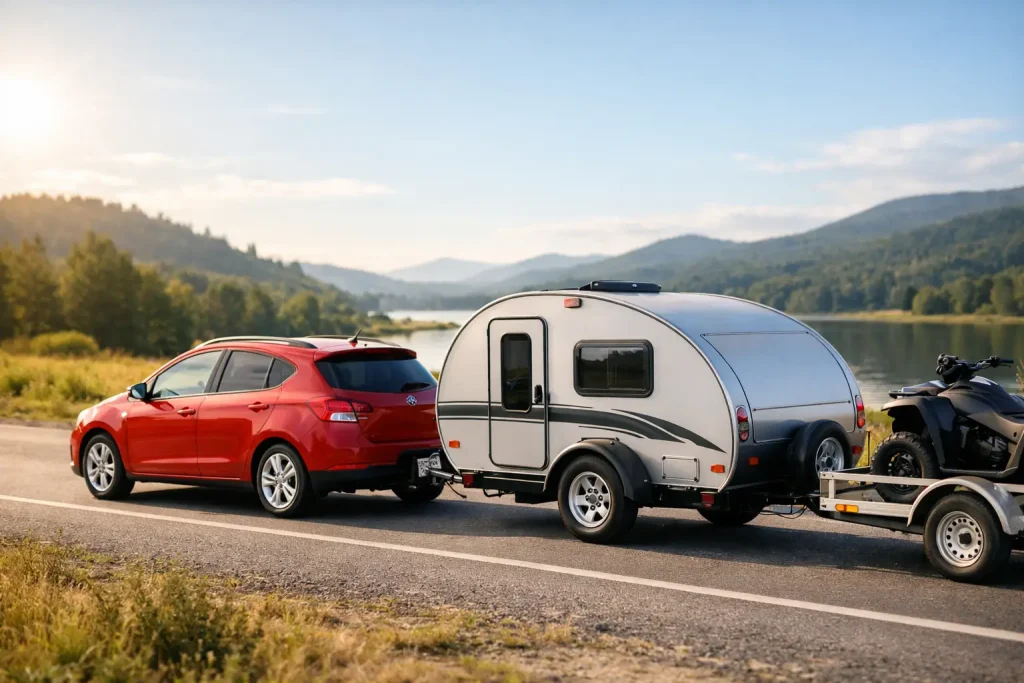
Plenty of drivers are surprised to learn that a small car can tow at all. The bigger surprise is that many compact cars can tow safely and legally, provided the setup is right. This guide to towing with a small car is here to clear up the guesswork, because towing with a lighter vehicle leaves less room for error than towing with a large SUV or van.
Small cars are often used for lightweight trailers, small camping trailers, bike carriers, and occasional household or garden jobs. That can work very well, but only when the vehicle, towbar, trailer and electrics are properly matched. If one part of the setup is wrong, the car can feel unstable, braking distances can increase, and wear on the clutch, suspension and tyres can climb quickly.
What matters most when towing with a small car
The main issue is not whether the engine feels strong enough. It is whether the vehicle is approved to tow the weight involved and whether the trailer is loaded correctly. A small hatchback with a modest engine may tow a light trailer comfortably, while a more powerful car can still be unsuitable if its towing limits, rear axle load or noseweight are exceeded.
The starting point is always the vehicle manufacturer’s towing limits. You need to know the maximum braked towing capacity, the unbraked towing capacity, and the permitted noseweight. Braked means the trailer has its own braking system. Unbraked trailers are lighter, and the legal limit is much lower. On many small cars, that difference is significant.
Noseweight is just as important. That is the downward force the trailer places on the towball. Too little noseweight can make a trailer unstable. Too much can overload the rear of the car and affect steering and braking. Small cars tend to have lower noseweight limits than larger towing vehicles, so loading needs more care.
A guide to towing with a small car starts with the right towbar
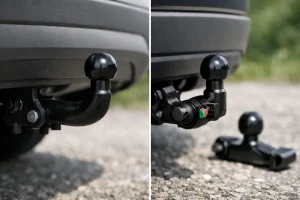
Not every towbar suits every job. The correct option depends on the car, the trailer, and how often you plan to tow. Fixed towbars are popular for regular towing because they are always ready to use and generally offer good long-term value. Detachable towbars can be a tidy choice when you want towing capability without leaving the towball fitted all the time.
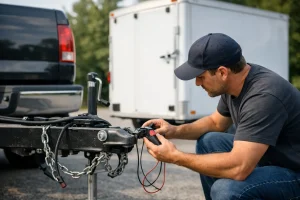
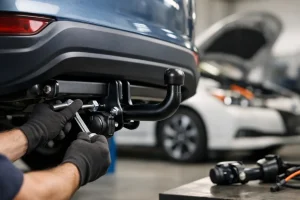
What matters more than the style is proper vehicle-specific fitting. Modern cars, including smaller ones, often have sensitive electronics, parking sensors, driver assistance systems and lighting circuits that need the correct trailer electrics. A universal wiring approach may seem cheaper at first, but it can create faults, warning lights or unreliable trailer lighting. For many motorists, professional fitting is the difference between a dependable setup and an ongoing headache.
If the car is used for reversing in tight spaces, it is also worth considering how a towbar interacts with parking sensors. On some vehicles, the system needs coding or the right electrics to prevent false alerts when towing.
Understanding weights without overcomplicating it
This is where many towing problems begin. Drivers often look only at the trailer’s empty weight or only at the car’s headline towing capacity. Neither gives the full picture.
You need to consider the trailer’s actual loaded weight, not just what it weighs when empty. Add in tools, camping kit, garden waste, luggage or machinery and the figure can rise quickly. A small car that copes well with an empty trailer may struggle once the trailer is fully loaded.
It is also wise to think beyond the legal limit and consider what feels sensible. Just because a car is rated to tow a certain figure does not always mean that towing near that limit is ideal for every journey. If you regularly travel on hills, dual carriageways, or in poor weather, keeping well within the limit usually gives a calmer and safer drive.
As a practical rule, a lighter trailer matched carefully to the car tends to produce the best result. Small cars can tow effectively, but they are less forgiving of poor loading or over-ambitious trailer weights.
Loading the trailer properly makes a huge difference
A badly loaded trailer can be dangerous behind any vehicle, but small cars feel the effects sooner. If the trailer is nose-light, it may snake. If too much weight sits forward, the towball and rear suspension can be overloaded.
Aim for a balanced load with heavier items placed low down and close to the axle. Secure everything properly so it cannot shift during braking or cornering. Loose loads change the trailer’s behaviour and can unsettle the car without much warning.
You should also check that the trailer sits level when hitched. If it tilts heavily nose-up or nose-down, weight distribution is likely to be wrong or the coupling height is poorly matched. That does not just affect stability. It can also affect tyre wear and braking on the trailer.
How a small car will feel on the road
Drivers new to towing often expect the main challenge to be pulling away. In practice, the bigger changes are braking, cornering and stability in wind. A small car towing a trailer will take longer to stop, feel slower to accelerate, and react more noticeably to crosswinds or road surfaces.
That means driving style matters. Leave more space, brake earlier, and avoid sudden steering inputs. On roundabouts and bends, take a smoother line and remember that the trailer tracks differently to the car. On steep hills, expect to use lower gears and avoid riding the clutch.
Motorway and dual carriageway driving need extra attention, especially if the trailer starts to feel unsettled at speed. If there is any sign of snaking, ease off gently and do not try to steer sharply out of it. Stability usually comes from reducing speed smoothly and ensuring the trailer is loaded correctly in the first place.
Safety checks that should never be skipped
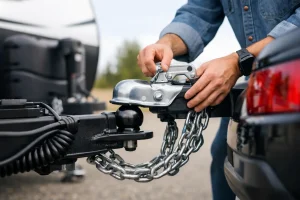
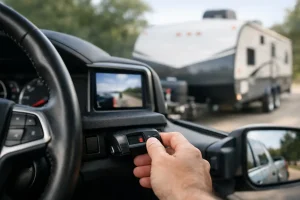
Before any journey, carry out a proper walk-round. Check the towball is secure, the coupling is engaged correctly, the breakaway cable is fitted where required, the jockey wheel is raised, and the trailer plug is connected properly. Test all lights, including indicators, brake lights and number plate lights.
Tyres deserve close attention on both car and trailer. Small cars already have less mass to settle the outfit, so underinflated tyres can make towing feel vague and unstable. Check pressures when cold and inspect for damage or uneven wear.
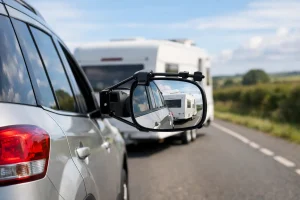
Mirrors are another point people forget. If the trailer is wider than the rear of the car, towing mirrors may be needed to maintain a clear rearward view. That is not just helpful. It is part of towing safely and legally.
When professional advice is worth it
If you are unsure about towing limits, towbar choice, electrics or trailer suitability, it is worth asking before anything is fitted or loaded. A workshop that deals with towing setups every day can spot issues that are easy to miss on paper, especially with newer vehicles and vehicle-specific wiring.
For local motorists using compact cars for leisure, work or occasional trailer use, getting the setup checked properly saves time and usually saves money in the long run. The right towbar, the right electrics and the right advice on trailer matching all help avoid wear, instability and electrical faults.
At Doncaster Towbars, we regularly speak to drivers who assumed they needed a bigger vehicle, when what they really needed was a correctly matched towing setup and clear guidance on weights and use.
Common mistakes in any guide to towing with a small car
Most towing problems with small cars come back to the same few issues. The first is assuming any towbar will do. The second is loading the trailer by eye rather than by weight. The third is overlooking the electrics, especially on newer cars with complex systems.
Another common mistake is treating an occasional short journey as low risk. In reality, short local runs can still involve emergency braking, poor road surfaces, tight manoeuvres and rushed loading. Good towing practice matters just as much on a ten-mile trip as it does on a longer journey.
There is also the question of expectations. A small car can tow very well within its limits, but it will not feel like a heavy 4×4. Progress may be slower, gear changes may be more frequent, and loading discipline matters more. That is normal. The aim is not to make a small car behave like a large towing vehicle. The aim is to create a setup that is safe, legal and predictable.
If you are planning to tow with a small car, the best approach is a simple one. Check the figures, fit the right equipment, load the trailer carefully, and do not guess. A well-prepared small car can be a practical tow vehicle for the right job, and confidence usually starts long before you turn the key.