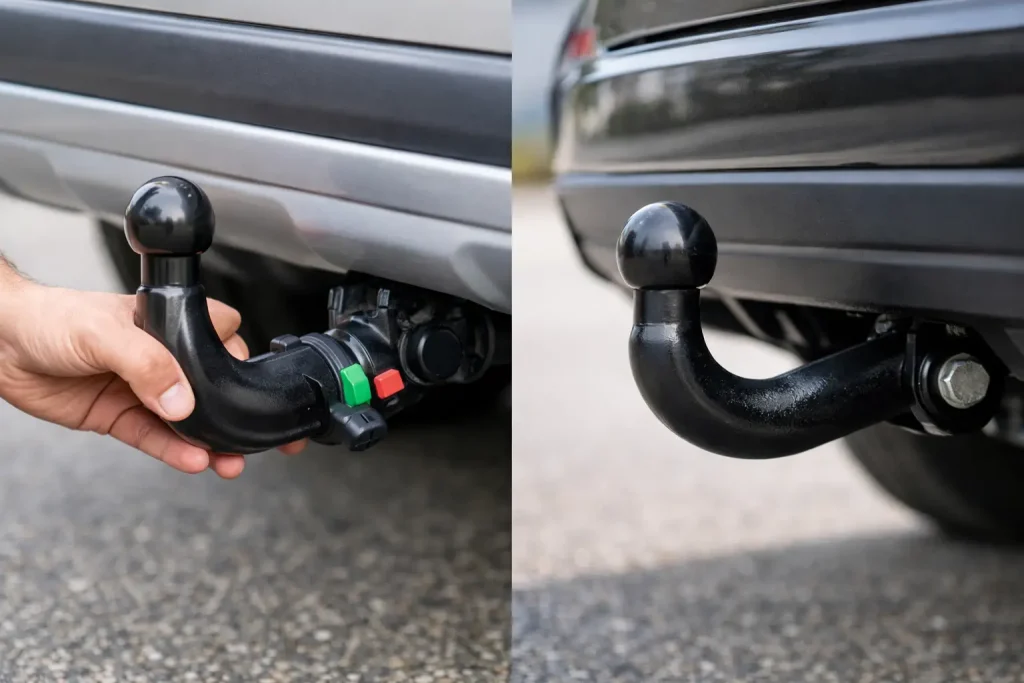
You usually notice the difference between a detachable and fixed towbar the first time you walk up to the back of your vehicle with shopping, tools or a caravan on the drive. One is always there, ready for work. The other can disappear when you are not towing. If you are weighing up detachable vs fixed towbar options, the right choice comes down to how often you tow, what you tow, and how you use the vehicle the rest of the week.
For some drivers, the answer is obvious. A van that tows a work trailer most days rarely needs a towbar that comes off. A family SUV that only tows a caravan a few weekends a year may suit a neater setup. The key is not choosing what sounds best on paper, but what makes sense for your vehicle, budget and routine.
Detachable vs fixed towbar: the basic difference
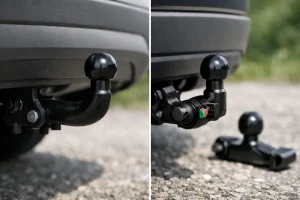
A fixed towbar stays fitted to the vehicle at all times. It is permanently in place, so when you need to hitch up, the towball is ready to go. That makes it a straightforward, practical option for regular towing.
A detachable towbar is designed so the towball section can be removed when not in use. Once detached, the rear of the vehicle looks cleaner and, on many models, you are left with very little visible hardware. The main structure still remains fitted behind the bumper, but the part you actually hitch onto is stored separately until needed.
Neither type is automatically better. Both can be safe, durable and suitable for a wide range of towing jobs when fitted properly and matched to the vehicle.
When a fixed towbar makes more sense
If towing is part of your normal routine, a fixed towbar is often the more sensible choice. Tradespeople towing plant trailers, households using a utility trailer for tip runs, and drivers moving bike carriers on and off regularly tend to value convenience over appearance.
The biggest advantage is simplicity. There is no separate neck to store, no risk of misplacing it, and no need to fit it before every journey. You reverse up, connect the trailer, plug in the electrics and get on with the job. For customers who tow often, that matters.
Cost is another reason many people choose fixed. In general, a fixed towbar is usually the more budget-friendly option compared with a detachable system. If you need dependable towing capability without spending extra on a removable mechanism, fixed is often the practical answer.
There is also less to think about in day-to-day use. If the vehicle is a working van or pickup-style setup where appearance is not the priority, a towbar that is always present is rarely a problem.
The trade-off with fixed towbars
The obvious downside is that it stays visible. Some drivers do not mind that at all. Others dislike the look, especially on newer cars where they want a cleaner rear profile.
A fixed towbar can also get in the way when you are loading the boot or walking around the back of the car. It is not unusual to catch a shin on one. That sounds minor until it happens on a dark morning before work.
On some vehicles, owners are also conscious of parking sensors and rear aesthetics. While proper fitting and coding can help vehicle systems operate correctly, the bar itself is still there physically, and that may be enough to sway your decision.
Why drivers choose a detachable towbar
A detachable towbar appeals to people who want their vehicle to look as original as possible when they are not towing. This is especially common with family cars, executive vehicles and SUVs used for mixed duties – school run during the week, caravan or trailer at the weekend.
Once removed, the towbar is largely out of sight, which gives the rear of the vehicle a tidier finish. For some owners, that is not just about looks. It can also make everyday access around the back of the car easier when you are not constantly stepping around a towball.
There is also a practical angle if you only tow occasionally. If your caravan comes out for holidays and the trailer is used once in a while for garden work, having the towbar present all year can feel unnecessary. A detachable system keeps the capability there without making it a permanent feature of the vehicle’s appearance.
The trade-off with detachable towbars
The drawback is that you pay more for the convenience and cleaner finish. Detachable systems are generally more expensive because of the locking and release mechanism.
You also need to keep track of the detachable section. It has to be stored somewhere safe, clean and easy to find when towing day arrives. If it is buried behind paint tins in the garage or left rattling around in the boot, that convenience starts to wear thin.
There is a little more routine involved as well. Before towing, you fit the detachable neck, lock it in place correctly and check that everything is secure. That is not difficult, but it is another step. For people towing every day, those extra minutes may become an irritation.
Does towing performance differ?
In normal use, both types can do the job equally well when they are approved for the vehicle and fitted correctly. What matters more than detachable or fixed is the vehicle’s towing limit, noseweight rating, the towbar specification, and whether the electrics are installed properly.
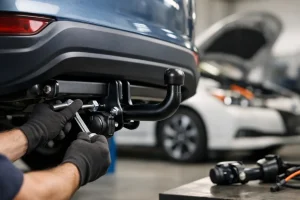
That is where professional fitting really matters. Modern vehicles are not just metal and bolts. Many now have complex rear sensors, lighting systems and vehicle-specific electronics that need the right wiring setup. A proper installation helps ensure the towbar works safely and the electrics communicate as they should with the vehicle.
So if you are asking whether detachable or fixed is stronger, the more useful question is whether the towbar and electrics are the right match for your car or van. A well-fitted fixed towbar and a well-fitted detachable towbar can both provide safe, reliable towing.
Which option suits your vehicle type?
For working vans and commercial vehicles, fixed towbars often come out on top because they suit frequent use and straightforward operation. If a van is earning its keep and towing is part of the day job, a fixed bar usually fits that role well.
For family cars and SUVs, it depends more on how the vehicle is used between towing jobs. If it is your main car and you only tow from time to time, detachable can be attractive because it preserves the look and everyday practicality of the vehicle.
For caravan owners, both options are common. Some prefer fixed because they tow often in season and want the towball always available. Others prefer detachable because the car spends more time not towing than towing, so they want a cleaner finish the rest of the year.
If you use a bike carrier, the answer may also depend on how often it goes on and off. Regular use can favour fixed for convenience. Occasional leisure use can make detachable feel more worthwhile.
Cost, convenience and appearance – what matters most?
This is usually what the decision comes down to.
If budget is your main concern and you want a dependable, no-nonsense towing setup, fixed is often the better value option. If appearance matters and you do not tow often enough to justify having a visible towbar all year, detachable may be worth the extra spend.
Convenience can point in either direction. Fixed is convenient because it is always ready. Detachable is convenient because it keeps the vehicle tidier when not in use. The right answer depends on which type of convenience matters more to you.
Getting the right advice before fitting
Choosing between a detachable and fixed towbar is easier when someone looks at the actual vehicle and asks the right questions. What are you towing? How often? Do you need single or twin electrics? Is the vehicle used for work, family life or both? Those details matter more than broad rules.
At Doncaster Towbars, that is usually where the best decisions start – with a practical conversation rather than a guess. A towbar should suit the job, the vehicle and the way you use it, not just the cheapest option on a list or the neatest photo online.
If you are still undecided, think about your next twelve months rather than the next twelve days. A towbar is not just for the first trip out. It needs to work just as well on a rainy weekday with a loaded trailer as it does on a summer holiday towing a caravan. Choose the setup that will still feel right after real use, not just on fitting day.