Choosing the best towbar for SUV towing usually comes down to one question: what are you actually going to pull, and how often? A family SUV used for a caravan a few times a year needs a different setup from a working vehicle towing tools, plant or a loaded trailer every week. Get that choice right and towing feels stable, predictable and legal. Get it wrong and you can end up paying for the wrong hardware, the wrong electrics, or both.
SUVs are popular tow vehicles for good reason. They tend to offer solid towing capacity, better kerb weight than smaller cars, and the kind of driving position that makes manoeuvring less stressful. But that does not mean every towbar suits every SUV, or every owner. The right answer depends on towing weight, noseweight, rear parking sensors, electrics, and whether you want a towbar on show all the time.
What is the best towbar for SUV towing?
In practical terms, the best towbar for SUV towing is the one matched correctly to the vehicle, the trailer or caravan, and the way the vehicle is used day to day. For some drivers, that will be a fixed flange towbar because it is strong, straightforward and handy for towing accessories. For others, a detachable or swivel towbar makes more sense because it keeps the rear of the vehicle neater when not in use.
There is no single best towbar for every SUV. A heavier 4×4 used for caravanning and long-distance towing may suit one style, while a compact SUV that mainly carries bikes and occasionally pulls a small trailer may suit another. That is why vehicle-specific advice matters.
The main towbar types for SUVs
Fixed flange towbars
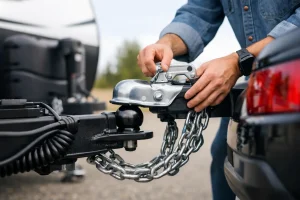
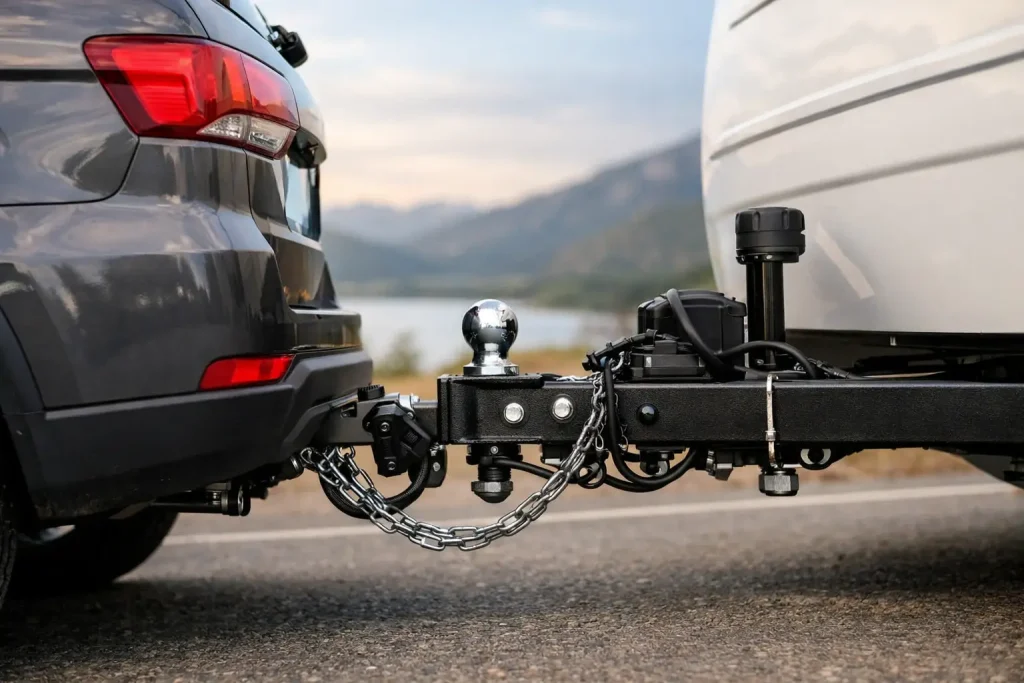
A fixed flange towbar is often the most practical choice for drivers who tow regularly. It stays in place permanently and is usually the most versatile option if you also need to mount accessories such as cycle carriers or bumper protection plates. It is easy to work with, generally cost-effective, and well suited to commercial or heavy-use towing.
The trade-off is appearance. A fixed flange towbar is always visible, and on some SUVs it can affect the look of the rear end more than owners would like. It may also sit in the working area of rear parking sensors depending on the vehicle and towbar design.
Fixed swan neck towbars
A fixed swan neck towbar has a cleaner appearance than a flange design and is often preferred by private motorists, especially caravan owners. It tends to look more integrated with the vehicle and can be a good choice where style matters as much as function.
The limitation is flexibility. Some accessories are not compatible in the same way they are with a flange towbar, so it is worth checking what else you might want to carry before fitting one.
Detachable towbars
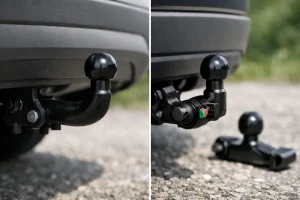
A detachable towbar is ideal if you want towing capability without having the towbar visible all the time. When removed, the vehicle keeps a cleaner factory-style look, which appeals to many SUV owners. It can also help reduce interference with parking sensors when the neck is off the vehicle.
This option suits drivers who tow occasionally rather than every day. It does cost more, and because there is a removable element, you need to keep the mechanism clean and store the neck properly when not in use.
Swivel or retractable towbars
Swivel towbars are built for convenience and appearance. They tuck away behind the bumper when not needed, then swing into position when it is time to tow. On the right vehicle they are an excellent solution, especially for newer SUVs where owners want a neat finish.
They are, however, more complex and usually more expensive. Availability also depends on the exact make and model of SUV. For some owners that extra cost is justified. For others, a detachable towbar does the same job well enough at a lower price.
Matching the towbar to the job
The real decision starts with the load. If you are towing a caravan, horse trailer, plant trailer or a fully laden goods trailer, the first thing to check is the vehicle’s towing capacity and permitted noseweight. Those limits matter more than the style of towbar itself.
A suitable towbar must be approved for the vehicle and capable of handling the intended load safely. That includes the trailer weight, the load distribution, and the ball weight pressing down on the rear of the SUV. Even a high-quality towbar is the wrong choice if it does not match the vehicle’s limits or your towing habits.
If you tow often, a fixed towbar usually makes the most sense because it is always ready and tends to be the most straightforward option. If you tow a caravan for summer holidays and want the vehicle looking tidy the rest of the year, detachable or swivel designs are often the better fit.
Towbar electrics matter as much as the bar itself
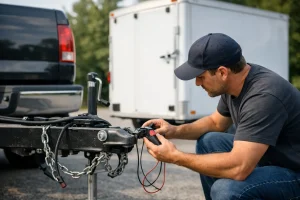
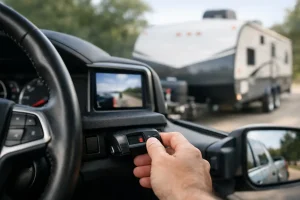
A lot of people focus on the towbar and overlook the electrics, but modern SUV towing setups depend heavily on proper wiring. The best towbar for SUV towing is only part of the picture. If the electrics are poor, incompatible or badly fitted, you can run into faults with trailer lights, stability systems, battery charging and reversing sensors.
For older trailers, basic 7-pin electrics may be enough. For caravans and newer trailers, 13-pin electrics are often the better option because they support road lights as well as extra functions such as fridge supply and battery charging.
With modern SUVs, vehicle-specific electrics are usually the right route. These kits are designed to work with the vehicle’s own systems and can help maintain the correct operation of safety features. On some vehicles, coding or programming may also be needed after installation so the car recognises it has towing equipment fitted.
Parking sensors, cameras and towing tech
SUV owners often ask whether a towbar will affect parking sensors or rear cameras. The honest answer is: sometimes. It depends on the towbar style, the vehicle, and how the sensors are set up.
A fixed towbar is more likely to remain in the sensor field all the time. A detachable neck can reduce that problem when it is removed. Some vehicles can be coded to account for towing equipment, and some towbar electrics can automatically adjust parking assistance behaviour when a trailer is connected.
This is one of the reasons professional fitting matters. On newer vehicles, towing equipment is no longer just a metal bar and a socket. It needs to work alongside factory electronics rather than fight against them.
Why professional fitting makes the difference
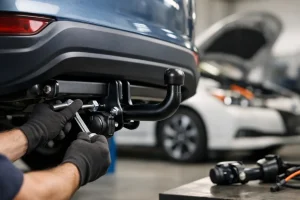
A towbar may look simple from the outside, but fitting one properly is not guesswork. The rear structure of the SUV, the mounting points, bumper trims, heat shields, wiring routes and electronic systems all need proper attention. A poor installation can cause rattles, lighting faults, warning messages or worse, unsafe towing.
Professional fitting gives you the confidence that the towbar is correctly matched, torqued, wired and tested. It also means practical advice before the job starts. If a customer says they need a towbar for a bike rack but might buy a caravan next year, that changes the recommendation. The best setup is the one that works for both now and later, not just the cheapest part that fits today.
At Doncaster Towbars, that hands-on approach is what helps customers avoid expensive mistakes. A proper conversation about the SUV, the trailer and the intended use is often the fastest way to narrow down the right option.
How to choose the right SUV towbar without overpaying
Start with the vehicle details, including exact model, year and engine. Then look at what you plan to tow, how frequently you tow, and whether you want the towbar visible when not in use. If towing is regular and practical use matters most, fixed designs usually offer the best value. If appearance matters and towing is occasional, detachable or swivel options are worth considering.
Do not try to save money by overlooking the electrics. A cheaper universal wiring setup can cost more in faults, inconvenience and compatibility issues later on, especially with modern SUVs. It is usually better to fit the correct vehicle-specific kit from the outset.
Also think ahead. If you are buying a larger caravan, changing trailers, or adding a cycle carrier, mention that before anything is fitted. The right advice now can save replacing parts later.
Best towbar for SUV towing depends on the whole setup
If there is one useful rule, it is this: choose the towbar as part of a full towing system, not as a standalone product. The SUV’s limits, the trailer weight, the electrics, and the way you use the vehicle all matter. A fixed flange towbar may be perfect for one owner and completely wrong for another.
That is why the best results come from asking the practical questions first. What are you towing? How often? Do you need a clean rear appearance? Will you be using caravan electrics? Does the SUV have parking sensors or trailer stability features? Once those answers are clear, the right towbar choice usually becomes clear as well.
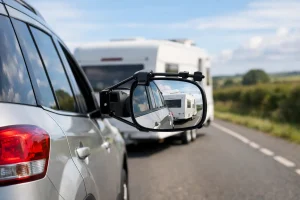
If you are not sure which setup suits your SUV, the safest next step is to ask for vehicle-specific advice and have the fitting done properly. Towing should feel dependable from the first journey, not like something you are still trying to second-guess in the mirror.