Towing a trailer or caravan is a common necessity for many UK drivers, whether for work, travel, or leisure. However, it comes with a responsibility to understand and adhere to specific towing laws. Ignorance of these laws can lead to penalties, fines, or even accidents. This guide covers the essential towing laws in the UK that every driver should be aware of.
Towing Capacity & Vehicle Limits
Towing capacity is the maximum weight your vehicle can safely tow, including the trailer and its load. You can find this information in your vehicle’s owner’s manual or the V5C registration certificate. The Maximum Authorised Mass (MAM) is the total weight of the vehicle plus the trailer, while the Gross Train Weight (GTW) is the combined weight of both when fully loaded. Exceeding these limits is illegal and dangerous.
Driving Licence Requirements
Your driving licence determines what you can tow. For example, if you passed your test before 1 January 1997, you may tow a heavier load than those who passed after this date. Post-2013 licence holders with a Category B licence can tow trailers up to 750kg or a heavier trailer if the combined weight doesn’t exceed 3,500kg. For heavier loads, a B+E licence is required.

Trailer & Caravan Safety Regulations
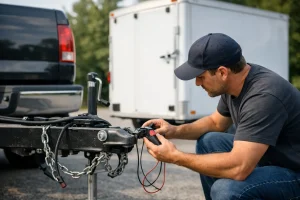
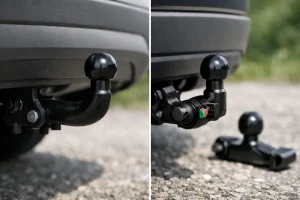
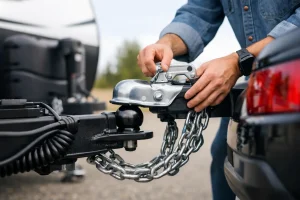
UK law mandates that trailers over 750kg must be fitted with brakes. Additionally, regular maintenance of the trailer’s lights, tyres, and hitch mechanisms is legally required to ensure safety on the road. Overloading or failing to maintain the trailer can lead to serious penalties.
Speed Limits for Towing
Towing imposes specific speed restrictions. On motorways and dual carriageways, the maximum speed limit is 60mph, while on single carriageways, it’s 50mph. Exceeding these limits can result in fines, points on your licence, or worse—an accident.
Legal Trailer Dimensions
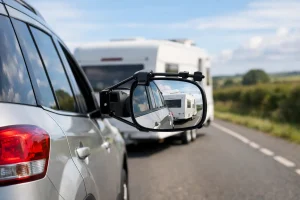
The law sets clear limits on trailer dimensions. The maximum width for a trailer is 2.55 metres, and the maximum length is 7 metres (excluding the towing vehicle). If your trailer is wider than your car, towing mirrors are legally required to ensure visibility, and failing to use them can result in fines.
Towing in Different Scenarios
When towing on motorways and dual carriageways, remember that you are not allowed in the right-hand lane of three or more lanes. Additionally, practice safe reversing and parking techniques to avoid any legal issues or accidents. Knowing how to handle your vehicle and trailer in tight spaces is essential.

Insurance & Documentation
While your car insurance may cover towing, it’s crucial to confirm that your trailer is also insured. Uninsured towing can result in severe penalties. Additionally, always carry necessary documents like your driving licence, insurance papers, and any relevant trailer documentation, especially when embarking on longer journeys or crossing borders.
Penalties & Fines
Common towing-related offences include exceeding weight limits, speeding, and failing to use towing mirrors. These offences can result in fines, points on your licence, and even court appearances. Repeat violations can affect your driving record and increase your insurance premiums.
Conclusion
Understanding and following the UK’s towing laws is essential for safety and compliance. Regularly review your towing practices, ensure your vehicle and trailer meet legal standards, and stay informed about any changes in the law. If you’re unsure about any regulations, seek professional advice to avoid costly mistakes. Happy and safe towing!