
A trailer rarely picks a convenient time to go wrong. It is usually when you are loading up for work, setting off with the caravan, or trying to keep a job on schedule. That is why trailer repairs matter more than many owners realise. Small faults with lights, brakes, tyres or couplings can quickly turn into bigger safety issues, costly downtime, or an MOT-style headache when the trailer should simply be ready to tow.
For private drivers, tradespeople and business owners alike, the real goal is not just fixing what has failed. It is keeping the trailer safe, stable and dependable every time it goes behind the vehicle. A proper repair should deal with the cause of the problem, not just the symptom.
Why timely trailer repairs matter
Most trailers work hard and get very little attention between jobs. They sit outside through winter, carry uneven loads, deal with potholes, water, mud and long periods of standing still. Over time, that creates wear in places owners do not always spot straight away.
A cracked light lens might seem minor until the wiring fills with water. A slightly noisy wheel bearing might keep going for a while, but if it fails on the road the repair bill and the disruption are much worse. Brakes that feel only a little off can affect stopping distance, tyre wear and overall control. With trailers, there is often a narrow gap between “still usable” and “not safe enough to tow”.
That is why it makes sense to get issues checked early. In many cases, a straightforward workshop inspection can catch wear before it turns into a breakdown or a recovery job at the side of the road.
The most common trailer repairs
Some faults appear again and again, especially on trailers used for general haulage, landscaping work, small plant transport and leisure towing. The exact repair depends on the trailer type, age and how it has been used, but a few areas are responsible for most workshop visits.
Lights and trailer electrics
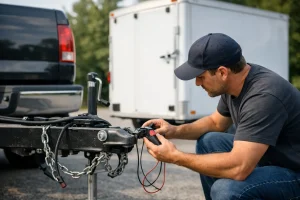
Lighting faults are among the most common problems. Indicators that work intermittently, dim brake lights, non-functioning side lights or a full lighting failure are often caused by damaged plugs, corroded connectors, poor earthing or broken wiring.
This is one of those jobs where guesswork can waste time. Sometimes the issue is in the trailer loom. Sometimes it is at the plug. Sometimes the fault is linked to the towing vehicle electrics. A proper diagnosis matters, especially with newer vehicles that use vehicle-specific electrics and more sensitive systems.
Brakes, cables and running gear
If a braked trailer feels rough when slowing down, pulls oddly, or seems hesitant under load, the braking system needs attention. Worn brake shoes, seized components, stretched cables and neglected linkage parts are all common causes.
Running gear faults often sit alongside braking issues. Suspension components, hubs and wheel bearings all take a battering. If the trailer hums, vibrates, knocks or feels unstable, the problem may not be obvious from a quick glance in the yard.
Tyres and wheels
Trailer tyres often wear differently from car tyres. They can age before they wear out, especially on trailers that spend long periods parked up. Cracking in the sidewall, flat spots, uneven wear and perished rubber all point to replacement or further inspection.
Wheel issues can also come from incorrect loading or poor alignment. Replacing a tyre without asking why it failed is not always enough. In some cases, the trailer needs a broader check to stop the same problem returning.
Couplings, jockey wheels and chassis wear
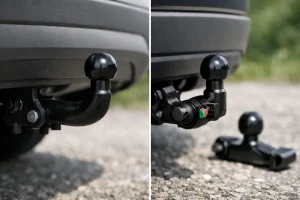
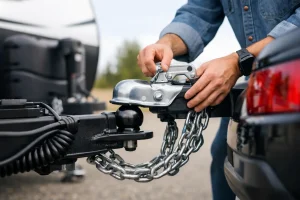
The coupling is one of the most important safety components on the trailer, yet it is often overlooked until something feels loose or awkward. Excessive wear, poor locking action or damage around the hitch can all affect towing safety.
Jockey wheels, hinges, latches and body fixtures also take plenty of abuse. On working trailers, general wear to the chassis, floor or tailgate area is common. Some repairs are quick and practical. Others depend on whether the trailer is still structurally sound enough to justify the work.
When a repair is better than a replacement
Not every trailer with faults needs replacing. In many cases, a sound trailer with worn service items is well worth repairing. Bearings, brakes, cables, lights, plugs, tyres and coupling parts are all normal maintenance items, and sorting them can return a trailer to safe, reliable use.
That said, it depends on the condition of the whole unit. If corrosion is widespread, the chassis is compromised, or repeated faults show deeper neglect, replacement may be the more sensible long-term option. A good workshop should be honest about that. There is no value in carrying out patch repairs on a trailer that will continue to cause problems.
For owners, the best outcome is clarity. You want to know what has failed, what needs urgent attention, what can wait, and whether the money going into the trailer is justified.
Signs you should book trailer repairs soon
Some issues are obvious. Others creep in gradually, which is why they are easy to ignore. If your trailer shows any of the following signs, it is worth having it checked before the next heavy journey.
Lights flickering or failing, unusual noises from the wheels or hubs, uneven tyre wear, a trailer that feels unstable when towing, poor braking response, a coupling that does not engage cleanly, or visible corrosion around key components all deserve attention. Water ingress into electrical parts and long periods of storage can also create faults that only become clear once the trailer is back in use.
Even if the trailer still moves and tows, that does not automatically mean it is in good order. Many faults start small and only show themselves properly under load.
Why professional trailer repairs are worth it
There is a place for basic owner checks. Keeping an eye on tyre pressures, lighting, load security and obvious wear makes sense. But when faults involve brakes, bearings, electrics or structural components, proper workshop attention is the safer route.
Professional trailer repairs are about more than replacing parts. They involve checking compatibility, fitting components correctly, inspecting related items and testing the trailer as a complete unit. That matters because trailer systems overlap. A worn hub can affect braking performance. A poor earth can make the lighting appear faulty when the real issue sits elsewhere. A badly adjusted coupling can change how the trailer feels on the road.
This is where an experienced workshop earns its keep. Instead of guessing, you get a practical diagnosis and a repair carried out with towing safety in mind.
Trailer repairs and regular servicing go hand in hand
Repairs are often reactive. Servicing is what helps reduce the need for them. The two work best together.
A trailer that comes in for periodic checks is far less likely to suffer major failures without warning. Service inspections can pick up wear in the brakes, bearings, tyres, electrics and hitch assembly before those parts cause trouble. That is especially useful for people who depend on a trailer for work and cannot afford avoidable downtime.
For leisure users, servicing offers peace of mind before the touring season or before longer trips. For trade customers, it supports reliability and helps avoid losing time and money when equipment should be out earning.
At Doncaster Towbars, trailer support is approached in exactly that practical way – not just as a single repair job, but as part of keeping your towing setup safe and dependable.
Choosing the right workshop for trailer repairs
Not every garage is set up for trailer work. That matters because trailers have their own braking systems, their own electrical demands and their own wear patterns. A general vehicle repair background is useful, but specialist trailer experience makes a difference when faults are awkward or when the trailer has seen years of hard use.
A good repair service should be able to assess the trailer properly, explain the fault in plain English and recommend work based on safety and value, not guesswork. It should also understand how the trailer interacts with the towing vehicle, especially where electrics and towing stability are concerned.
For local customers in Doncaster, Rotherham and the surrounding area, convenience matters too. Being able to get practical advice, repairs and related towing support from one specialist workshop saves time and avoids the runaround.
A safer tow starts before you set off
The best time to deal with trailer faults is before they leave you stranded, not after. If something looks worn, sounds wrong or feels different on the road, it is worth getting it checked. Most trailer problems start as manageable jobs. Left alone, they tend to become more expensive and less convenient.
A trailer should feel like a dependable part of your setup, not the weak point in it. When it is repaired properly and checked by people who understand towing, every journey becomes simpler for all the right reasons.