Load a trailer badly and you usually feel it before you understand it. The steering can go light, the back of the vehicle can squat, and the whole outfit can feel unsettled long before you reach motorway speed. That is exactly why a towbar nose weight guide matters. Get the nose weight right and towing feels calmer, braking is more predictable, and both vehicle and trailer work as they should.
Nose weight is the downward force that the trailer coupling puts onto the towball. In simple terms, it is how heavily the front of the trailer presses down on the rear of the towing vehicle. It is not the full trailer weight, and it is not a number to guess at by eye. Every vehicle and every towbar has a maximum permitted nose weight, and the safe working figure is always the lower of the two.
What nose weight actually affects
Drivers often focus on towing capacity first, which makes sense, but nose weight has a huge effect on stability. Too little nose weight and the trailer can become lively, especially at speed or in crosswinds. Too much nose weight and you overload the rear of the vehicle, which can reduce steering control, upset headlight aim, and put strain on suspension and the towbar assembly.
This is one of those areas where close enough is not really good enough. A trailer that feels acceptable on a short local run can behave very differently when fully loaded for a holiday, a work job, or repeated motorway miles. The right balance is what makes a towing setup feel planted rather than nervous.
Towbar nose weight guide – know your legal limits
There is no single nose weight figure that suits every vehicle. A compact hatchback, a family SUV and a working van may all tow, but they do not all carry the same downward load at the towball. The limit can be set by the vehicle manufacturer, the towbar manufacturer, or both. If one says 75kg and the other says 100kg, your real limit is 75kg.
You will usually find the towbar limit on the identification plate attached to the bar itself, while the vehicle handbook or manufacturer data will give the vehicle figure. If either figure is unclear, it is worth getting it checked properly rather than relying on assumptions or online forum advice.
Just as important, nose weight is not a target to exceed in the hope of making the trailer more stable. A little positive weight on the towball is generally needed, but more is not always better. The correct figure depends on the trailer, the load and the towing vehicle.
Vehicle limit versus towbar limit
This catches people out more often than you might think. A heavy-duty towbar fitted to a vehicle does not automatically raise the vehicle’s own permitted nose weight. Likewise, a capable tow car is still restricted by the rating of the towbar fitted to it. Both numbers matter, and both need to be respected.
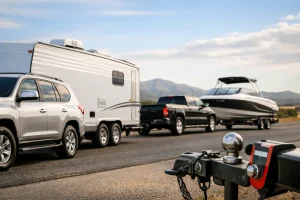
For anyone towing regularly with caravans, plant trailers, box trailers or trade equipment, this is one of the first checks worth making before loading up.
How to measure nose weight properly
The safest approach is to measure it with the trailer loaded as it will actually be used. That means including petrol bottles, tools, luggage, water containers, machinery or anything else you plan to tow with. Measuring an empty trailer tells you very little if it is normally used loaded.
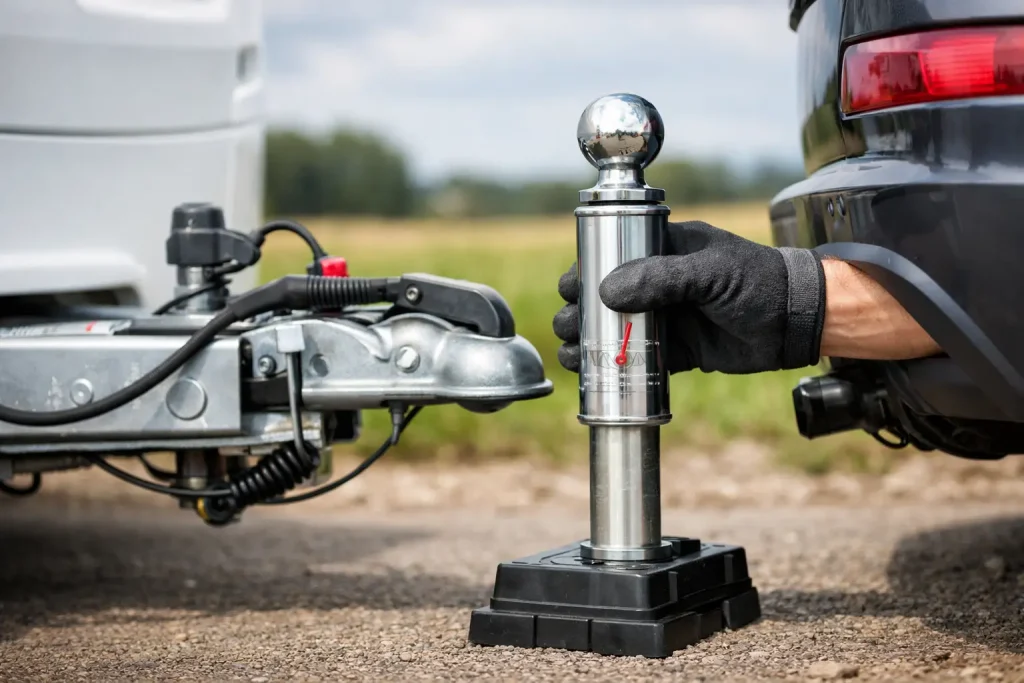
A proper nose weight gauge is the most straightforward option, but other approved measuring methods can work if carried out carefully on level ground. The trailer should be level, or as close as possible to the height it will sit at when attached to the vehicle. If you measure it with the drawbar far too high or low, the reading can be misleading.
You then support the coupling head on the gauge and take the reading. If it is above the safe limit, the load needs adjusting. If it is far too low, the trailer may need weight moved forwards. Small changes in load position can make a big difference.
Common measuring mistakes
One of the biggest mistakes is checking nose weight before the trailer is fully packed. Another is moving items after measurement and assuming the figure stays the same. It will not. Even shifting a toolbox, generator or stack of luggage can alter the reading enough to matter.
Uneven ground is another issue. If the trailer is leaning or not sitting level, you are not getting a reliable figure. And of course, guessing by how much the rear suspension compresses is no substitute for an actual measurement.
How to adjust nose weight by loading the trailer
Most nose weight problems come back to where the load sits in relation to the trailer axle. Move weight forwards and nose weight increases. Move it backwards and nose weight reduces. That sounds simple, but the correct balance needs a bit of care.
Heavy items should usually be loaded low down and close to the axle area, with enough forward bias to maintain stable nose weight without overloading the towball. What you want to avoid is too much mass at the very back of the trailer. Rear-heavy trailers are far more likely to snake and feel unstable.
There is always some compromise. Put everything at the very front and you may overload the nose weight. Put too much behind the axle and stability suffers. The aim is a balanced, secure load that gives a measured nose weight within the allowed limit.
Different trailers behave differently
A small camping trailer, a twin-axle caravan and a builder’s plant trailer will not all respond the same way to loading changes. Trailer design, axle position, suspension type and load shape all play a part. That is why copying someone else’s setup is not always wise, even if their trailer looks similar.
If you tow for work, consistency helps. Keeping equipment packed in the same positions each time makes it easier to stay within limits and spot when something has changed.
Signs your nose weight may be wrong
If the steering feels unusually light, the rear of the vehicle looks excessively low, or the trailer seems twitchy at speed, nose weight is one possible cause. Swaying, poor straight-line stability and a general feeling that the trailer is steering the car are all warning signs worth taking seriously.
That said, nose weight is not the only factor. Tyre pressures, worn suspension, poor trailer maintenance, uneven braking and insecure loads can also cause instability. Towing problems are often a combination of issues rather than one simple fault.
This is where hands-on workshop advice can save time. If a customer says a caravan or trailer never feels quite right, we would not just look at the towbar in isolation. The full towing setup matters.
Why professional fitting and checks make a difference
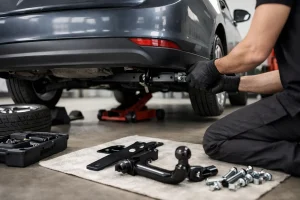
A correctly fitted towbar and suitable electrics give you a proper foundation for safe towing, but setup does not end there. Vehicle-specific electrics, correct towball height, trailer condition and legal load limits all feed into how well the outfit performs on the road.
That is especially true with modern vehicles. Suspension characteristics, rear load ratings and electronic systems can all influence towing behaviour. If you are new to towing, upgrading vehicles, or using a trailer for heavier work than before, it is worth having the setup checked by people who deal with these systems every day.
For local motorists, caravan owners and van users around South Yorkshire, practical advice matters more than theory. A quick conversation about what you tow, how often you tow it, and what vehicle you use can often highlight issues before they become expensive or dangerous.
A sensible towbar nose weight guide for everyday use
The best routine is a simple one. Know the maximum nose weight for both vehicle and towbar, load the trailer with care, measure the nose weight on level ground, then adjust until it sits within the safe limit. After that, make sure the load is secured properly and the trailer is otherwise roadworthy.
If your towing setup changes, check again. Different cargo, a different trailer, a new vehicle or even a change in where tools are stored can alter the result. Regular towers tend to build this into their preparation because it removes guesswork.
At Doncaster Towbars, this is the kind of detail that separates a basic towing setup from one that feels dependable every time you use it. When the weights are right, the towbar is fitted properly, and the trailer is in good order, towing becomes far less stressful.
If you are unsure about nose weight, towbar limits or how your vehicle is set up for towing, get it checked before your next journey. A few minutes in the workshop can make the drive home a lot more settled.