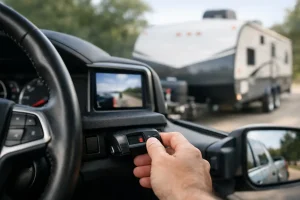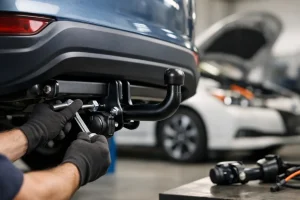
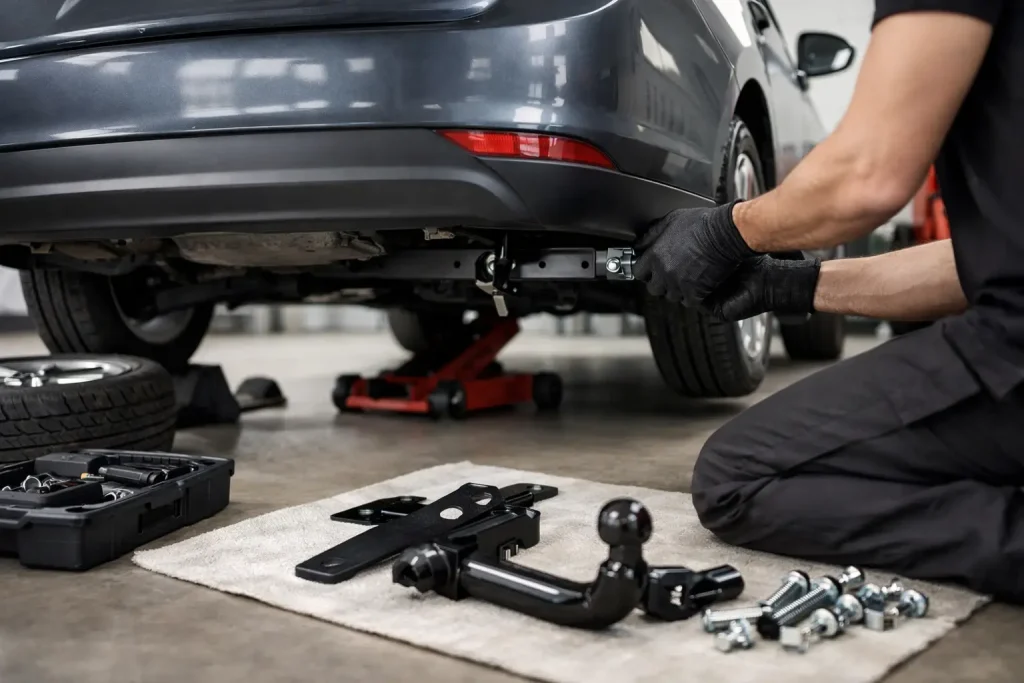
A towbar fitting appointment should not involve guesswork on the day. The right towbar, electrics and fitting method depend on your exact vehicle, how you plan to tow and what equipment is already fitted to the rear of the car. Knowing how to prepare car for towbar fitting helps the work go smoothly and gives your installer the information needed to build a safe, practical towing setup.
For most customers, preparation is straightforward. You do not need to remove the bumper or attempt any wiring yourself. In fact, modern vehicles often have parking sensors, cameras and safety systems behind the bumper, so leaving the technical work to an experienced fitter is the sensible option. Your job is to confirm the details, make the car accessible and raise any concerns before the fitting begins.
Confirm your vehicle and towing requirements
Start with the exact make, model, year and registration of your vehicle. Small differences between trim levels and model years can affect the towbar bracket, bumper cut, wiring kit and coding required. A vehicle that looks identical to another from the outside may use different rear crash bars, electrical systems or sensor layouts.
It also helps to be clear about what you will tow. A lightweight garden trailer, a caravan, a horsebox and a work trailer place very different demands on the vehicle. Tell the fitter whether you need a standard towball, a detachable towbar, a flange towbar for accessories, or a system that can take a cycle carrier as well as a trailer.
Check the towing limits in your vehicle handbook or on its VIN plate. Look for the maximum braked trailer weight, unbraked trailer weight and gross train weight. These figures set the limits for the vehicle, not just the towbar. The towbar and trailer must never be used beyond the lowest applicable weight rating.
If you are unsure what the figures mean, bring this up when booking. It is far better to discuss a caravan’s plated weight, a loaded trailer or a commercial van’s working requirements in advance than to discover a mismatch after fitting.
How to prepare car for towbar fitting before arrival
A clean, accessible car makes the fitting process easier and helps protect the interior while the electrics are connected. There is no need for a showroom finish, but heavy mud around the rear bumper, wheel arches or underside can slow down inspection and fitting.
Clear the boot where possible. Fitters may need access behind side trims, under the boot floor, near the spare-wheel well or around the rear light clusters to route and connect vehicle-specific wiring. Remove loose tools, shopping, pet equipment and valuable items, particularly if they are stored beneath the boot floor.
Make sure the locking wheel-nut key is in the vehicle if your car uses locking wheel nuts. It may not be needed on every model, but having it available avoids an unnecessary delay if access is required. If you have a removable boot liner, aftermarket storage system or fitted load-area equipment that blocks access to trim panels, mention it before the appointment.
Leave enough fuel in the vehicle for normal testing and avoid arriving with a completely flat battery. Modern towbar electrics need to communicate correctly with the car, and a weak battery can create avoidable warning messages or prevent proper checks. If the battery has recently been disconnected, replaced or has known issues, tell the technician.
Tell the fitter about existing rear-end equipment
The rear of a modern car can contain more technology than many drivers realise. Parking sensors, reversing cameras, blind-spot monitoring, rear cross-traffic alert, powered tailgates and hands-free boot opening systems can all influence the fitting approach.
A good installation is not simply about attaching a towbar. The vehicle’s systems should continue to operate as intended, and where required, the towbar electrics should communicate with the car. This can include switching off rear parking sensors when a trailer is connected, monitoring trailer indicators and supporting stability-related towing functions on compatible vehicles.
Let the fitter know if the car has had previous accident damage, bumper repairs, aftermarket body styling, rear parking sensor work or non-standard electrics. These do not automatically prevent a towbar fitting, but they can affect access and may need a closer inspection. The same applies if a previous towbar has been removed or the car has an existing electrical socket that no longer works.
If your vehicle has a factory-fitted spare wheel beneath the rear floor, an LPG tank, an AdBlue tank or a non-standard exhaust, mention that too. The correct product should be selected around the vehicle as it stands, rather than relying on assumptions.
Choose the right electrics for the job
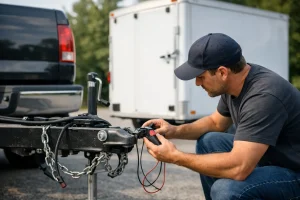
Towbar electrics are just as important as the towbar itself. A standard 7-pin socket is commonly used for many trailers, while a 13-pin socket is widely used for caravans and newer trailers. The correct option depends on what you tow and the functions you need.
For example, a caravan may need more than road lights. Depending on its setup, it may require power for internal functions, battery charging or fridge operation. A basic lighting socket is not always enough. Explain how you use your trailer or caravan so the fitter can specify the right wiring from the outset.
Vehicle-specific electrics are often the best choice for modern cars and vans because they are designed to work with the vehicle’s electrical architecture. They can reduce the risk of warning lights, electrical faults and poor trailer-light performance associated with unsuitable universal wiring. In some cases, coding or configuration after installation is required, which is another reason not to treat towing electrics as a simple add-on.
Before booking, check your trailer plug and the condition of its cable. There is little value in fitting high-quality electrics to the car if the trailer has corroded connectors, damaged insulation or unreliable lights. If the trailer needs attention, arrange servicing or repairs so both sides of the towing combination are ready.
Think about access, sensors and day-to-day use
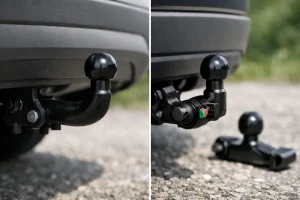
The best towbar for you is not always the cheapest or most visible option. A fixed towbar is often a practical choice for frequent towing, commercial vans and drivers who also use a towbar-mounted carrier. A detachable towbar can be a neater option where appearance matters or where you do not tow every week.
There are trade-offs. Some detachable systems are easier to remove when not in use, but the mechanism must be kept clean and used correctly. A fixed towbar is always ready, but it remains visible and may affect access around the rear of the vehicle. The installer can advise on the right fit for your vehicle and intended use.
If you regularly reverse into tight driveways, tow a caravan onto a pitch or use a busy work yard, consider whether parking sensors or a reversing camera would make life easier. A towbar can change what sits behind the vehicle, and a well-planned parking sensor or camera installation can make manoeuvring more confident. It is often convenient to discuss these upgrades while the car is already booked into the workshop.
What not to do before a fitting
Avoid removing the rear bumper, disconnecting lights or fitting a universal wiring kit yourself before the appointment unless specifically advised. Missing clips, damaged trims and altered wiring can turn a straightforward fitting into fault-finding work. Keep the vehicle in its normal condition and let the technician assess it properly.
Do not rely on a towbar’s headline capacity alone. The vehicle’s own towing limit, the trailer’s plated weight, the noseweight limit and the load in the car all matter. A trailer that is legal when empty may not remain suitable once loaded with machinery, building materials or holiday equipment.
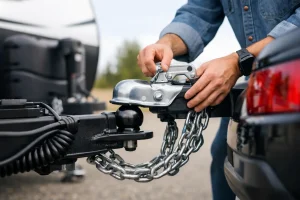
Finally, do not forget insurance and practical paperwork. Tell your insurer about the towbar if required by your policy, keep any fitting documentation, and make sure you understand the rules that apply to your licence category and trailer combination. If you are new to towing, ask for advice on safe coupling, breakaway cables, lighting checks and noseweight before your first journey.
A professionally fitted towbar should leave you ready to tow with confidence, not leave you with questions. Bring the right vehicle information, clear the boot, be open about any existing equipment and explain what you intend to tow. The team at Doncaster Towbars can then match the fitting and electrics to the way you actually use your car, caravan, trailer or van.