A loaded trailer can feel perfectly settled on the drive and completely different at 50 mph on the A1. Crosswinds, uneven loads, tired tyres and poor visibility all expose weak points quickly. The best upgrades for towing safety are not always the biggest or most expensive – they are the ones correctly matched to your vehicle, trailer and the work you ask them to do.
For caravan owners, occasional trailer users and tradespeople alike, the right setup starts with sound basics. A professionally fitted towbar, reliable electrics and a roadworthy trailer should come before convenience accessories. Once those foundations are right, a few well-chosen upgrades can make hitching, manoeuvring and travelling far less stressful.
Start with the towbar and towing limits
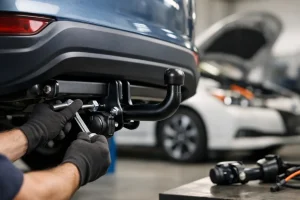
A towbar is not a universal lump of metal. It must be suitable for the exact vehicle, installed correctly, and compatible with the vehicle’s towing and nose-weight limits. Those figures matter more than the towbar’s apparent strength. Exceeding the permitted trailer weight or loading too much weight onto the towball can affect steering, braking and stability.
For many modern vehicles, a vehicle-specific wiring kit is equally important. It communicates properly with the car’s electrical system and can support functions such as trailer stability control, rear parking sensor deactivation and fog lamp switching where fitted. A basic universal wiring solution may cost less initially, but it is not always the right answer for a vehicle with complex electronics.
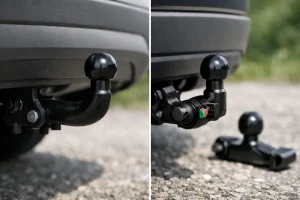
Choose a fixed or detachable towbar based on how you use the vehicle. A fixed towbar is practical for frequent towing and hard-working vans. A detachable version keeps the rear of the car clearer when not in use and may avoid interference with parking sensors. Neither type is automatically safer than the other – correct specification and fitting are what count.
The best upgrades for towing safety on the road
Vehicle-specific trailer electrics
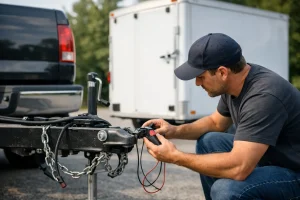
Good trailer electrics do more than illuminate the indicators. They give other road users clear warning of every turn, stop and change of direction, while providing a dependable connection for legal trailer lighting. Poor connections can cause intermittent lights, warning messages or lights that work until vibration and rain reveal a fault.
A 13-pin system is the usual choice for modern towing and offers a secure, weather-resistant connection. It can also provide the additional functions needed for caravans, including charging circuits and internal power where required. If you are towing an older trailer with a different plug, the connection should be adapted properly rather than relying on a loose or corroded converter.
Before every journey, check indicators, brake lights, tail lights, fog light and number plate light with the trailer attached. It takes moments and prevents the sort of avoidable fault that can turn a simple trip into a roadside stop.
A reversing camera or parking sensors
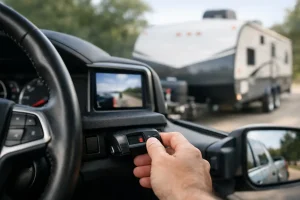
Reversing a car with a trailer is a skill, but better visibility makes it safer. A reversing camera can help you line up with the coupling, watch the rear corners of the trailer and spot low obstacles that mirrors may miss. It is particularly useful when hitching alone, in a busy yard or on a tight driveway.
Parking sensors can also be valuable, although they need to be fitted and configured with the towbar in mind. On some vehicles, trailer detection or a dedicated wiring kit allows the sensors to switch off when a trailer is connected. This avoids constant warnings from the trailer while retaining the system’s benefit when you are driving without it.
Neither system replaces checking mirrors and getting out to look when space is tight. Cameras can distort distance, and mud or rain can obscure a lens. Treat them as an extra set of eyes, not permission to reverse without care.
Extended towing mirrors
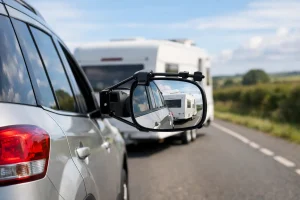
If the trailer or caravan is wider than the towing vehicle, you need a clear view down both sides and behind it. Proper towing mirrors are one of the simplest safety improvements available. They help you monitor traffic approaching from behind, see whether the trailer is tracking correctly and make safer lane changes.
Choose mirrors that fit securely and do not vibrate excessively at speed. Poorly fitted extensions can move out of position, scratch the vehicle or become a hazard in their own right. Set them before leaving, then recheck after a few miles if necessary.
Tyre pressure monitoring and quality tyres
Tyres are often overlooked because they are not a glamorous upgrade, yet they carry the entire load. A tyre pressure monitoring system can provide early warning of a slow puncture or sudden pressure loss on the towing vehicle. This is particularly useful with heavy loads, long motorway runs and vehicles that spend much of the week doing short local journeys.
The trailer deserves the same attention. Trailer tyres can look healthy while ageing internally or cracking at the sidewalls, especially if the trailer is stored outside or used infrequently. Check their condition, inflation pressures, load rating and age. Replace tyres that are damaged, perished or unsuitable for the trailer’s maximum laden weight.
Do not assume that fitting tougher tyres allows you to exceed the vehicle or trailer limits. Tyres improve resilience and grip only when they are correctly rated and inflated for the load.
Trailer brakes, breakaway cable and hitch maintenance
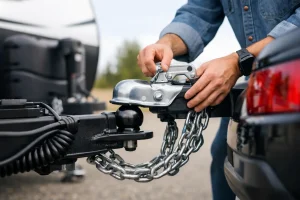
On a braked trailer or caravan, the braking system is a major part of the safety package. Worn brake shoes, seized cables, poorly adjusted brakes or a damaged coupling can all make the trailer harder to control. A regular trailer service checks the parts that are easy to ignore until they fail, including wheel bearings, brake operation, hubs, lights and the coupling head.
The breakaway cable should be in good condition and attached correctly for each journey. Its job is to apply the trailer brakes if the trailer becomes detached. It is not a substitute for proper hitching, nor should it be wrapped around unsuitable parts of the towbar. If there is any doubt about the correct attachment point for your vehicle and coupling, ask a professional fitter to show you.
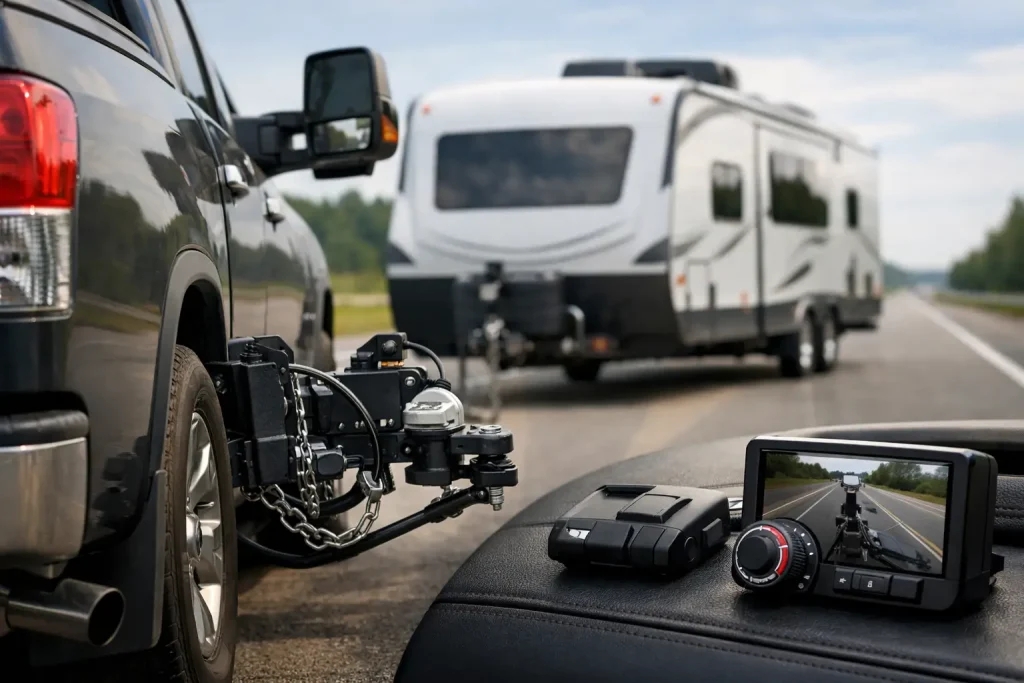
A stabiliser hitch or compatible friction stabiliser can be worthwhile for caravans and certain trailers, particularly where crosswinds and passing lorries are common. It helps reduce snaking, but it cannot correct a badly loaded trailer, an unsuitable tow car or excessive speed. Load distribution remains the first defence: keep heavy items low, secure them properly and position the load to achieve the correct nose weight.
Do not overlook the driver’s view and awareness
A dash cam does not prevent a trailer from swaying, but it can be a sensible safety and security addition for regular towing. It records incidents, encourages careful driving and can provide useful evidence if another road user cuts across the trailer or causes a collision. A professionally installed system keeps cables tidy and avoids compromising the driver’s view.
For those towing commercially, a dash cam can also help identify repeated issues such as poor loading practice, rushed reversing or close calls at particular sites. The value is in learning from what it shows, not simply having a recording after something has gone wrong.
Allow more distance than you would when driving unladen. A trailer changes acceleration, braking and overtaking distances, and it can be affected by road camber and gusts that barely register in the car. If instability begins, ease off the accelerator smoothly, keep the steering straight and avoid sharp braking or sudden corrections.
Choose upgrades around the job, not the catalogue
There is no single shopping list for every towing setup. A small garden trailer behind a family car may benefit most from quality electrics, towing mirrors and a thorough trailer check. A caravan used for long holidays may justify a stabiliser, tyre monitoring and a reversing camera. A tradesperson towing plant or materials may need to focus first on load ratings, braking condition, secure coupling and frequent inspections.
At Doncaster Towbars, the useful starting point is a conversation about the vehicle, trailer and typical load. That makes it possible to recommend a towbar, electrics and practical safety equipment that suit the job rather than fitting accessories for the sake of it.
Before your next trip, take ten minutes to check the hitch, breakaway cable, lights, tyres, load security and mirrors. The safest upgrade is often the one backed up by a careful routine every time you tow.