A van dash cam has a harder job than one fitted to a family car. It may need to record long working days, cover a larger vehicle, cope with frequent stops and starts, and provide evidence when the van is parked outside a customer’s property or loaded with tools. The best dash cams for vans are therefore not simply the ones with the biggest specification on the box. They are the ones that suit how, where and when the vehicle is used.
For a sole trader, the priority may be clear footage following an incident on the road. For a fleet operator, it may be rear coverage, driver protection and a reliable record of deliveries. For anyone carrying valuable equipment, parking surveillance can be just as useful as forward-facing recording. Choosing the right system starts with those real-world needs.
What makes a dash cam suitable for a van?
A good van dash cam needs dependable video quality, a sensible field of view and a power setup that will not cause problems with the vehicle battery. It should also be fitted properly, with cables routed safely and discreetly rather than draped across the windscreen or interfering with airbags and trim.
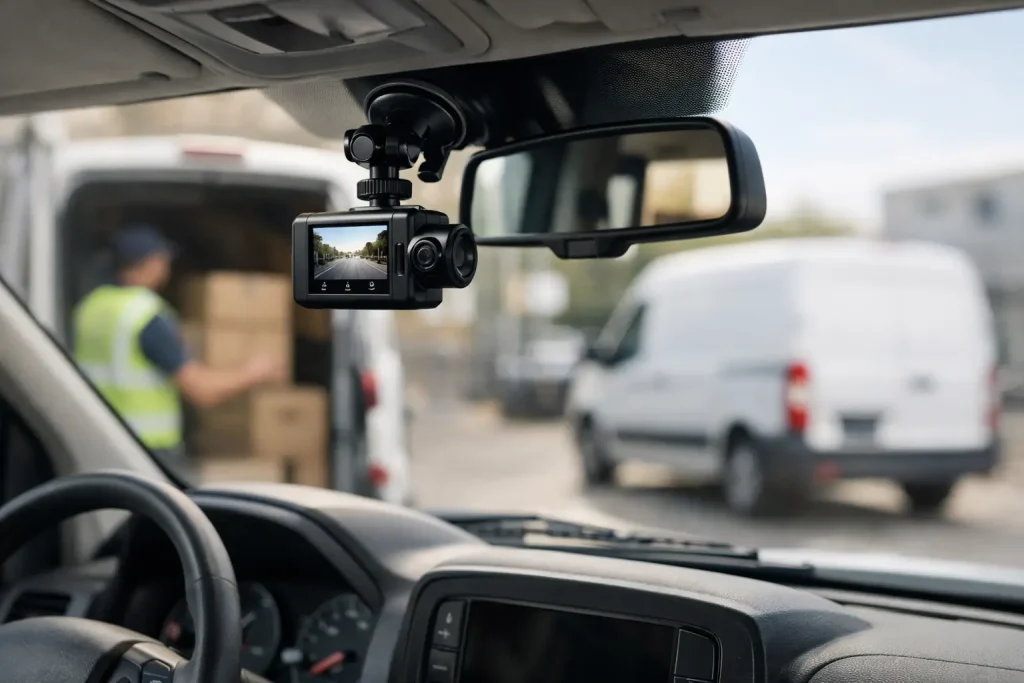
The camera’s position matters more in a van than many drivers expect. A high windscreen and upright seating position can produce a different view of the road compared with a car. The camera needs a clear forward view without obstructing the driver’s line of sight. If the vehicle has a bulkhead, windowless rear doors or racking, that will also affect whether rear recording is practical and worthwhile.
It is tempting to choose a camera purely on resolution. High-resolution footage is useful, particularly when reading number plates, but it is only one part of the picture. Strong low-light performance, a reliable image sensor and sensible exposure control are often more valuable on a wet winter evening in South Yorkshire than a headline resolution figure.
The best dash cams for vans depend on the job
There is no single best setup for every van. A simple, professionally fitted front camera can be an excellent choice for an owner-driver doing local jobs. A dual-camera system is usually more appropriate for vehicles travelling longer distances, making regular deliveries or operating with more than one driver.
Front-facing cameras for everyday protection
A front-facing dash cam records what happens ahead of the van. It is the straightforward choice for drivers who mainly want evidence after collisions, close calls, false allegations or disputes over road conditions.
Look for a camera that records at least Full HD, with a wide but not excessively distorted viewing angle. Very wide lenses can show more of the scene, but may make distant vehicles and number plates appear smaller. A well-balanced lens and good night recording are usually a better investment than chasing the widest possible angle.
For many tradespeople, this type of system provides the right level of protection without adding unnecessary complexity. It can document incidents on busy roundabouts, narrow residential streets and motorways, while keeping the installation neat and easy to use.
Front and rear cameras for broader evidence
A dual dash cam records both the road ahead and the area behind the van. This is particularly useful where rear-end incidents, tailgating, loading-area disputes or reversing claims are a concern.
Rear camera fitting needs more thought on a commercial vehicle. A rear window can make installation relatively simple, but many vans have solid rear doors. In that case, an external camera may be required. It must be mounted securely, protected from weather and positioned so that doors, hinges or a towbar do not obstruct the view.
A rear-facing dash camera is not a replacement for parking sensors or a reversing camera. Its primary role is recording, not necessarily providing a live manoeuvring view. However, the right combination of rear camera, parking sensors and dash cam coverage can make a working van safer and easier to manage.
Interior cameras for driver and cab security
Some systems include an interior-facing camera. This can be useful for passenger-carrying vans, taxi-style work, driver training or fleet operations where there is a genuine need to record activity inside the cab.
It is not right for every business. Interior recording brings privacy considerations, especially where employees use the vehicle. Drivers should know when recording is taking place, what is captured and how footage is handled. If audio recording is enabled, consider whether it is necessary for the intended use.
For vans carrying tools, an interior camera may offer some additional reassurance if the load area is visible through the bulkhead opening or rear-view space. In most cases, though, a dedicated security alarm and sensible tool storage remain the first line of defence.
Features worth paying for
When comparing dash cams, focus on features that improve the quality and availability of evidence rather than gimmicks that add little to day-to-day use.
Night vision and clear number plates
Most incidents do not happen in perfect daylight. Good low-light recording is essential for early starts, winter commutes and vans parked on the road overnight. Look for footage that remains clear under streetlights and when facing headlights.
Number plate readability is affected by lighting, speed and distance, so no dash cam can guarantee a perfect image in every situation. A quality camera with a good sensor gives you the best chance of retaining useful detail when it matters.
Parking mode and battery protection
Parking mode allows a dash cam to record or save footage when the vehicle is unattended. Depending on the system, it may activate after an impact or movement near the van. This can be valuable for identifying damage in car parks, outside jobs or at home.
The important part is how it is powered. A properly hardwired installation can include a low-voltage cut-off, which stops the camera drawing power once the vehicle battery reaches a set level. This is particularly important for vans that may stand for several days between jobs. Cheap plug-in arrangements can be convenient, but they are rarely the best answer for reliable parking protection.
GPS, speed data and Wi-Fi access
GPS can record the vehicle’s route and location alongside the video. That can help establish where an incident occurred, but some drivers prefer to disable speed recording or GPS data for privacy reasons. The correct choice depends on the vehicle’s use and the business policy.
Wi-Fi or app access makes it easier to review and download clips on a phone without removing the memory card. It is handy, but do not let it distract from the basics. The camera should create clear recordings consistently, save them reliably and use a suitable high-endurance memory card designed for repeated writing.
4G-connected cameras for fleet use
For businesses with several vans, a 4G-connected dash cam may be worth considering. These systems can provide alerts, live location information and remote access to recordings, subject to mobile signal and a data subscription.
They can be useful where a manager needs visibility of vehicle use or where rapid access to footage matters. They also cost more and require clear rules about monitoring. A small business with one or two vans may get better value from a quality dual-camera system with professional hardwiring.
Why professional dash cam fitting matters
A dash cam is only as dependable as its installation. Hardwiring avoids a trailing lead from the 12V socket and leaves that socket free for other equipment. More importantly, it allows the system to be configured for controlled parking-mode operation.
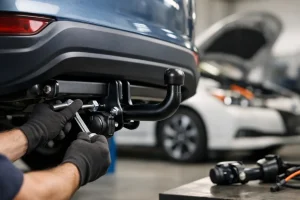
Modern vans have increasingly complex electrical systems, airbags in windscreen pillars and vehicle-specific trim. Cables should be routed with care, fuse connections selected correctly and the camera tested before the vehicle leaves the workshop. Poor fitting can lead to rattles, unreliable power, poor camera alignment or, in the worst case, interference with safety equipment.
At Doncaster Towbars, dash cam fitting can be planned around the vehicle and its working role, whether that means a tidy front camera, a dual-camera arrangement or a system alongside parking sensors and towing electrics. It is a practical way to keep vehicle upgrades in one place and ensure the finished installation works as it should.
Choosing the right setup for your van
Before buying, think about where the van is parked, how many miles it covers, whether more than one person drives it and what you most want the footage to prove. A local electrician’s van parked on a driveway may need a front camera and impact-triggered parking mode. A courier van working long hours may benefit from front and rear recording, strong night performance and a high-capacity memory card. A small fleet may justify connected cameras and an agreed footage policy.
Avoid treating a dash cam as a fit-and-forget accessory. Check the recordings occasionally, keep the lens clean and replace the memory card if it shows errors or reaches the end of its working life. That small amount of maintenance helps ensure the camera is ready when an unexpected moment needs explaining.
If you are unsure which system suits your van, a brief conversation with an experienced fitter can save buying features you will never use or missing the ones that genuinely protect your work.