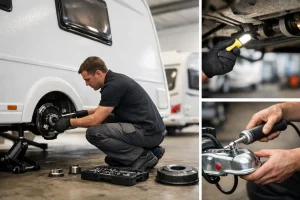
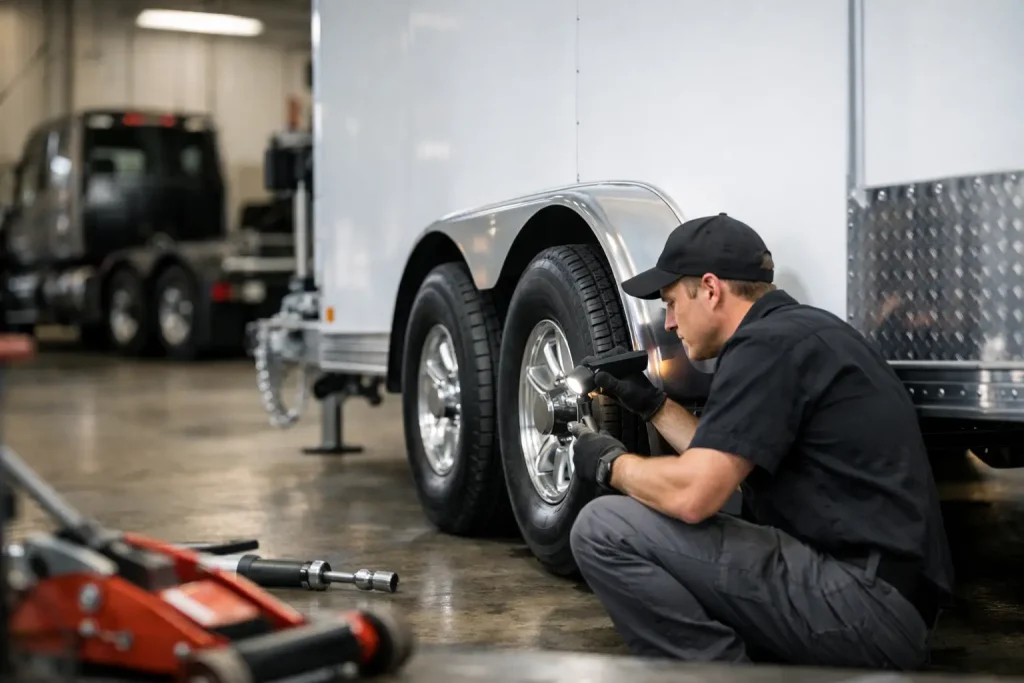
A trailer can look perfectly serviceable while the parts that matter most are wearing out underneath. Wheel bearings, brakes, tyres, lights and couplings all work hard, often after long periods parked up. If you are asking when should a trailer be serviced, the sensible answer is before a fault leaves you stranded, damages your load or makes towing unsafe.
For most privately owned trailers, an annual professional service is a sound starting point. However, the right interval depends on how far you tow, the weight you carry, where the trailer is stored and whether it has brakes. A heavily used plant trailer or working trailer may need attention far more often than a lightly used domestic box trailer.
When should a trailer be serviced?
As a general guide, arrange a full trailer service every 12 months or around every 6,000 miles, whichever comes first. This is particularly sensible for braked trailers, caravans, horseboxes, boat trailers and commercial trailers that regularly carry substantial loads.
That said, mileage is not the only measure. A trailer used only a few times a year can still develop faults while standing. Moisture can affect brake components and electrics, tyres can deteriorate, and bearings may suffer if water has entered the hub. A trailer that has spent winter outside and unused should be checked before its first proper journey of the season.
If you use your trailer for work, carry machinery, tow regularly on motorways or travel long distances for holidays and events, consider a six-month inspection alongside the yearly service. This gives wear items a chance to be identified before they become an expensive repair.
New trailers and recently repaired trailers
A new trailer should still be checked after its first period of use. Wheel nuts can need re-torquing, brakes may require adjustment as components bed in, and a quick inspection can identify any early issues with cables, lights or fixings.
The same applies after significant repairs. If bearings, brakes, axles, tyres or electrics have been replaced, follow any advice given by the technician and keep an eye on how the trailer feels during the first few trips.
Signs your trailer needs servicing sooner
You should not wait for the annual date if something changes in the way your trailer tows, stops or connects to the vehicle. Small symptoms are often easier and cheaper to resolve than a complete roadside failure.
Book an inspection promptly if you notice any of the following:
- The trailer pulls to one side, feels unstable or develops unusual sway.
- Brakes feel weak, snatchy or fail to release cleanly after stopping.
- A wheel hub becomes hot after a journey, which can point to a bearing or brake issue.
- Tyres show cracking, uneven wear, bulges or repeated pressure loss.
- Lights flicker, fail intermittently or do not work correctly with the towing vehicle.
- The hitch is difficult to couple, has excessive movement or does not lock positively.
- You hear grinding, rumbling, squeaking or knocking from the wheels, axle or hitch.
- The breakaway cable is frayed, damaged or incorrectly routed.
A hot hub deserves particular attention. Do not continue towing and hope it settles down. Heat can indicate a failing bearing or binding brake, both of which can lead to serious damage if ignored.
What is checked during a trailer service?
A proper service is more than checking whether the lights come on. It should examine the mechanical parts that carry weight, control the trailer and keep it safely attached to your vehicle.
Brakes, hubs and wheel bearings
On a braked trailer, the braking system should be inspected for wear, corrosion, correct adjustment and free movement. Brake shoes, drums, cables, linkages and the overrun mechanism all need to work together. If the brakes are poorly adjusted or seized, stopping performance can be affected and tyres may wear unevenly.
Wheel bearings are checked for play, noise, condition and suitable lubrication. Bearings work out of sight, so a problem is easily missed until it becomes severe. This is especially relevant for boat trailers, where launching and recovery can expose hubs to water.
Tyres, wheels and suspension
Trailer tyres need checking for tread depth, sidewall cracking, age-related deterioration and the correct load rating. A tyre may have plenty of tread but still be unsafe if it is old, perished or damaged. Tyre pressures should be set for the trailer’s intended load, not guessed at when you are ready to leave.
The technician should also inspect wheel nuts, wheel rims, suspension components, axle mountings and the trailer chassis. Overloading, potholes and kerb strikes can all place extra strain on these areas.
Hitch, coupling and safety equipment
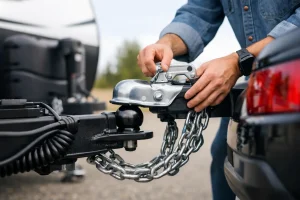
The hitch should lock firmly onto the towball and show no excessive wear. A service should include the coupling head, jockey wheel, stabiliser if fitted, breakaway cable and safety chain where applicable. These are simple components, but they are central to keeping the trailer correctly connected to the towing vehicle.
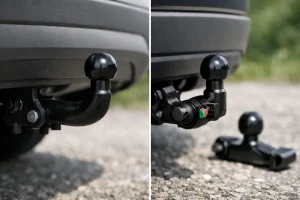
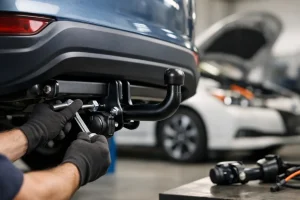
It is also worth checking that the towball itself is in good condition and that any detachable towbar is fitted correctly. A trailer service and a towbar inspection work well together, particularly if you have recently changed vehicles or installed new trailer electrics.
Lights and trailer electrics
Every lamp should be tested, including indicators, brake lights, tail lights, number plate illumination, fog light and reversing light where fitted. The plug, cable, sockets and wiring should be checked for corrosion, damage and poor connections.
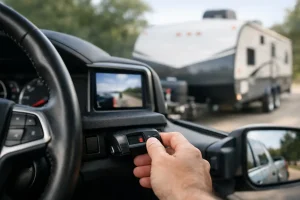
Electrical faults can be frustrating because they may appear only when the cable moves or when the weather is wet. Vehicle-specific electrics and a properly fitted socket help ensure your towing vehicle communicates correctly with the trailer, rather than leaving you to diagnose a warning light on the dashboard before every journey.
Servicing depends on how you use the trailer
A small unbraked trailer used for occasional trips to the tip will not have the same maintenance needs as a twin-axle trailer carrying equipment every day. It still needs regular checks, but the service plan can be proportionate to its use.
Trailers that carry heavier loads need closer attention because brakes, tyres, suspension and bearings are under greater pressure. Similarly, trailers stored outdoors are more vulnerable to corrosion, water ingress and seized moving parts. If your trailer stands for months at a time, moving it occasionally and checking the tyre pressures can help prevent flat spots and seized brakes.
Boat trailers deserve additional care after any water exposure. Rinsing the running gear with fresh water and arranging more frequent bearing inspections can prevent problems that are not immediately visible. Horseboxes should be checked with particular care because safe braking, flooring, tyres and structural condition directly affect the welfare of the animal being carried.
Checks to make before every journey
An annual service does not replace routine pre-tow checks. Before setting off, walk around the trailer and look for obvious damage, loose loads, flat tyres and faulty lights. Check that the hitch is fully engaged, the jockey wheel is raised and secured, the breakaway cable is correctly attached, and the trailer plug is fully connected.
Make sure your load is evenly distributed and properly restrained. Too much weight at the rear can contribute to instability, while excessive nose weight can overload the towbar or rear axle of the vehicle. Always work within the towing limits for the vehicle, towbar and trailer.
After the first few miles, especially when carrying a new or heavy load, stop somewhere safe and check that the trailer is still secure. This quick habit can reveal a loose strap, shifting load or developing wheel issue before it becomes a bigger problem.
Why professional servicing is worth it
Some visual checks are straightforward for any owner, but brake adjustment, bearing work, axle inspection and fault-finding on trailer electrics require the right tools and experience. A professional service provides a clearer picture of the trailer’s condition and helps you plan repairs before they become urgent.
Keeping service records is also useful. It gives you a maintenance history, supports the trailer’s resale value and makes it easier to track tyres, brakes, bearings and replacement parts over time. For tradespeople and small businesses, it also helps show that work equipment is being looked after responsibly.
At Doncaster Towbars, trailer servicing can be combined with repairs, replacement parts and trailer electrics checks, so issues can be dealt with in one workshop visit rather than left to chance.
The best time to book is before your next busy period, not the day before a holiday, job or long-distance tow. A well-maintained trailer should be the quiet, dependable part of the journey – leaving you free to concentrate on the road ahead.