Essential Safety Checks For Your Towbar Before A Long Journey
Being able to hitch your caravan or tent trailer and set off on an adventure is great fun. Hit the open road, go where you want and experience the opportunity to see different places here and abroad. However, like any good adventure, you should make a plan. This is particularly important if you travel in vehicles towing a caravan or trailer.
MOT Towbar Test
The UK MOT test includes towbars in Section 6.1.6 – coupling mechanisms and towing equipment. Here is when your towing equipment’s coupling mechanisms and condition are checked for road safety.
However, you should always perform a safety check before long journeys. Doing this will enable you to commence your journey feeling confident in your vehicle. Plus, you can avoid a costly fine—up to £2500, a driving ban and three penalty points—for driving an unsafe vehicle.
5-Point Check List To Follow
1: Weight Limits
- Know your car or van’s weight limit. The VIN plate will provide this info.
- If towing a trailer, ensure you do not overload it.
- Make sure everything is balanced evenly.
- Make sure your load is safe and secure.
- Trailer Without A Braking System
- You must weigh at most 50% of your car/van weight.
- It should weigh at most 750 kg.
- Trailer With A Braking System
- Check that the second weight on the manufacturer’s plates is the maximum for a car and loaded trailer.
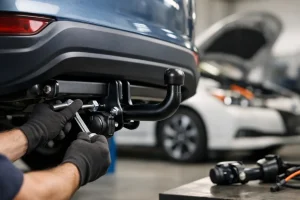
2: Towbar Checks
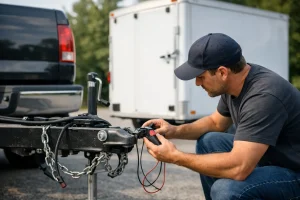
- The towbar is connected correctly and undamaged.
- Nuts and bolts are tightened.
- The coupling is the correct height.
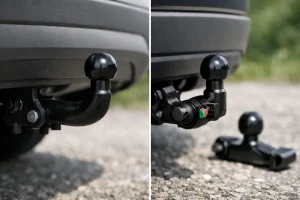
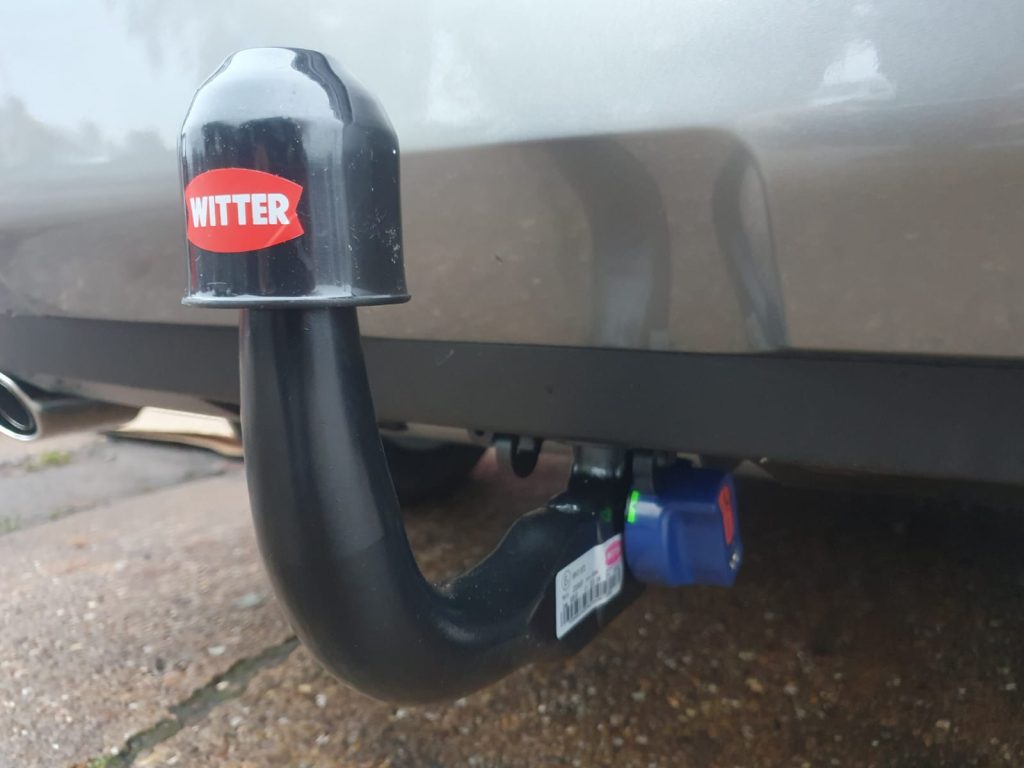
- Ensure the safety indicator of a detachable towbar is entirely green. This indicates you have correctly locked the towbar in place. If the indicator is red or only partially green, it is not connected correctly and is unsafe to tow.
- If you have a 7 or 13-core cable and plug check, both show no damage.
3: Breakaway Cable
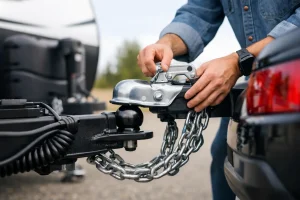
This cable engages the trailer brakes, stopping it if it detaches from the vehicle. If fitted check,
- The cable is not dragging on the ground when in motion.
- There is enough slack so that you don’t accidentally apply the brakes.
- There is no wear and tear on the cable.
4: Lights And Indicators
- Check they are working correctly.
- Check for any sign of damage.
5: Wheels And Tyres
Check both the car or van and whatever you are towing for,
- Any cuts or bulges.
- Each tyre tread should have a depth of 1.6mm.
- Ensure you inflate all tyres to the manufacturer’s specs for the load you tow.
- All around the tyre’s circumference.
- Across the central ¾ breadth of the tyre.
- The torque of the wheel nuts and ensure you tighten the bolts correctly.
- Fit mudguards to the trailer or caravan.
If You Are Unsure, Talk To The Experts
The first place to check for any instructions or guidelines to prepare your vehicle for towing is your vehicle manufacturer’s handbook.
For those who live in and around the Doncaster area, you can also contact us for a chat or for us to do a preparation inspection.