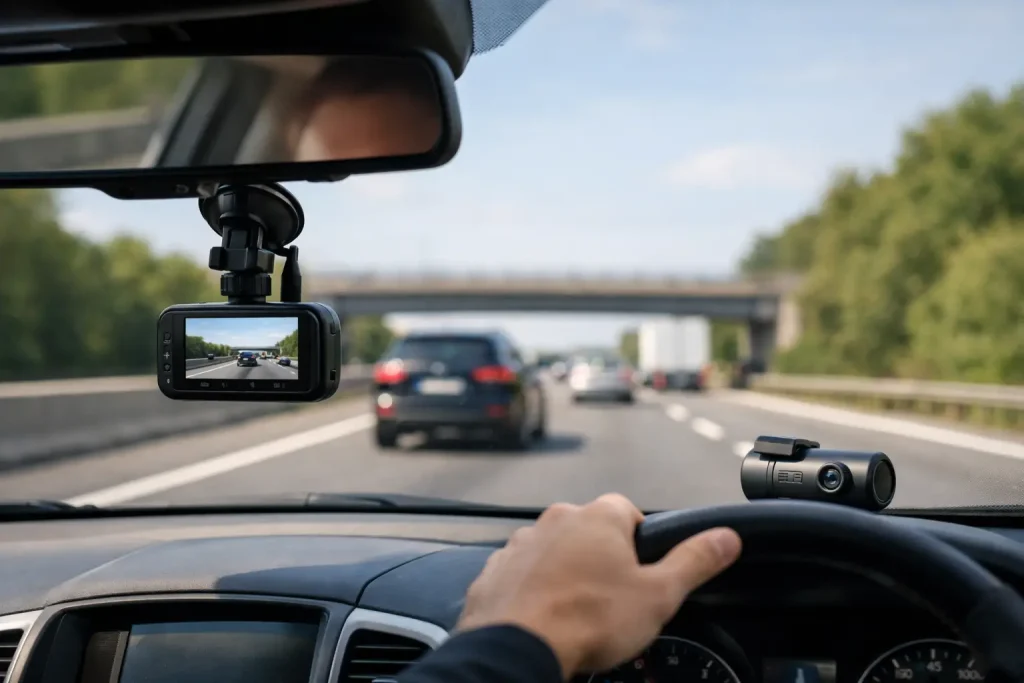
A motorway incident can unfold in seconds, often at speeds where a registration number is only visible for a moment. That is why the best dash cams for motorway driving need to do more than record a wide view of the road. They need to produce usable footage in changing light, cope with long journeys and remain dependable when you need evidence most.
For drivers around Doncaster and Rotherham, that may mean regular M18, A1(M) or M62 travel, commuting, towing a caravan, or running a van between jobs. The right camera can provide valuable reassurance after a collision, a near miss or an insurance dispute. The wrong one may leave you with grainy footage, missed files or an installation that interferes with your view.
What makes a dash cam good on the motorway?
Motorway driving places different demands on a dash cam than short urban journeys. Vehicles approach and pass quickly, number plates can be obscured by spray, and bright sun can turn into low light or heavy rain within a few miles. Image quality is therefore more than a specification on a box.
A front camera with 4K recording can capture more detail than a basic Full HD model, particularly where you need to pause footage and identify a vehicle at distance. However, a well-designed 1440p camera with good low-light performance and high dynamic range can be the better real-world choice. High dynamic range helps the camera manage dark areas under bridges alongside a bright sky, while a quality sensor is often more useful at night than a headline resolution figure.
Frame rate also matters. At 60 frames per second, fast-moving vehicles are generally recorded with less motion blur than at 30 fps. The trade-off is larger files and, on some cameras, a reduction in maximum resolution. For frequent motorway users, clear, stable footage is usually worth prioritising over a long list of novelty features.
Reliability should sit just as high on the list. Look for a camera that records continuously in a loop, automatically protects files when it detects an impact, and uses a heat-resistant capacitor rather than relying solely on a standard internal battery. Cars can get very hot in summer and cold in winter, and a dash cam must be able to cope with both.
Best dash cams for motorway driving by requirement
There is no single best model for every driver. A private motorist doing a weekly motorway commute has different priorities from a tradesperson covering high annual mileage in a van or a caravan owner who wants coverage around a tow vehicle.
Best all-round choice: a 4K front and rear system
For most motorway drivers, a quality front and rear system is the sensible starting point. A 4K front camera gives the best chance of reading plates and recording detail ahead, while a rear camera can be crucial if another vehicle follows too closely, collides with you from behind, or disputes what happened before an overtake.
Established dual-camera systems from manufacturers such as Nextbase, Garmin and BlackVue are commonly considered in this category. The best fit depends on how much you value image quality, app access, parking mode and discreet fitting. A camera with a separate rear unit also requires careful cable routing, but the additional coverage is worthwhile for many drivers.
Best for high-mileage drivers and vans: a discreet, hardwired camera
If your vehicle is on the road daily, convenience quickly becomes part of reliability. A compact camera hardwired behind the rear-view mirror starts and stops with the ignition, keeps the 12V socket free and avoids a loose power cable across the cabin.
This is particularly useful in working vans, where the windscreen area must stay clear and equipment should look tidy. Some commercial users prefer cameras with GPS, speed data and straightforward video download options so footage can be reviewed quickly following a complaint or incident.
GPS is a personal choice. It can help establish where an event happened and provide useful context, but some drivers prefer the option to disable speed recording. Check the settings before fitting rather than assuming every camera handles this in the same way.
Best for overnight parking: a camera with properly managed parking mode
Parking mode records incidents while the vehicle is unattended. It can be useful at motorway service stations, hotel car parks, work sites and outside the home. The important point is how it is powered.
A dash cam needs a suitable hardwire kit with low-voltage battery protection to operate parking mode safely. This monitors the vehicle battery and cuts power before it is drained too far. A basic plug-in installation cannot normally provide the same protection or coverage.
Some systems record continuously at a lower rate when parked, while others wake when they detect motion or an impact. Buffered parking mode is often the more useful option because it can save footage from just before the trigger, not only after it. It costs more, but it gives a fuller picture of what occurred.
Best value choice: a good-quality front camera
A front-only dash cam remains a sound option when budget is limited. It covers the most common type of road incident and can still provide clear evidence of lane changes, sudden braking, debris in the carriageway and the behaviour of vehicles ahead.
Do not choose purely on price. A very cheap camera may advertise high resolution but use a poor sensor, unreliable memory card or weak mounting system. It is better to buy a proven front camera with a decent warranty and fit it correctly than to install an all-singing system that cannot retain reliable footage.
Features worth paying for
A few features make a genuine difference on long-distance driving. A polarising filter can reduce dashboard reflections on the windscreen, which is helpful in bright conditions. Wi-Fi or Bluetooth access lets you transfer clips to a phone without removing the memory card, although app quality varies between brands.
Voice control can be handy when you want to save a clip without taking your hands from the wheel. A wide viewing angle is useful too, but wider is not always better. An extremely wide lens can make distant plates appear smaller and distort the edge of the picture. Around 140 to 160 degrees is often a practical range.
For storage, use a high-endurance microSD card designed for constant recording. Standard memory cards can wear out quickly in a dash cam because they are repeatedly overwritten. Formatting the card in the camera periodically, as instructed by the manufacturer, helps prevent corrupted footage.
Driver-assistance alerts for lane departure or forward collision may sound appealing, but they are not a replacement for your vehicle’s original safety systems or attentive driving. On some cars they can become distracting, especially on roadworks or narrow lanes. Consider them a secondary extra, not a reason to choose one camera over another.
Why professional dash cam installation matters
A dash cam should be positioned high on the windscreen, usually behind or close to the rear-view mirror, without obstructing the driver’s view. It must have a clear view of the road while avoiding tinted areas, heater elements and sensor housings where possible.
The fitting is just as important as the camera. A professional installation routes cables behind trim panels rather than leaving wires visible, connects the system correctly and protects vehicle electrics. On modern vehicles with airbags in the A-pillars, incorrect cable routing can create a safety issue. A qualified fitter will route wiring so it does not interfere with airbag deployment or vehicle controls.
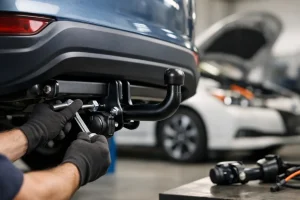
Hardwiring is especially worthwhile for drivers who want parking mode or simply want a cleaner finish. At Doncaster Towbars, dash cam fitting can be matched to the vehicle and the way it is used, whether that is a family car, tow vehicle, SUV or working van.
Before you choose, think about your actual journeys
Ask yourself where your risk lies. If you spend hours on the motorway, invest in clear forward footage, a reliable mount and an endurance card. If you regularly park away from home, add a hardwire kit and battery-protected parking mode. If you tow, a rear camera becomes more attractive because it can record traffic behind the vehicle and trailer combination.
Also consider how you will retrieve footage. The best camera is one you can use confidently after an incident. Test the app, learn how protected clips are saved and check that date and time settings are correct before relying on it.
A properly chosen and professionally fitted dash cam quietly gets on with its job. Hopefully, you will never need the footage, but when a motorway journey goes wrong, clear evidence is one of the most useful things your vehicle can carry.