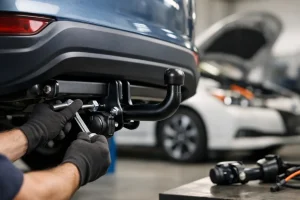
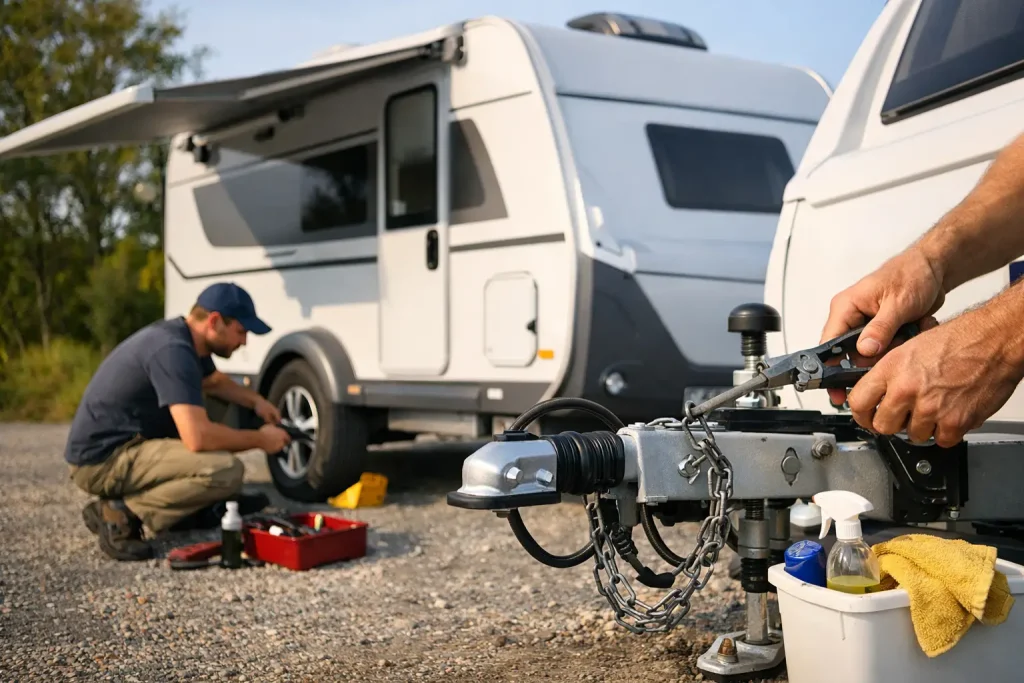
A caravan trailer rarely gives you much warning before a small issue turns into a miserable weekend. One flat tyre, one failed light board, or one brake problem on the way out of Doncaster can quickly spoil a trip and leave you with an expensive repair bill. If you are wondering how to maintain caravan trailer condition properly, the key is simple – check little and often, and never assume that because it towed well last time, it is fine now.
For most owners, maintenance is less about doing major mechanical work yourself and more about spotting wear early, keeping components clean and protected, and knowing when a workshop should step in. A well-kept caravan trailer is safer to tow, steadier on the road, and far less likely to let you down when you need it.
How to maintain caravan trailer condition year round
Good maintenance works best as a routine, not a once-a-year panic before a holiday. Trailers and caravans often spend long periods standing still, and that can be just as hard on components as regular use. Tyres age, brakes seize, electrics corrode and damp can quietly spread before it is visible inside.
A sensible approach is to give the caravan trailer a basic check before every journey, a more detailed inspection every few months, and a proper annual service. If you tow frequently, carry heavy loads, or store the trailer outside all year, it is worth being even more strict. Usage matters. So does storage.
Start with tyres and wheels
Tyres are one of the most overlooked parts of caravan trailer maintenance. Owners often focus on tread depth, but age, condition and pressure matter just as much. A tyre can still show legal-looking tread and still be unsafe because the rubber has hardened or cracked.
Check pressures when the tyres are cold and use the manufacturer’s recommended settings. Underinflated tyres run hot and wear badly. Overinflated tyres can reduce grip and make the trailer feel harsher and less stable. Look closely at the sidewalls for cracking, bulges or cuts, and inspect the tread for uneven wear that could point to alignment or suspension issues.
Wheel nuts also need attention. They should be tightened to the correct torque, especially after a wheel has been removed or replaced. If you have a spare wheel, inspect that as well. A spare that has sat under the trailer for years without being checked may be no use when you actually need it.
Check the hitch, coupling and jockey wheel
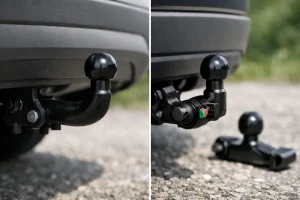
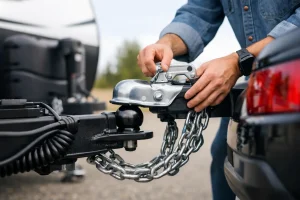
The hitch is where safety starts. If the coupling head is worn, stiff or not locking correctly onto the towball, you should not tow until it has been inspected. The breakaway cable should be in good condition and routed correctly. If it is frayed, kinked or corroded, replace it.
The jockey wheel should wind up and down smoothly and clamp securely in place. It is a small component, but a failing jockey wheel makes hitching awkward and can create real problems when manoeuvring. A light clean and lubrication helps, but if the mechanism is bent or badly worn, replacement is usually the better option.
Brakes, bearings and running gear
Trailer brakes do not always fail dramatically. More often, performance drops off gradually, or parts begin to bind after storage. That is why owners can miss the early signs. If the caravan trailer feels unstable under braking, pulls oddly, smells hot after a run, or seems harder to move by hand, the braking system needs checking.
Brake linkages, cables and shoes wear over time and can seize if left unused. Wheel bearings are another key area. If you hear rumbling, notice play in the wheel, or feel heat around the hub after towing, do not ignore it. A worn bearing can escalate from a minor repair to a roadside recovery very quickly.
Suspension units and axle components also deserve a visual inspection. Look for rust, damage, perished rubber and any sign that one side is sitting lower than the other. None of this is complicated to notice, but it does need a careful eye.
Know when maintenance becomes servicing
There is a difference between owner checks and workshop servicing. Cleaning, inspecting and monitoring are sensible jobs for most caravan trailer owners. Brake adjustment, bearing replacement, axle work and fault finding on running gear are better handled by trained technicians with the right tools.
That matters even more if you tow long distances or carry valuable loads. What feels like a minor issue in the yard can become a serious hazard at motorway speed.
Lights, plugs and trailer electrics
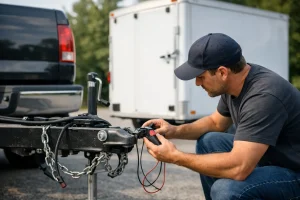
Electrics are a common weak point because they live low down, close to road spray and dirt. Before every trip, check side lights, brake lights, indicators, number plate lights and fog lights. Do not just glance at them. Confirm they are all bright, consistent and working as they should.
If a light fails now and then, do not assume it is just a bulb. Intermittent faults often come from corroded plug pins, damaged sockets, poor earth connections or worn wiring. Water ingress is especially common on older trailers and caravans.
Inspect the plug for bent pins, cracking or green corrosion. Make sure the cable is not trapped, stretched or rubbing against the drawbar. If your caravan trailer has internal electrics, battery charging or road lighting issues, it is worth getting the full system checked rather than chasing one fault at a time.
Bodywork, chassis and damp prevention
A clean caravan trailer is easier to inspect properly. Dirt hides cracks, corrosion and damaged seals, so washing it down is part of maintenance, not just appearance. Pay attention to the chassis, corners, fasteners and mounting points. Surface rust can often be treated early, but once corrosion gets into structural areas, repairs become more involved.
On caravan-style trailers, water ingress is one of the costliest problems. Check window seals, roof joints, locker seals and external trims for gaps or deterioration. Inside, watch for staining, soft wall sections, musty smells or bubbling finishes. Damp is much easier to deal with when caught early.
Storage makes a difference here. If possible, keep the trailer on firm, well-drained ground and use a breathable cover if it is suitable for the model. Fully wrapping a damp trailer can trap moisture and make matters worse, so it depends on the condition of the bodywork and how the trailer is stored.
Keep seals and moving parts in working order
Door hinges, catches, corner steadies and access panels all benefit from occasional cleaning and suitable lubrication. The aim is not to soak everything in grease, but to keep mechanisms moving freely and stop corrosion taking hold. Rubber seals should be kept clean and checked for splitting or flattening.
If locks are stiff, deal with them before they fail. Forced entry after a seized lock is a frustrating way to start a trip.
Inside the caravan trailer matters too
Maintenance is not only about towing parts. Inside the caravan trailer, loose fittings, damaged flooring, worn gas locker seals and unsecured storage can all create problems on the road. After travel, vibration often shows up as loosened screws, trim movement or cupboard catches that no longer hold properly.
Check that heavy items are still secured and that payload is distributed sensibly. Poor loading affects stability and can put extra strain on tyres, suspension and hitch components. If one side is consistently carrying more weight, you may start seeing uneven tyre wear or handling changes over time.
Appliances, gas systems and internal water systems also need periodic attention, but those areas should be approached carefully. If you are unsure, have them inspected professionally rather than guessing.
A simple maintenance routine that works
The best answer to how to maintain caravan trailer reliability is consistency. Before each trip, check tyres, lights, hitch operation and number plate security. Every few months, inspect the chassis, electrics, seals, brakes and wheel condition more closely. Once a year, book a proper service so wear points are assessed before they become failures.
Keep a note of what has been checked, what has been replaced and when tyres, bearings or brake parts were last looked at. That small bit of record keeping makes future maintenance easier and helps you spot patterns, especially if the trailer is used for business or frequent touring.
If something does not feel right while towing, act on it. A new noise, a vibration through the car, poor brake feel or a flickering light is rarely best ignored. In many cases, the cheapest repair is the one dealt with first.
For owners who want reassurance before a trip or need help with faults, servicing or trailer repairs, a specialist workshop such as Doncaster Towbars can take care of the mechanical and electrical side properly. That gives you confidence that the caravan trailer is safe, roadworthy and ready for the miles ahead.
A well-maintained caravan trailer does not ask for much – just regular attention, sensible checks and a willingness to sort small problems before they become big ones.