A rear view dash cam review should start with the situation you face every day: reversing off a driveway, manoeuvring a van in a tight space, or keeping an eye on traffic behind while towing. Rear-facing recording can provide useful evidence after an incident, but the best system also needs to suit your vehicle, your visibility requirements and the way you use it.
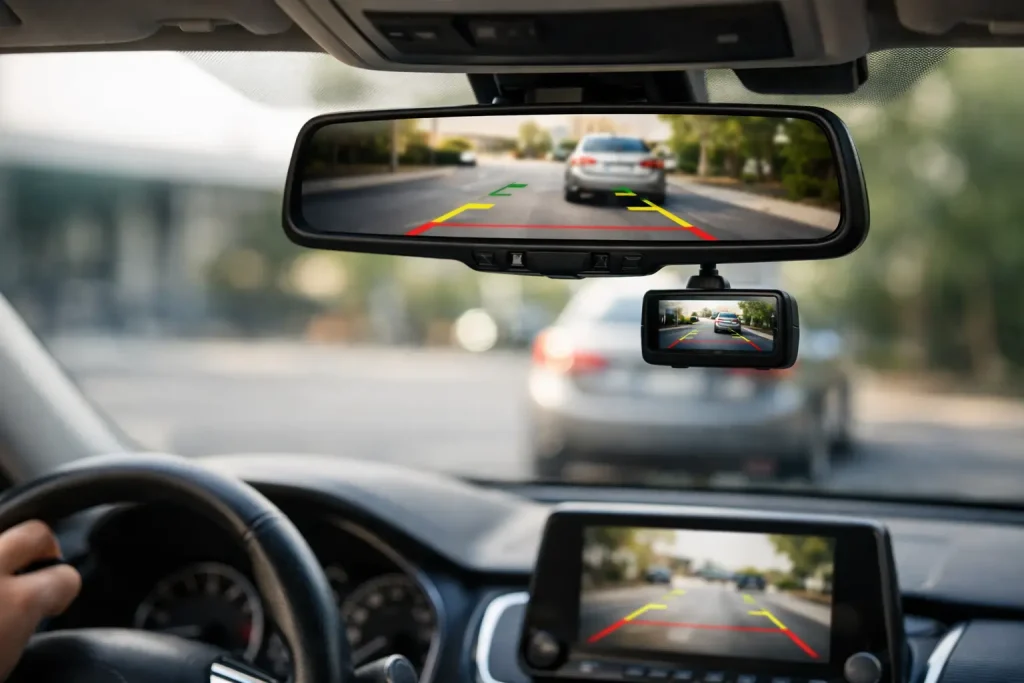
The term can describe two slightly different products. A conventional front-and-rear dash cam records the road ahead and behind through separate cameras. A digital rear-view mirror system replaces or overlays the usual mirror view with a live camera feed. Both can improve awareness and provide recorded footage, but they are not interchangeable. Choosing well means looking beyond the headline video resolution.
Rear View Dash Cam Review: What Matters in Real Use
For most motorists, image quality is the first consideration. A rear camera needs to capture number plates and vehicle detail in changing light, not just produce a sharp-looking image on a sunny day. Low-light performance is particularly relevant in winter, on unlit roads and when leaving work late. Look for a camera with a wide dynamic range so bright headlights do not turn the surrounding image into a dark blur.
Resolution helps, but it is only part of the picture. A well-positioned 1080p rear camera can be more useful than a poorly fitted higher-resolution unit with reflections, a dirty lens or an obstructed view. Frame rate, sensor quality and compression also affect whether a moving number plate is readable when you need the footage.
Viewing angle deserves the same attention. A very wide lens shows more of the road but can distort distances at the edges. That may be acceptable for recording incidents, while a live mirror display should give a natural enough image to support safe driving. The aim is useful coverage, not simply the biggest number on the box.
Rear recording versus a reversing camera
A rear dash cam is not automatically a reversing camera. A recording camera points behind the vehicle continuously and stores video, usually alongside the front camera. A reversing camera is designed to show the area immediately behind the bumper when reverse gear is selected, often with parking guidelines.
Some systems can do both, but the wiring and camera position need to be correct. A rear camera mounted high in the rear window may be excellent for recording traffic but less helpful for seeing a low bollard or trailer coupling. On an estate car, SUV or van, it can make sense to combine a rear dash cam with parking sensors or a purpose-built reversing camera if close manoeuvring is a regular task.
Features Worth Paying For
A reliable dash cam should start recording automatically with the ignition and save footage in short loops. When the memory card is full, it overwrites the oldest normal clips. This is standard, but a camera must also protect files captured during an impact or sudden braking event. That is the job of the G-sensor.
A sensitive G-sensor can be useful, although one that triggers every time you cross a pothole will fill the card with protected files. Adjustable sensitivity is preferable, especially for vans and vehicles used on uneven sites. Parking mode can also be worthwhile when the vehicle is left in public car parks or on the road. It records when an impact or movement is detected, but it must be installed with suitable hardwiring and battery protection to avoid draining the vehicle battery.
Other practical features include GPS, Wi-Fi and a screen or mobile phone app for viewing clips. GPS can show location and speed data, which may support an insurance claim, but some drivers prefer the option to switch speed display off. Wi-Fi makes downloading clips more convenient, but it is no substitute for a good-quality memory card.
Use a high-endurance card made for continuous recording. Standard memory cards can fail early under constant heat and rewriting. It is sensible to check footage occasionally and format the card in the camera at the intervals recommended by the manufacturer. A dash cam only offers reassurance if it is actually recording.
Fitting Quality Makes a Noticeable Difference
A rear camera has a harder job than a front-facing one. It may be looking through a rear screen with heating elements, tinted glass, a wiper sweep area and reflections from inside the vehicle. On a van, the rear doors may have no glass at all, meaning an external camera and more involved cable routing may be required.
Professional fitting keeps cables out of sight and away from airbags, trim clips and moving tailgate sections. On hatchbacks and estates, the cable has to pass safely through the flexible rubber gaiter between the body and tailgate. This is a common point where rushed installations can lead to pinched wiring or intermittent faults later on.
The camera also needs to be mounted in a position that remains useful in rain and road spray. External cameras are exposed to dirt, salt and pressure washing, so weather protection and secure mounting matter. A camera fitted behind the rear glass is protected from the elements, but the image may suffer if the glass is heavily tinted or dirty.
For vehicles with factory parking sensors, rear cameras, digital mirrors or advanced driver-assistance equipment, the installation should be planned around the existing systems. Correct vehicle-specific electrical work avoids unnecessary warning lights, poor reception or interference with other equipment.
Rear Dash Cams for Towing and Working Vehicles
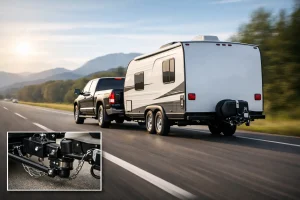
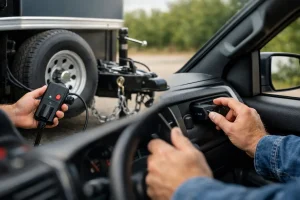
Rear recording is particularly valuable for drivers who tow caravans, box trailers or work trailers. Traffic behind can be harder to monitor when a load sits between the vehicle and the road, and an incident involving a trailer may leave more questions than a straightforward car-to-car collision.
There is a trade-off, though. A camera on the rear window of the towing vehicle may record little more than the front of the trailer. If the main requirement is evidence of traffic following the trailer, a camera located at the rear of the trailer may be a better solution. That calls for a properly protected installation and a connection arrangement that accounts for coupling and uncoupling. It should never compromise the trailer’s lighting, electrics or safe operation.
For tradespeople, rear-facing footage can be useful when a van is parked at customer sites or carrying tools. A discreet installation with parking recording may offer extra reassurance, while an external camera can suit solid rear doors. The right answer depends on whether the priority is road footage, security while parked, reversing visibility or a combination of all three.
Common Mistakes When Choosing a System
The cheapest kit is not always poor, but it can become expensive if the camera fails when needed or the installation is untidy. Avoid judging a system only by its advertised resolution or a short daytime sample video. Ask how it performs at night, how long clips are retained, whether replacement parts are available and what type of memory card it needs.
It is also worth thinking about the screen. A large display can be handy during set-up, but it may distract the driver if left on while travelling. Digital mirror systems need to be bright enough in daylight without producing glare at night. If you wear varifocal glasses, try the viewing position before committing, as display placement can affect comfort.
Finally, do not assume every rear camera is suitable for every vehicle. A compact hatchback, a long-wheelbase van and a towing vehicle have different sight lines, cable routes and practical needs. A brief discussion before fitting can prevent choosing a system that sounds right but does not solve the real problem.
At Doncaster Towbars, we can assess the vehicle, explain the sensible options and fit a rear dash cam system neatly around your existing electrics and accessories. Whether you want clearer evidence on the road, better visibility around a working van or added confidence while towing, a properly chosen and professionally fitted camera lets you concentrate on the drive ahead.