A trailer can look correctly attached while still being unsafe to tow. The difference often comes down to a coupling that is worn, mismatched, incorrectly adjusted or simply not checked properly before setting off. This trailer coupling guide covers the practical points every caravan owner, trailer user and tradesperson should understand before towing.
The coupling is the connection between your vehicle and trailer, so it deserves more attention than a quick push down onto the towball. Choosing the right type, staying within its plated limits and coupling it correctly protects your load, your vehicle and everyone else on the road.
Trailer coupling guide: start with compatibility
Most UK road trailers use a 50mm towball and a matching 50mm ball coupling. That does not mean every coupling is suitable for every towing job. The trailer’s coupling, drawbar, brakes, towbar, towball and vehicle towing capacity must all be suitable for the weight being towed.
Begin with the identification plate on the trailer coupling. This normally states its maximum permitted mass, often called the coupling’s D value or maximum gross trailer weight, alongside other approval details. Never assume the coupling rating is enough on its own. The lowest-rated component in the complete setup sets the practical limit. For example, a highly rated coupling does not make a vehicle legally able to tow more than its handbook or VIN plate allows.
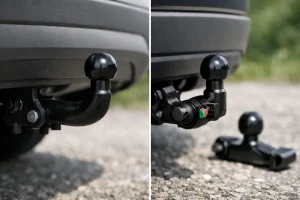
You should also check the towball is suitable for the coupling. A standard fixed, swan-neck or detachable 50mm towball can be used with many trailers, provided it is approved and within its limits. However, some stabiliser couplings have requirements about the shape, finish or condition of the towball. Paint, grease, corrosion and damage can stop the friction pads from working as intended.
If you use a detachable towbar, make sure the neck is fully locked before connecting the trailer. Follow the towbar manufacturer’s locking procedure and check the visual indicator where fitted. A detachable neck that has not engaged properly is not a minor issue – it is a reason not to tow.
Braked and unbraked trailers need different checks
An unbraked trailer is simpler in design, but it still needs a secure coupling, working lights, sound tyres and a correctly distributed load. Its maximum permitted weight is limited by both the trailer’s rating and the towing vehicle’s unbraked towing limit.
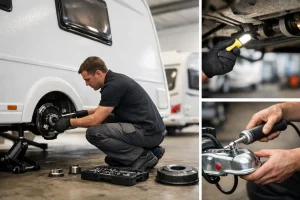
A braked trailer or caravan uses an overrun braking system. When the towing vehicle slows, the trailer’s drawbar compresses and applies the trailer brakes. The coupling head, damper, brake linkage and breakaway system all need to work together. If the drawbar feels rough, sticks, knocks excessively or fails to return smoothly, arrange an inspection before using the trailer.
Braked trailers should use a breakaway cable. This is designed to apply the trailer brakes if the trailer becomes detached from the vehicle. It should be attached to a suitable designated point on the towbar or around the towbar in line with the vehicle and trailer guidance. Do not clip it onto the electrical socket, safety chain or any point that could fail under load.
Choosing the right trailer coupling
For most general-purpose trailers, a standard 50mm ball coupling is the straightforward choice. It is durable, widely available and suitable for many domestic, leisure and commercial towing duties. The key is buying a quality, approved coupling with the correct rating and fitting it securely to the correct drawbar size.
A stabiliser coupling is a popular option for caravans and larger trailers that can be affected by passing lorries, crosswinds or uneven road surfaces. It uses friction pads around the towball to reduce snaking and pitching. It can improve towing stability, but it is not a cure for poor loading, worn suspension, incorrect tyre pressures or excessive speed.
There are also specialist couplings for particular trailer designs, including ring couplings, pin-and-eye arrangements and plant trailer systems. These are not interchangeable with a standard ball hitch. If you are replacing a coupling on a commercial or specialist trailer, match the original specification and obtain advice where there is any uncertainty.
When selecting a replacement, consider more than the coupling head itself. Check the drawbar diameter or mounting arrangement, the trailer’s gross weight, nose weight limit, brake system compatibility and whether a stabiliser unit is appropriate. A part that physically fits may still be the wrong part for the trailer.
Nose weight matters
Nose weight is the downward force the trailer applies to the towball. Too little nose weight can make a trailer unstable. Too much can overload the towbar, rear axle or coupling and affect steering and braking.
The correct figure depends on your vehicle, towbar and trailer. Check the relevant limits, then load heavy items low down and close to the trailer axle where practical. Avoid placing most of the load right at the rear, as this can encourage sway. A nose-weight gauge is a useful tool, particularly for caravans, loaded box trailers and trailers carrying machinery.
How to couple a trailer safely
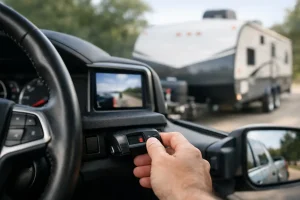
A consistent routine is the best defence against mistakes. Park on firm, level ground where possible, apply the trailer handbrake and keep people clear of the gap between vehicle and trailer while manoeuvring.
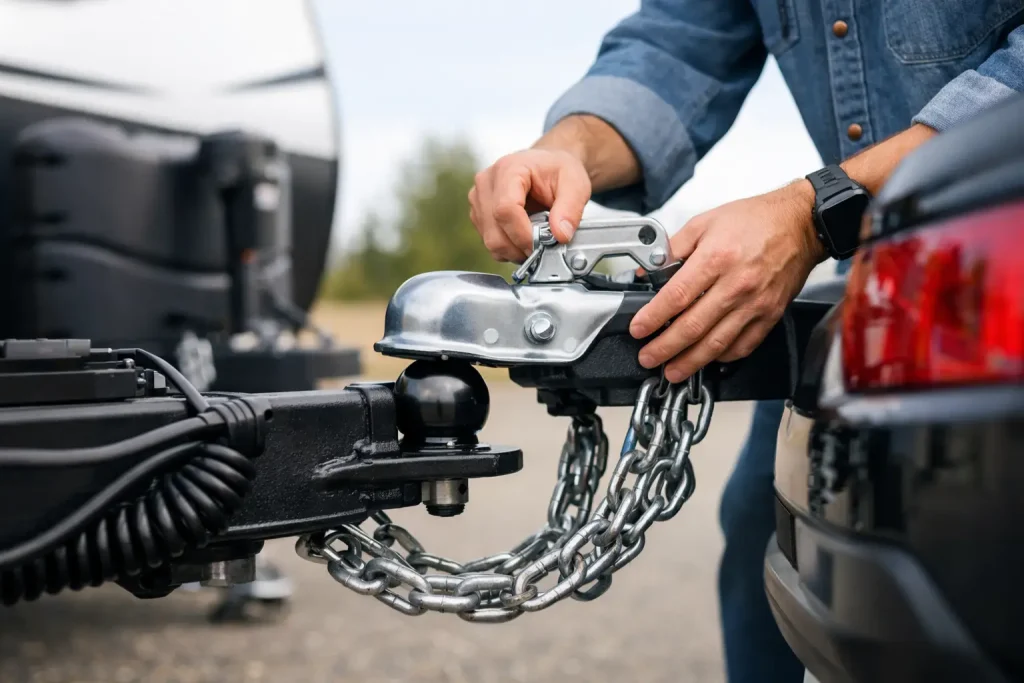
First, raise or lower the trailer with the jockey wheel until the coupling is slightly above the towball. Reverse the vehicle slowly into position, ideally with a second person guiding from a safe, visible position. Never rely on somebody standing directly behind the vehicle, and agree clear signals before you start.
Next, open the coupling handle and lower the trailer fully onto the towball. Press down until the mechanism locks. Many coupling heads have a coloured indicator, but do not rely on the indicator alone. Raise the jockey wheel slightly to confirm the rear of the towing vehicle lifts with the trailer. This simple lift test helps show that the coupling has properly engaged the towball.
Once connected, wind the jockey wheel fully up and secure it in its travelling position. A lowered jockey wheel can strike the road surface, bend its bracket or cause loss of control. Release the trailer handbrake only when you are ready to move.
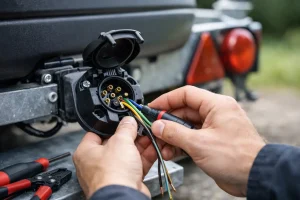
Then attach the breakaway cable on a braked trailer, connect the electrical plug and make sure the cable has enough slack for turns without dragging on the road. Test the indicators, brake lights, side lights, reversing light where fitted and fog light. If an LED lighting conversion or vehicle-specific electrics are involved, a proper test is especially worthwhile.
Before leaving, walk around the whole outfit. Check the coupling is locked, the trailer tyres are sound and inflated, the load is secured, the number plate is visible, the lights work and all doors, ramps and lids are latched. It takes a minute and can prevent a long delay at the roadside.
Common coupling faults to watch for
A rattling coupling is not always a sign of immediate failure, but it should not be ignored. Wear inside the coupling head, a damaged towball, loose mounting bolts or play in the drawbar can all contribute. If the trailer bangs during braking or pulling away, the issue may also lie in the overrun damper or brake linkage.
Look for cracking around the coupling body, distorted metal, seized handles, missing locking parts and excessive corrosion. On stabiliser couplings, inspect the friction pads and towball condition. Grease is normally required on many towing components, but not on the contact area of a stabiliser towball unless the manufacturer specifically says otherwise. Grease there can reduce the stabilising effect.
A coupling that is difficult to latch may be contaminated, worn or incorrectly aligned. Do not force it shut and assume it is secure. Clean it, inspect the towball and coupling head, and seek professional help if the mechanism still does not operate positively.
When professional trailer support is the sensible choice
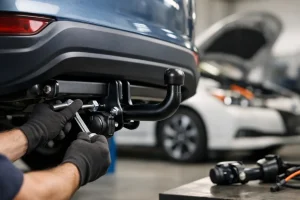
Replacing a coupling, setting up a braked trailer or diagnosing overrun brake problems is not always a simple bolt-on job. Incorrect adjustment can lead to poor braking performance, instability or component damage. The same applies if you are unsure whether your vehicle’s towbar, detachable neck and electrics are suitable for the trailer you want to use.
At Doncaster Towbars, we can help assess trailer coupling issues alongside trailer repairs, servicing, towbar fitting and vehicle-specific electrics. For regular users, a routine trailer check is often the easiest way to spot wear before it turns into a cancelled job, missed holiday or unsafe journey.
Treat the coupling as a safety-critical part rather than a piece of hardware to check only when something goes wrong. A correctly matched, properly maintained coupling gives you the confidence to concentrate on the road ahead and the job or trip you set out to do.