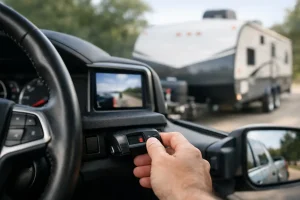
A caravan that is wider than the tow car can hide the very area you need to see when changing lanes, joining a motorway or reversing around a tight site. That is why towing mirror rules are more than a kit-list detail. The right mirrors give you a usable view down both sides of the trailer and help make every manoeuvre calmer and safer.
For many drivers, the question is simple: do I need extension mirrors? In the UK, you must be able to see clearly down both sides of the trailer or caravan you are towing. If your normal vehicle mirrors do not provide that view, extension towing mirrors are required. For most caravan owners, and for anyone pulling a trailer wider than the car or van, standard mirrors will not be enough.
When towing mirrors are needed
Towing mirrors are needed when the trailer obscures your view behind it. A quick look while parked can help, but do not judge it only by whether you can see the trailer’s sides. You need a clear view of traffic approaching from behind, vehicles sitting alongside the trailer, cyclists filtering through slow-moving traffic and the road edge when reversing.
The commonly used legal visibility standard is that your mirrors should allow you to see an area four metres wide, measured from the side of the trailer, at a point 20 metres behind the driver’s eye. Put simply, you should be able to look past the trailer rather than merely at it.
This matters most with a caravan, horsebox, enclosed box trailer or wide plant trailer. It can also apply to smaller trailers behind narrow cars, because the difference in width is not always obvious from the driver’s seat. If you are unsure, fitting extension mirrors is the sensible option. They are a relatively small addition compared with the consequences of a missed vehicle during a lane change.
Towing mirror rules on size and projection
Extension mirrors must be secure, give a useful rearward view and not create an unnecessary hazard for other road users. Their projection is limited: they should not extend more than 250mm beyond the widest part of the trailer or caravan.
That limit is easy to overlook. A pair of very wide arms may seem helpful, but a mirror that sticks out too far can be struck by passing traffic, pedestrians or roadside objects. It also makes narrow lanes, petrol station forecourts and campsite entrances harder to negotiate.
The mirror should be positioned so it extends only as far as needed to achieve the required view. If the trailer is narrower than the vehicle and your existing mirrors already show the required area, extensions may not be necessary. This is one of those situations where the setup matters more than simply owning a pair of towing mirrors.
Do mirrors need to be removed when not towing?
Yes, as a matter of good practice, remove extension mirrors once the trailer is unhitched. They are intended for towing, not everyday driving. Leaving them fitted can increase the chance of damage and may leave the vehicle wider than expected in car parks or traffic.
It also makes sense to take them off before driving home after dropping off a caravan or trailer. A mirror that is secure at motorway speed can still be vulnerable when you are squeezing through a supermarket car park or meeting oncoming vehicles on a narrow road.
Choosing the right towing mirrors for your vehicle
There is no single best towing mirror for every vehicle. The right choice depends on the shape of the vehicle’s standard mirrors, the width of the trailer and the type of use you have planned.
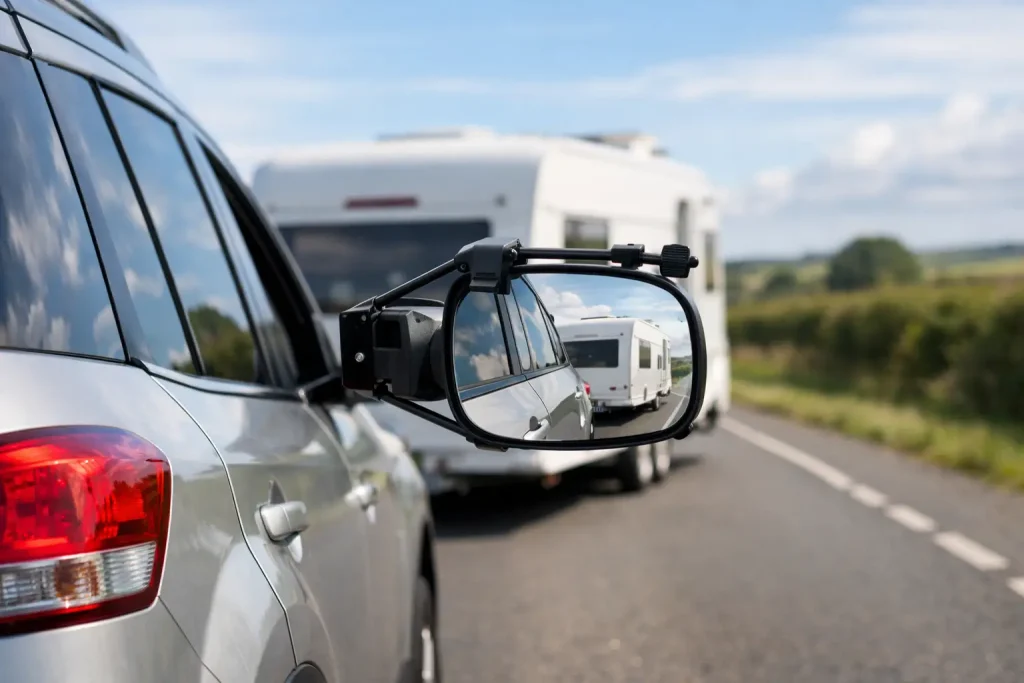
Clamp-on mirrors are popular because they are straightforward to fit and remove. Quality versions use adjustable arms and secure straps or clamps to hold the mirror firmly against the original vehicle mirror housing. They work well for many cars, SUVs and vans, but fit is critical. A loose mirror that vibrates at speed is not giving a safe or reliable view.
Vehicle-specific options can provide a neater, more stable arrangement where available. These are worth considering for frequent towing, particularly if you use a caravan regularly or tow for work. Some modern vehicles have large, shaped or folding mirror housings that are poorly suited to generic clamps, so it is worth checking compatibility rather than forcing a universal product to fit.
Convex glass can widen the field of view, while flat glass tends to make distances easier to judge. Many towing mirrors combine both approaches. The trade-off is that convex glass can make following traffic appear farther away than it really is, so take time to get used to what you are seeing before relying on it in busy traffic.
How to fit and adjust towing mirrors properly
A towing mirror should feel like part of the vehicle, not like an accessory balanced on the edge of the original mirror. Clean the mirror housing first, fit the clamps or straps as instructed and tighten them evenly. Avoid overtightening, particularly on painted, heated or power-folding mirror housings.
Once fitted, sit in the normal driving position and make your adjustments. The aim is to see along the trailer’s side with enough road visible beyond it. Do not angle the extension mirror so far down that it only shows the trailer wheels, and do not set it so wide that you lose useful reference points for judging the trailer’s position.
Before setting off, carry out four simple checks:
- Both towing mirrors are firmly attached and do not move when gently pushed.
- The view reaches beyond each side of the trailer and shows approaching traffic.
- The mirrors do not project excessively beyond the trailer’s widest point.
- Your standard mirrors, indicators, lights and number plate remain unobstructed.
Check them again after the first few miles. Road vibration can loosen fittings, especially on a newly fitted set or after travelling over uneven surfaces. A quick stop is far better than discovering a mirror has slipped just as you need it on a dual carriageway.
Common mistakes that reduce visibility
The most common mistake is fitting towing mirrors because they are legally required, then failing to adjust them correctly. A poorly positioned extension mirror may technically be present but still leave a large blind spot behind the trailer.
Another issue is buying the cheapest universal design without considering the vehicle’s mirror shape. At speed, vibration can make the image difficult to read. If you cannot tell whether a vehicle is closing quickly, the mirror is not doing its job. A stable, correctly sized pair is a safety item, not just a caravan accessory.
Drivers should also avoid using towing mirrors as a substitute for proper observations. Mirrors show a great deal, but they cannot remove every blind spot. Check mirrors early, signal in good time, make a final shoulder check where appropriate and give yourself more space than you would when driving without a trailer.
Reversing is another area where towing mirrors earn their keep. They help you monitor both trailer sides, but they cannot show everything immediately behind the trailer. If visibility is restricted, use a banksman where possible and agree clear signals before you start moving. Never rely on a passenger standing where they cannot be seen.
Towing with confidence in South Yorkshire
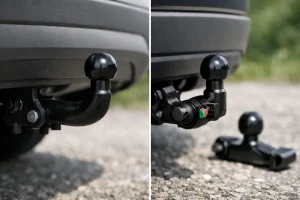
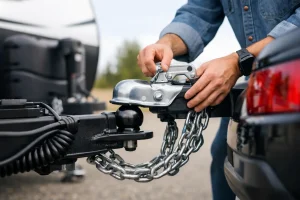
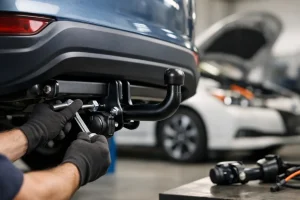
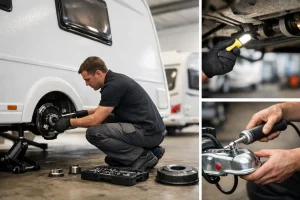
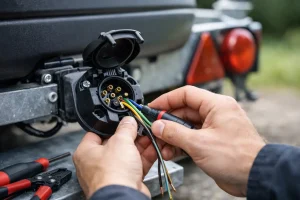
Your towing mirrors are only one part of a safe towing setup. The towbar must suit the vehicle and trailer, electrics need to operate correctly, the trailer’s tyres and lights should be checked, and the load must be secure and properly balanced. A good view behind the trailer is far more useful when every other part of the outfit is working as it should.
At Doncaster Towbars, we regularly help drivers prepare cars, vans and trailers for caravanning, work and weekend use. If you are unsure whether your current mirrors give the required view, or you need advice alongside a towbar, trailer electrics or trailer repair, speak to our team before your next journey.
Before you leave, take two minutes to sit in the driver’s seat and look properly down both sides of the trailer. If you cannot clearly see what is coming up behind you, sort the mirrors before the wheels start turning.