A towbar is only useful when you can rely on it every time you hitch up. The main fixed swan neck towbar benefits are straightforward: a neat appearance, dependable day-to-day towing capability and no detachable neck to remove, store or refit before a journey. For many caravan owners, trailer users and tradespeople, that makes it the most sensible option.
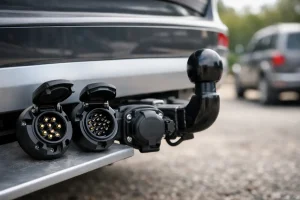
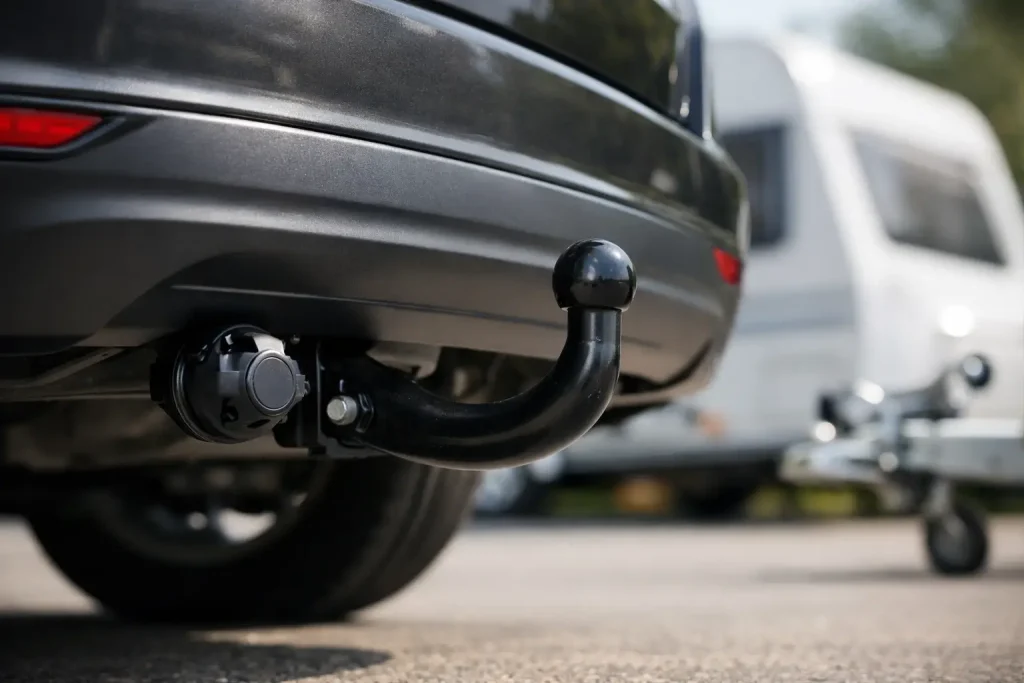
A fixed swan neck towbar stays on the vehicle permanently. Its curved, single-piece neck sits close to the rear bumper and supports the towball in a position designed for safe, stable towing. It is a popular choice for drivers who regularly pull a trailer, caravan, bike carrier or small plant trailer and want their vehicle ready to work whenever needed.
Fixed swan neck towbar benefits for regular towing
The biggest advantage is convenience. With a detachable towbar, the neck needs to be fitted before towing and removed afterwards if you prefer a clear rear bumper. That is a worthwhile feature for some motorists, but it is an extra job. A fixed swan neck towbar is always there, so connecting a trailer simply means checking the hitch, attaching the breakaway cable where required, plugging in the electrics and carrying out your usual safety checks.
This is particularly useful for van owners and tradespeople who may tow at short notice. If your trailer carries tools, materials, equipment or garden machinery, there is no need to find the detachable neck in the garage or check that its locking mechanism is clean and operating correctly before setting off.
The fixed design is also a practical choice for frequent caravan users. When a holiday starts early, the last thing most people want is another component to fit before loading up. A professionally installed fixed towbar gives you a consistent towing point, ready for the season and the journeys in between.
A tidy, vehicle-specific appearance
Swan neck towbars are generally more discreet than older-style flange towbars. The curved neck follows the shape of the vehicle and, on many cars and SUVs, sits neatly beneath the bumper rather than extending visibly behind it. The result is a clean installation that does not make the vehicle look unnecessarily industrial.
That matters if you use your car for family driving during the week but tow a caravan or trailer at weekends. You get permanent towing capability without the more obvious look of a traditional plate-style towbar.
A vehicle-specific towbar is designed around the mounting points, bumper shape and permitted towing weights of the particular vehicle. Professional fitting ensures the towbar is secured correctly and that any bumper trims are made carefully where necessary. The finished job should look purposeful, not improvised.
Fewer moving parts to manage
A fixed swan neck towbar has no removable coupling neck or release handle. That does not remove the need for maintenance – the towball should still be kept clean and checked for wear – but it does mean there is less to operate before towing.
Detachable systems are well engineered and can be an excellent choice, especially where the towbar must be removed to avoid affecting parking sensors or where the owner strongly prefers an unobstructed rear bumper. However, their locking mechanism needs occasional attention and the detachable section must be stored securely when it is off the vehicle. A fixed towbar avoids those considerations.
For drivers who tow often, simplicity is a genuine benefit. There is less chance of leaving an essential part at home, and less time spent preparing the vehicle for a job that may only take a few minutes to load and collect.
Strength, safety and the right towing limits
A fixed swan neck towbar is built to meet the approval requirements for the vehicle it is fitted to. That does not mean every towbar has the same capacity. The maximum trailer weight, nose weight and gross train weight are set by the vehicle manufacturer, so the vehicle’s handbook and identification plate always remain the starting point.
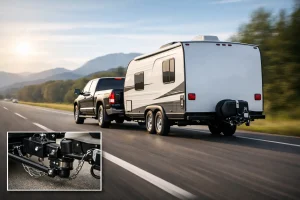
The towbar must also be suitable for the load. A small car pulling a lightweight domestic trailer has different requirements from a pickup towing a twin-axle trailer or a van carrying a fully loaded work trailer. The right answer depends on what you tow, how often you tow it and the towing limits of your vehicle.
Nose weight deserves particular attention. This is the downward force placed on the towball by the trailer coupling. Too little nose weight can make a trailer unstable; too much can overload the vehicle or towbar. Loading the trailer correctly, securing the load and staying within all stated limits are as important as the towbar itself.
A professional fitting team can help identify a towbar rated for your vehicle and intended use. This is especially valuable if you are changing vehicles, moving up to a heavier caravan, or fitting a towbar to a commercial van where payload and trailer weight need careful consideration.
Compatibility with trailers, caravans and carriers
The swan neck shape works with most standard trailer and caravan couplings. It is also often preferred for accessories that connect directly to the towball, such as cycle carriers. The clear shape around the ball can give better coupling access than certain flange towbar arrangements.
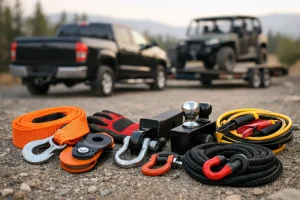
There are exceptions. Some older stabiliser hitches, recovery equipment and specialist accessories may have their own fitting requirements. If you use a towbar-mounted bike rack, check its maximum carrying capacity, including the weight of the bikes. Electric bikes can be heavy, so the combined load and towbar nose-weight limit must be respected.
A fixed swan neck is not normally the right choice if you require a flange plate for a pin-and-ball arrangement, an adjustable-height coupling or certain specialist commercial attachments. In those cases, a flange towbar may offer more flexibility. The best towbar is the one that suits the actual job, rather than simply the one that looks best on the vehicle.
Don’t overlook trailer electrics
Mechanical fitting is only half of a safe towing setup. Your trailer lights, indicators, brake lights, rear fog lamp and number plate lights all need the correct electrical connection. Depending on the trailer or caravan, this may mean a 7-pin or 13-pin socket and vehicle-specific wiring.
Modern vehicles often have sophisticated electrical systems, parking sensors and driver-assistance features. A properly installed dedicated wiring kit is designed to communicate with the vehicle where needed and can help avoid warning lights, electrical faults or issues with trailer detection.
The socket position matters too. On a good installation, it should be accessible when hitching up while remaining protected and tidy when not in use. Before every journey, test all trailer lights with someone else watching or by using a suitable test device. It is a simple check that prevents avoidable problems on the road.
Parking sensors and reversing cameras
Because a fixed towbar remains in place, it can be detected by some factory parking sensor systems. On many vehicles, correctly coded vehicle-specific electrics allow the sensors to recognise that a trailer is attached. On others, the towbar itself may occasionally trigger a sensor when reversing without a trailer.
This does not automatically rule out a fixed option. It is simply worth discussing before fitting, particularly if you rely heavily on rear parking sensors or have a reversing camera. The vehicle, towbar design and electrical system all affect the outcome.
Is a fixed or detachable swan neck towbar better?
A fixed swan neck towbar is usually the better value choice for drivers who tow regularly and do not mind having the towball visible beneath the bumper. It gives permanent convenience, a tidy profile and straightforward operation. It is often a very sensible fit for working vans, regular caravan users and anyone who keeps a trailer at home.
A detachable swan neck towbar can be better for occasional towing, vehicles with sensitive parking sensors, or owners who want the rear of the car completely clear when they are not towing. It costs more, but the removable design may be worth it for the right vehicle and lifestyle.
The key is not to choose solely on price or appearance. Consider your vehicle’s towing limits, the trailer or caravan you use, the type of electrics required and how often you expect to tow. At Doncaster Towbars, the team can assess those details and recommend a professionally fitted setup that is right for your vehicle. A short conversation before booking can save you from choosing a towbar that is less practical than it first appeared.