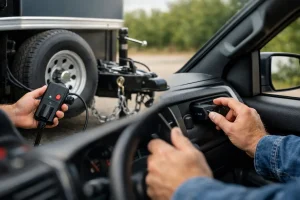
A trailer board that flashes correctly on the driveway can still be the wrong answer for a modern vehicle. In a proper dedicated towbar electrics comparison, the key difference is not simply whether the trailer lights work. It is whether the vehicle recognises that it is towing and responds as it was designed to.
For many cars, SUVs and vans, trailer wiring now communicates with systems far beyond the rear light clusters. Parking sensors, bulb-failure warnings, stability control and charging circuits can all be affected by the type and quality of the installation. That is why the cheapest wiring option is not always the best value, particularly if you tow a caravan, loaded trailer or work equipment regularly.
What are dedicated towbar electrics?
Dedicated electrics are vehicle-specific wiring kits made for a particular make, model and often model year. Rather than taking a basic signal from a rear lamp and passing it directly to the trailer socket, the kit connects to the vehicle in the intended locations and communicates with its electrical system.
When fitted and configured correctly, dedicated wiring can tell the vehicle a trailer is connected. Depending on the vehicle and kit, this may switch off rear parking sensors, alter the behaviour of stability systems, adjust reversing assistance, manage rear fog lamps correctly or activate dashboard trailer indicators.
The exact functions available vary. A dedicated kit does not add every towing feature to every car, and some vehicles require coding after installation. However, it gives the vehicle the best opportunity to operate its factory towing functions as intended.
Dedicated towbar electrics comparison: dedicated versus universal
The usual alternative is universal or bypass electrics. These are designed to work across a broad range of vehicles, normally using a bypass relay to take a low-current signal from the vehicle lights and supply power to the trailer lights from a separate feed.
Universal kits have a place. On an older vehicle with straightforward wiring, or where the owner only needs basic trailer lighting for occasional light-duty use, they can be a sensible and cost-conscious option. A properly fitted bypass relay is far preferable to old-fashioned direct splicing into sensitive vehicle circuits.
The trade-off is integration. A universal kit may make the trailer lamps operate without the car knowing a trailer is attached. The parking sensors may continue to sound when you select reverse with a trailer coupled. The vehicle may not activate trailer stability functions, where fitted, and a dashboard warning may not identify a failed trailer bulb in the same way as a dedicated system.
Dedicated kits are generally more expensive because they are vehicle-specific and can involve more installation time, connection points and coding. For many newer vehicles, that extra cost buys compatibility, cleaner operation and fewer avoidable electrical problems. It can also make a difference when selling the vehicle, as a professional vehicle-specific installation is easier to explain and gives the next owner more confidence.
Why modern vehicles benefit most
Modern vehicles monitor electrical loads closely. LED lamps, multiplex wiring and CAN-bus systems are particularly sensitive to changes that older cars would barely notice. An incorrect connection can trigger warning messages, cause lights to behave unpredictably or create faults that are difficult to trace later.
Dedicated wiring is designed around these systems. It uses the correct interfaces rather than asking a rear lamp circuit to carry work it was not designed to do. This matters on family cars with advanced driver-assistance features, premium SUVs, electric vehicles and commercial vans with complex body-control modules.
That does not mean every older car needs a dedicated kit. It means the decision should start with the vehicle, the trailer and how you plan to use them – not with the lowest headline price.
The functions that make a real difference
The most obvious benefit is parking sensor deactivation. Without it, the sensors may detect the towbar or trailer and give a continuous warning in reverse. On some vehicles, dedicated electrics can also change the operation of rear camera guidance or reversing assistance when a trailer is connected.
Trailer Stability Programme, often referred to as TSP, is another worthwhile feature where the vehicle supports it. This system can detect trailer instability and use braking or engine control to help bring the combination back under control. It is not a substitute for correct loading, tyre pressures or sensible speed, but it is a useful additional safety measure. It only works if the vehicle can reliably detect the trailer.
Correct fog lamp operation is also more than a finishing detail. Many dedicated systems switch off the vehicle’s rear fog lamp when a trailer is attached, preventing glare reflected from the trailer or caravan. Some systems can monitor trailer indicators and bulbs through the vehicle display, although this depends on the vehicle and the type of trailer lighting fitted.
Do you need 7-pin or 13-pin electrics?
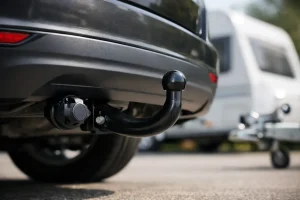
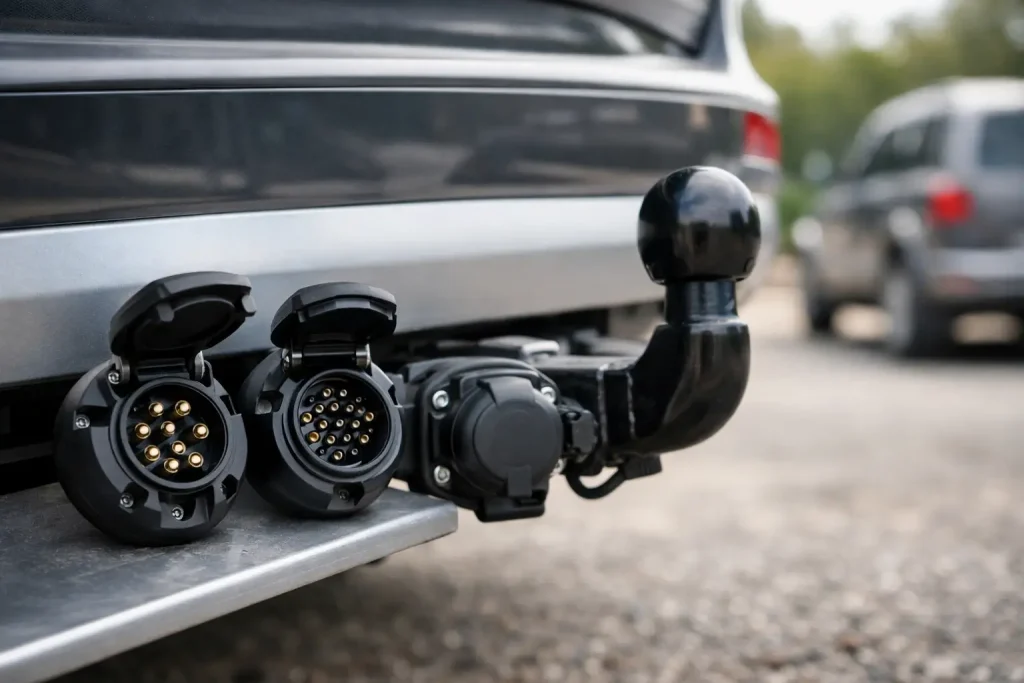
The socket type is a separate decision from whether the kit is dedicated. You can have vehicle-specific wiring with either type, although 13-pin is the common choice for newer towing installations.
A 7-pin socket supplies the legal road-lighting functions needed by many small trailers, including indicators, brake lights and tail lights. It is often adequate for a basic garden trailer, motorcycle trailer or light utility trailer.
A 13-pin socket offers a neater, more secure plug connection and can provide additional functions. For caravan users, it can support reversing lights and, with the correct wiring and vehicle capability, auxiliary power feeds for features such as battery charging or an internal supply. Not every 13-pin installation provides every auxiliary function, so it is worth discussing what your caravan or trailer actually requires before booking.
If you tow more than one trailer, adaptors can be useful, but a direct matched socket and plug is generally the tidiest and most dependable arrangement. Adaptors add another connection that must be kept clean, dry and secure.
Coding, charging and electric vehicles
On many modern cars, fitting the wiring is only part of the job. Coding may be needed to activate towing mode or tell the vehicle that the dedicated module has been installed. Skipping this stage can leave useful functions inactive, even when the trailer lights appear to work normally.
Caravan charging deserves similar attention. A fridge feed, battery-charging supply and permanent live connection can place different demands on the vehicle electrical system. The correct cable size, fusing and relay or voltage-sensitive arrangement matter. A standard lighting kit is not automatically suitable for these additional circuits.
Electric and hybrid vehicles need an especially careful assessment. Their towing limits, battery-management systems and approved towing arrangements differ significantly between models. If the vehicle is rated to tow, a vehicle-specific dedicated kit is normally the sensible starting point, but the final recommendation should be based on the exact registration, towing requirement and trailer type.
Choosing the right setup for your use
If you use a small unbraked trailer a few times a year behind an older car, universal bypass electrics may meet your needs well. The installation still needs to be professionally routed, fused and tested, but you may not benefit enough from the extra integration of a dedicated kit to justify the additional spend.
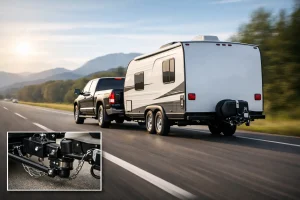
If you tow a caravan, horse trailer, work trailer or a loaded braked trailer, dedicated electrics are usually the stronger choice. The same applies if your vehicle has parking sensors, a reversing camera, LED rear lamps or factory towing functions. Regular users tend to appreciate the convenience as much as the technical advantages: fewer warnings, fewer workarounds and a vehicle that behaves predictably every time the trailer is coupled.
It is also worth considering future use. A driver who currently tows a small trailer may move to a caravan or enclosed trailer later. Fitting the right socket and wiring arrangement at the outset can avoid paying for another installation when requirements change.
Professional fitting matters as much as the kit
Even the best dedicated kit cannot compensate for poor workmanship. Wiring should be secured away from heat, moving parts and sharp edges, with proper grommets and protected cable runs. Connections need to be clean and weather-resistant, while the trailer socket must be positioned securely and tested with suitable equipment.
At Doncaster Towbars, the fitting process starts with the actual vehicle and intended towing use. That allows the right dedicated kit, socket type and any required coding or supplementary charging circuits to be specified before work begins. The finished installation should be tested with the trailer functions in mind, not just checked for a flashing indicator.
Before choosing on price alone, ask whether the quote includes vehicle-specific wiring, coding where required, socket type, charging feeds and full testing. A few clear answers at the start can prevent warning lights, parking-sensor frustration and electrical troubleshooting after the towbar has been fitted.
The best arrangement is the one that suits your vehicle and the job it has to do. Bring the vehicle details and towing plans to the conversation, and an experienced fitter can help you leave with a setup you can rely on every time you hitch up.