A loaded trailer that starts to push the tow car as you slow down is not something to ignore. For trailers fitted with electric brakes, the controller is the component that tells those brakes when and how firmly to apply. This trailer brake controller review explains what separates a worthwhile controller from an unsuitable one, and why the right answer depends on your trailer, vehicle wiring and the type of towing you do.
The first point is also the most commonly misunderstood: a brake controller is not a universal upgrade for every braked trailer. Most UK caravans and many domestic trailers use overrun brakes, where the trailer coupling compresses under braking and applies the trailer brakes mechanically. An in-car brake controller is designed for a trailer with electric brakes. It cannot be added to an overrun-braked trailer and expected to do the same job.
That distinction matters for owners of imported trailers, specialist plant trailers, horseboxes, commercial equipment and certain American-style caravans. If your trailer has electric braking, a properly matched controller and vehicle-specific electrical installation can make towing feel far more controlled. If it does not, the right focus may be trailer servicing, brake adjustment and checking the overrun system instead.
Trailer Brake Controller Review: What We Look For
A good controller should apply the trailer brakes progressively, predictably and in proportion to what the tow vehicle is doing. It should also be easy to adjust, clearly display its settings and work reliably with the trailer’s braking system.
The best unit on paper is not automatically the best unit in a particular vehicle. A controller that is excellent for a frequently used twin-axle trailer may be unnecessary for an occasional light trailer. Equally, a basic unit can become frustrating if you regularly tow on steep roads, carry variable loads or cover long motorway distances.
The review criteria that matter most are braking response, adjustment range, mounting position, display clarity, compatibility and installation quality. Price matters too, but a low initial cost is poor value if the controller cannot be calibrated accurately or if the required wiring is not fitted correctly.
Proportional controllers
Proportional, sometimes called inertia-based, controllers sense the vehicle’s rate of deceleration and apply the trailer brakes accordingly. Press the brake pedal gently and the trailer brakes come on gently. Brake harder in an emergency and the controller increases braking effort.
For regular towing, this is usually the more refined option. It helps the trailer feel like part of the vehicle rather than something reacting a moment later behind it. The smoother response can reduce the chance of trailer wheels locking during light braking, while still providing strong support when more braking is needed.
There is a trade-off. Proportional controllers normally cost more and need to be installed in a suitable orientation. Some models have flexible mounting requirements, while others must be positioned level and in line with the direction of travel. The instructions for the chosen unit matter here.
Time-delay controllers
Time-delay controllers apply a pre-set amount of trailer braking after a set delay when the vehicle brake pedal is pressed. They are simpler and are sometimes chosen for lighter, less frequently used electric-braked trailers.
Their limitation is that they do not react directly to how sharply the vehicle is slowing. Set the gain too high and the trailer may brake too aggressively at low speed. Set it too low and it may offer little support when the load is working hardest. They can be effective when set up carefully, but they generally feel less natural than a proportional controller.
For drivers towing valuable equipment, heavier loads or trailers in changing conditions, a proportional unit is normally worth considering. For simple, occasional duties, a time-delay controller may be adequate if the trailer, vehicle and usage genuinely suit it.
Matching the Controller to the Trailer and Vehicle
Before choosing a controller, establish the number of braked axles, the trailer’s braking type and its expected loaded weight. A unit needs enough output capacity for the brakes it will operate. Choosing on appearance or dashboard features alone is a common mistake.
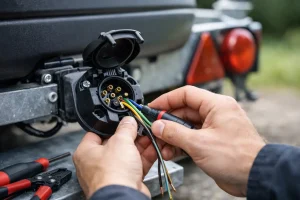
The tow vehicle also needs the correct electrical provision. The controller requires a properly protected power feed, an earth connection, a brake-pedal signal and a dedicated output to the trailer brakes. Depending on the vehicle and controller, additional connections may be needed. A standard towbar socket installation does not automatically mean the vehicle is ready for an electric brake controller.
Modern vehicles need particular care. Their electrical systems are monitored, controlled by modules and often sensitive to incorrect connections. Picking up a signal from the wrong circuit can cause warning messages, unreliable operation or faults that are difficult to trace later. Vehicle-specific electrics and a professionally routed wiring installation are not just about a tidy finish – they help protect the vehicle and ensure the braking system receives the signal it needs.
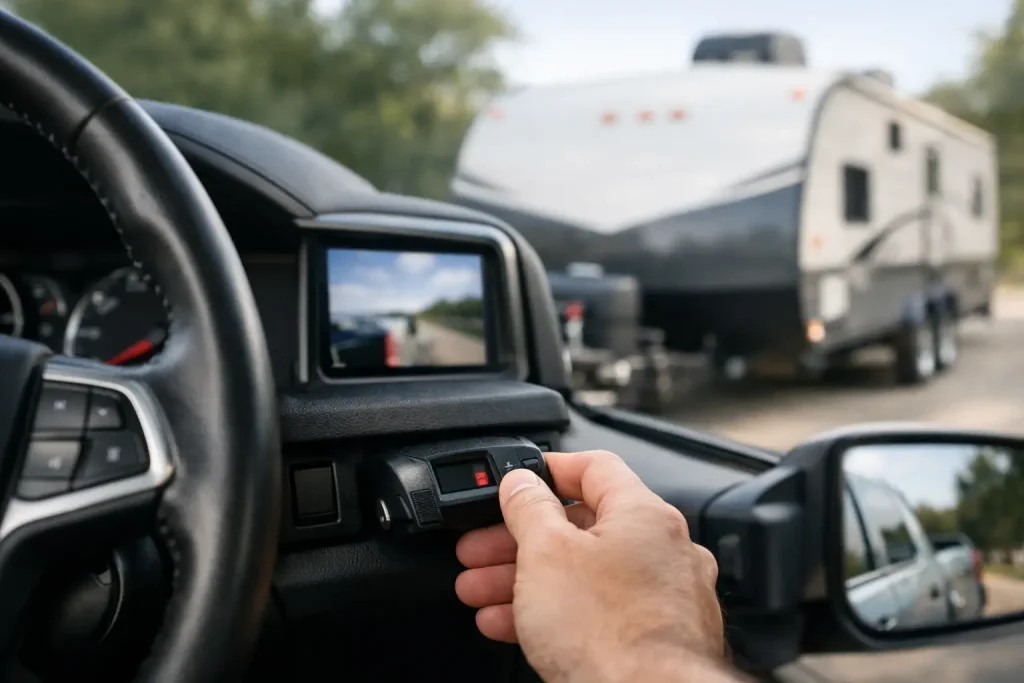
You should also consider where the controller will sit. It needs to be reachable by the driver, visible enough to read and mounted where it will not obstruct normal driving or interfere with airbags, trim panels or knee clearance. A neat installation should look considered, not like an afterthought hanging beneath the dashboard.
Adjustment Is Where Safety Is Won or Lost
Even a high-quality controller will not perform properly if it has not been set up for the actual trailer load. The key setting is usually called gain, output or braking power. This controls how much electrical force is sent to the trailer brakes.
A sensible setup starts with the trailer loaded as it will be used, not empty on the driveway. On a safe, quiet stretch of road, the controller is adjusted so the trailer contributes firmly without snatching or locking its wheels under normal braking. The manual override function, where fitted, should also be tested. This allows the driver to apply the trailer brakes independently and can be useful for checking operation or settling minor trailer movement in the right circumstances.
Settings may need revisiting when the load changes. A plant trailer carrying machinery, for example, will need a different level of braking assistance from the same trailer travelling empty. Wet roads, loose surfaces and tyre condition can also change how the trailer responds. The aim is controlled, balanced braking, not the highest possible setting.
Watch for warning signs after installation or adjustment. Trailer brakes that grab at low speed, a trailer that continues to push under braking, inconsistent brake response or warning lights on the vehicle all deserve investigation. Do not compensate for a mechanical or electrical fault by continually turning the controller up or down.
The Installation Is Part of the Review
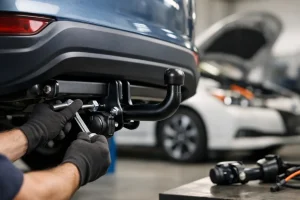
It is tempting to judge a brake controller solely by its screen, buttons and advertised features. In practice, the installation has just as much influence on the result. Correct cable sizing, secure fusing, sound earth points, protected wiring runs and weather-resistant trailer connections all affect reliability.
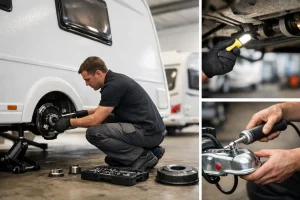
The trailer itself also needs to be in proper condition. Electric brake magnets, drums or discs, bearings, breakaway equipment, plug connections and cables should be inspected as part of the wider towing setup. A controller cannot correct worn brake components, poor tyre pressures, incorrect noseweight or an overloaded trailer.
For customers around Doncaster and Rotherham, Doncaster Towbars can assess whether an electric brake controller is appropriate for the trailer and vehicle, then advise on compatible equipment and professional fitting. That is particularly useful where a vehicle already has aftermarket towing electrics, where the trailer is imported, or where an intermittent braking fault needs proper diagnosis rather than guesswork.
Is a Premium Controller Worth It?
For occasional light towing, a straightforward controller with clear controls may be all that is required. Spend the saved budget on correct wiring, trailer maintenance and a proper setup, as these have a direct effect on safety.
For frequent towing, variable loads or long-distance work, the extra control offered by a proportional model is often easier to justify. Features such as a clear display, easy gain adjustment, diagnostic warnings and a well-designed manual override are useful because they make it simpler to check the system before setting off and respond if something changes on the road.
The best choice is the one that suits the braking system you actually have, is correctly rated for the trailer and is fitted cleanly to the vehicle. If you are unsure whether your trailer uses electric or overrun brakes, start there. A quick professional check before buying equipment can save the cost and inconvenience of fitting the wrong system.