A towbar is only the starting point. The right equipment turns it into a safe, usable towing setup for your caravan, trailer, cycle carrier or work gear. This best towbar accessories list focuses on the items that genuinely make a difference on the road, at the campsite and on site – not novelty extras that end up forgotten in the garage.
What you need will depend on what you tow, how often you do it and the vehicle you drive. A tradesperson moving a loaded trailer has different priorities from a family taking a caravan away for the weekend. However, safe electrics, clear rear visibility, secure coupling and sensible trailer care should be near the top of every driver’s list.
Best Towbar Accessories List: The Essentials
1. Vehicle-specific towing electrics
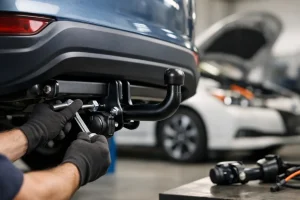
Trailer electrics are not an optional add-on. They operate your trailer’s road lights, including indicators, brake lights, tail lights and number plate illumination. A correctly fitted 7-pin or 13-pin socket is essential for legal towing, while a 13-pin system is commonly required for caravans and may also supply reversing lights and interior power functions.
Vehicle-specific wiring is usually the best choice on modern cars and vans. It is designed to communicate properly with the vehicle’s systems and can support functions such as trailer stability assistance, rear parking sensor deactivation and bulb-failure monitoring where fitted. Universal wiring may suit some vehicles, but it is not always the right solution. Professional advice is worthwhile before choosing, especially on newer models with sensitive electrical systems.
2. Towing mirrors
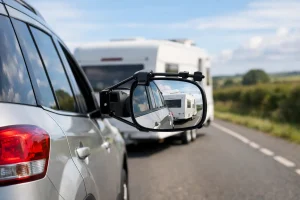
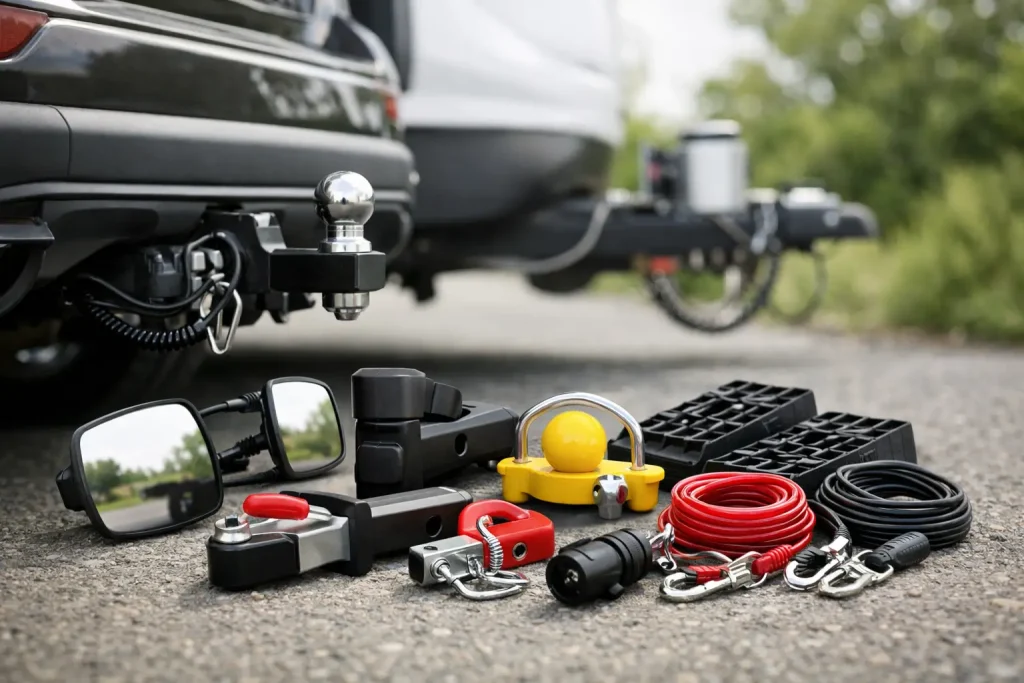
If your trailer or caravan is wider than the towing vehicle, you need suitable extension mirrors. The legal requirement is simple: you must be able to see clearly down both sides of the trailer and sufficiently behind it. Standard door mirrors often do not provide that view.
Clamp-on towing mirrors are a practical option for occasional caravan users, provided they are fitted firmly and adjusted before setting off. Choose a secure, vibration-resistant design that does not obstruct your normal mirrors. Poorly fitted mirrors can move at speed, reduce visibility and become a hazard to other road users.
3. A quality towball cover and towball grease
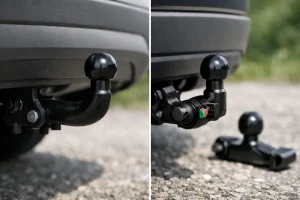
A towball cover is inexpensive, but it protects the ball from road salt, dirt and corrosion when it is not in use. That matters particularly on detachable towbar systems, where keeping the towball clean helps it fit and lock correctly.
Grease is more situation-dependent. Many standard trailer couplings benefit from an appropriate light application to reduce wear and corrosion. However, do not grease the towball when using a caravan stabiliser hitch with friction pads. Those pads need a clean, dry towball to work as intended. Wipe away old grease before coupling a stabiliser-equipped caravan.
4. Breakaway cable or secondary coupling
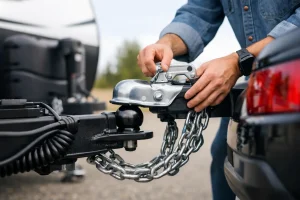
A braked trailer or caravan needs a correctly connected breakaway cable. In the unlikely event that the trailer becomes detached, the cable applies the trailer brakes. It must be attached to a suitable designated point or loop, not simply wrapped around the towball where that is not approved.
Unbraked trailers use a secondary coupling, typically a chain or cable, to keep the trailer connected if the coupling fails. Check the cable, clips and attachment points regularly. Fraying, rust or a bent clip are small faults that can have serious consequences.
5. A hitch lock and wheel clamp
Trailers, caravans and cycle carriers are valuable and often easy targets when left on drives, storage sites or work premises. A hitch lock helps prevent an unattended trailer being coupled to another vehicle. A wheel clamp adds another visible layer of deterrence and is particularly useful for trailers stored at home.
Security products vary greatly in quality. Buy a lock designed for your specific hitch or wheel size, and use it whenever the trailer is parked for any length of time. A lock that does not fit properly offers less protection and can be awkward to remove when you need to leave early.
6. A trailer board and spare lighting kit
A lighting board is essential when a load overhangs the rear of a trailer and hides its lights or number plate. It gives other drivers a clear view of your brake lights, indicators and rear number plate, keeping the trailer visible after dark and in poor weather.
A spare bulb kit, replacement plug or short extension lead can save a journey from being delayed by a minor electrical issue. LED lighting boards tend to last well and provide good brightness, but they still need checking before every trip. If lights flicker, fail intermittently or trigger warnings on the dashboard, have the trailer socket and wiring inspected rather than relying on a temporary fix.
7. Ratchet straps and load restraint equipment
A trailer is only as safe as the load on it. Ratchet straps, wheel chocks, netting and properly rated anchor points stop equipment shifting under braking, cornering or rough road conditions. This is particularly important for plant trailers, motorcycles, furniture and loose garden materials.
Use straps with a suitable lashing capacity for the job, and inspect them for cuts, damaged stitching or worn ratchet mechanisms. Avoid relying on rope, elastic cords or a single strap over a heavy item. The load should be evenly distributed, secured in more than one direction and kept within the trailer’s payload limit and your vehicle’s towing limits.
8. A jockey wheel, prop stands and levelling aids
A working jockey wheel makes coupling, uncoupling and manoeuvring a trailer far easier. It also helps support the front of the trailer when it is not connected to the vehicle. Check that it winds smoothly, locks securely and has a wheel suitable for the surface where you normally park.
Caravan users may also benefit from corner steadies, levelling ramps and wheel chocks. These do not make a caravan safe to tow, but they make it more stable and comfortable once pitched. They are especially useful on uneven ground, where attempting to level a caravan with loose timber or improvised blocks is a poor substitute.
9. A reversing camera or parking sensors
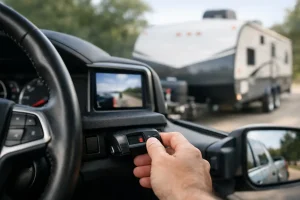
Towing changes the way your vehicle behaves when reversing. Rear parking sensors can be helpful, but they may detect the trailer or towbar itself unless they are programmed or fitted to work correctly with towing equipment. A reversing camera gives a useful view of the hitch, trailer drawbar and obstacles behind the vehicle.
For drivers who regularly hitch up alone, a camera can reduce guesswork and repeated trips in and out of the vehicle. It will not replace proper observation, mirrors or a banksman where visibility is restricted, but it can make low-speed manoeuvres more controlled. Professional installation helps ensure the system is positioned well and integrated neatly with the vehicle.
10. Tyre, wheel and basic repair equipment
Trailer tyres often deteriorate from age, sunlight and long periods standing still, even when the tread looks good. Carry a suitable spare wheel where possible, along with a jack rated for the trailer, a wheel brace and locking wheel-nut key if fitted. Check tyre pressures when cold, including the spare.
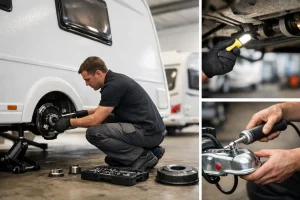
A compact kit with work gloves, a torch, warning triangle, tyre pressure gauge and spare fuses is equally useful. For regular users, keeping a small socket set and a can of electrical contact cleaner in the trailer can help deal with simple issues. Major brake, bearing or wiring faults should be diagnosed properly rather than patched up at the roadside.
Choosing Accessories for Your Type of Towing
The best towbar accessory list is not identical for every driver. For a caravan, prioritise 13-pin electrics, towing mirrors, a clean towball for the stabiliser hitch, breakaway cable checks and security devices. For a box trailer or domestic trailer, load restraints, a lighting board and a reliable secondary coupling may be the main essentials.
Tradespeople should pay close attention to payload, straps, wheel condition and lighting. Repeated heavy use puts more strain on couplings, bearings, brakes and electrics than occasional holiday towing. A trailer service can identify wear before it becomes a missed job, a roadside breakdown or an unsafe load.
Cycle carrier users should check the towbar’s nose weight limit, the carrier’s maximum load and whether the carrier has lights and a number plate holder. The combined weight of the carrier and bikes counts towards the towbar limit. Electric bikes, in particular, can make a setup heavier than expected.
Fit It Properly, Then Check It Every Time
Even the best accessory cannot compensate for incorrect fitting or a rushed pre-departure check. Before towing, confirm the coupling is fully engaged, the breakaway cable or secondary coupling is attached correctly, electrics work, tyres are inflated and the load is secure. Check that the number plate is visible and that nothing obstructs the trailer lights.
At Doncaster Towbars, we can advise on the right towing electrics, towbar setup and practical accessories for your vehicle and trailer. Bring your requirements to the workshop before buying parts that may not suit your hitch, electrics or intended load – a properly matched setup makes every journey calmer from the first mile.